When the going gets tough

A few days ago, for the first time in years, I found myself in a horrible mood – completely out of the blue. On reflection, I got into it through comparing myself to someone else, being inflexible and impatient under the pressure of my own big dreams. Had I not known better, I would have thought I was suicidal. I was thinking of how I owe it to the people who love me to keep going. I knew that I felt like this before. Because of that, cognitively, I knew it would pass. Cognitively, I knew that the kind of words that were floating around in my head were only words that clumsily tried to explain how much pain I was in. All the same, it was a really dark three or four hours of self-hatred and hopelessness. It was made worse by the vicious cycle of feeling guilty and weak for feeling bad.

Cognitively, I knew that the faster I interrupt this horrible mood, the better. Bad moods beget more bad moods. At this point, I stopped judging myself for feeling bad, acknowledged that this is simply the way it is – good or bad – and it’s time to get myself out of this horrible state. But how? How do you get yourself out of this mood swamp? Common wisdom would say: look for support. I couldn’t fathom talking to anyone. I know now that it’s silly, but there was no arguing with the upset-me. Common wisdom would say: try and feel grateful for what you have rather than feel bad about what’s missing. That just seemed like some kind of evil joke.

I want to die

The answer, as always, came from asking the right question. The question I asked was: What’s useful about this? I knew this lesson from before. I’ve even written about it here. It just goes to show that these lessons aren’t only cognitive. It takes time and iterations to learn them. Even with all my knowledge, it took me a bit of digging around to find where the right button was.

What was useful about it? I knew that I need time to look after myself. In and of itself, that was useful information. I looked back and wondered what upset me – I learn from that too. It wasn’t the first time that being super focused and not flexible enough got me into trouble like this. However, rather than judging, I will just take this is another data point and another note to self: be more flexible. This is high level theory, but I’ve already implemented measures that would make it easier for me to be more flexible. I also realised that today wasn’t a good day to do any work. My alarm bells went off – I am glad that I don’t have to work?! Rather than accusing myself of laziness, I dug deeper. I was doing something  important, repetitive – and boring. It was super easy. I am sure many people don’t mind those kind of tasks, but I can’t handle them at all. My relentless focus on doing what needs to be done got me into a situation where I couldn’t play to my strengths. So here’s another lesson: doing things that don’t come naturally for too long isn’t sustainable. I think that’s valuable as next time I will be able to assign who does what and when better.

As I am writing this, I am able to not just hope that that horrible feeling never happened – I feel grateful that I learnt from it. I really mean it. It’s all about learning, progress, small wins and getting closer to the person you want to become. And not judging.

The truth is, it’s highly unusual for me to get upset. I wasn’t just born this way though. There was one thing that made me go from super sensitive to where I am now. When I say super sensitive, I mean if the person who poured my coffee in the morning looked at me wrong – I would feel uneasy for hours. What made the difference for me wasn’t some sort of soul searching or even mindfulness – it was straight up physical exercise. I don’t know whether it is just the flood of endorphins, but it really helps with the art of just not giving af when appropriate. Exercise is the one thing that makes the biggest difference to both mental and physical health for a healthy person.

what to do when you feel awful

There was some cognitive work too, but it would never have happened without the initial boost through exercise. The cognitive work was something like this: the barista doesn’t care about you, you are just a person with an order and a wallet. They are in their own world. It’s not personal. They are just trying to get through the day the best they can. I think there’s a word for that – it’s called empathy. Exercise isn’t known to cause empathy, what’s going on here? Exercise requires focus, so in a sense, it requires mindfulness. Maybe that’s part of it. In any case – in my unblinded non-randomised non-controlled trial of n=1, it works.

The pain of dreaming big

Every commencement speech tells you to dream big. I want to clarify that dreaming big specifically relates to who you become – not what you have. Fantasising about Ferraris doesn’t count. In this model, they are a possible side effect of delivering something valuable to the world.

Dreaming big comes naturally to those who are ambitious, but some people don’t. Why don’t they? Freud is my friend here. Not dreaming big is less painful than dreaming big. Big accomplishments come with increased responsibility, hassle and resentful friends. Nobody likes those things. I think every human being can relate to this. At the same time, convincing yourself that something that is out of reach isn’t worth it has a name. In Ancient Rome, they called it sour grapes. Literally, the expression comes from this: you cannot reach the grapes, so you convince yourself that they are sour – so you don’t have to keep reaching. It’s a form of nihilism: “it’s not worth it anyway.” Personally, I never suffered from this. Grapes are yummy. However, I have another issue.

is it better to dream big or be realistic

Dreaming big focuses on the future. It stretches you. It sets a vision on what should be in your head. However, when you snap out of the big dream – it really hurts. Looking at reality will inevitably cause you to question what is responsible for the discrepancy. This may be another reason that stops people from dreaming big. Furthermore, even if you have the audacity to dream big, feeling bad about yourself in this manner hampers your chances of achieving your dream.

Happiness is most certainly a function of expectations, not reality. In fact, to make it nice and mechanical, let’s (over)simplify: Happiness = reality – expectations.

It is easy to be happy if you have no sense of entitlement. This is a nice way of saying it. It is stoicism in a sentence. Let’s try this: it is easy to be happy if you have low expectations. Hmmm. This calls into question the idea of dreaming big. It seems that reality hurts more when you have big dreams as happiness becomes a negative “number”. While there is technically a difference between a dream and an expectation, but I think for anyone who really believes in their dreams, it is kind of the same thing.

The only solution I can think of is patience. Patience means that you don’t expect is all and expect it now. I recall dreaming of being a doctor. I knew no bigger dream at the time. It didn’t hurt so much when I was 17 and on track – though the dream was still only a dream. It becomes more complex when you are an adult. When you see others who achieve humongous things at an exceptionally young age, when you start comparing yourself to others – your patience seems to die a sudden death. For me, thinking about Mark Zuckerberg or the chap who came up with Snapchat makes me feel like I am already late to the party.

is it better to dream or not

Another bit of common wisdom comes to mind – don’t not compare yourself to others. Is it good advice? Comparing yourself to others is part of understanding reality. I believe that self-awareness and awareness of reality are paramount – hence my interest in mindfulness. So comparing yourself to others it’s at least in part useful. However, it has to be balanced with feeling good about yourself – I don’t think anyone ever achieved anything through hating themselves. In fact, comparing yourself to others could even be pleasant – look at you doing better than some of your classmates. Twisted, but true. Apparently, that’s the same mechanism behind people watching the Kardashians being ridiculous. I don’t know. I’ve never gone there. Looking up to a role model – our fundamental way of learning – is a form of comparing yourself to others, only here you strongly believe that one day you can become a version of this person.

I think it is good advice in the sense that in the long run, you’re only ever fighting against your former self. If you are trending upwards, it doesn’t really matter where you rank in the short term.

Lastly, it is important to get good at dealing with failure. It is my rule that if something hurts too much – a rejection, a failure, whatever – I am taking it personally. The only way to approach this is like a game. A sort of hobby. The moment you begin to take it personally, you lost. There is a temptation, especially among overachievers, to bet their self-esteem on achievements. Bad idea. Just like in negotiating – you should never put yourself in a situation where you can’t walk away from a deal. The way to do that when it comes to expectations is to remember that you are distinct from your mission – no matter how much you love it.

After all, dreaming big is about who you become. Winning is a long game, so big dreams, patience and a good understanding of reality will be required.

Trust and likeability

What is trust? I think it is a feeling. It’s not an objective measure of how reliable somebody is.

I have many friends who are incredibly unreliable, incompetent at times – yet I still trust them because I somehow know that they will be reliable when it will really matter.

I think it is about having coherent values.

Belonging to one tribe – however you chose to define it. The reason we have tribes is probably deeply rooted in our DNA. A long time ago we were conditioned to know that if we lose our tribe, our survival chances are lower. It is the very reason why public speaking is so difficult for so many people. They feel that getting up on stage with a high risk of embarrassing themselves would lead to their audience – their tribe – to alienate them. It is one of the many examples where our brains are scanning for survival situations when really they would do much better to chill out a bit. It is one of the things that mindfulness really helps with: instead of assuming things and following the same scripts, it allows to take a step back and perceive a situation from a different standpoint.

In this day and age we have learnt to pay less attention to the superficial: race and socioeconomic background. Values lead the conversation on trust and exposing authenticity and vulnerability strengthens it. Trust makes us feel remarkably good. It is one of the things people value most in life: the goodwill of other people.

psychology of trust

Trust emerges in the strangest situations. We seem to always restrict the group that we trust.

Having a common enemy automatically builds trust among complete strangers. Nostalgia is a phenomenal marketing strategy because it immediately builds references for values we all accept and love – hence it builds trust. This means trust is scalable.

You don’t need to know much about the person: just pick up on the relevant markers of trustworthiness – and there, you are best friends. Our brains sort of skip over the whole due diligence process required to build trust.

Celebrities always say that fans feel that they know them personally – that’s the power of the illusions that trust can create.

One of the key reasons why social media have changed the world is because it trades in trust. Social proof – knowing that our friends, whom we trust, trust ABC brand – that causes us to trust the brand too. It’s like human link juice.

Being transparent is hard.

It takes courage as we run the risk of being rejected – that’s what the survival brain thinks about first. “Always budget for the downside”.

A better strategy would be based on the realisation that by being transparent we will be able to find the people who share our values. They are out there.

The easier it is for them to find you – the better life will be. Haters will be there and they won’t accept you even if you try and deceive them into believing you.

In the words of Elbert Hubbard: To avoid criticism, say nothing, do nothing, be nothing. Don’t stand for anything. Make unfalsifiable claims – like the multinationals that none of us have any time for. It seems that to get trust, you need to be directional.

After all, making a decision means, literally, cutting off other options. And we all know that being indecisive is worse.

I can think of an exception to that rule: when somebody takes a strong position in a conflict averse environment. Certain societies value a lack of extreme statements. When my friends started expressing their opinions on Brexit on social media, people were reluctant to engage either way. Sometimes having a strong opinion in and of itself is against the values of a given environment. It seems to be a mantra we now have in the West. What if being agreeable and non-directional has become a value? Or is it simply the easy way out? Is it just a special case of the Stanford Prison Experiment?

There is one situation where strong opinions should definitely be held back – and that is in anything you don’t know well. Most commonly, this appears to be geopolitics. People who know nothing about politics make black and white claims. Obviously, this will garner support and trust from some parts of society, but a low quality signal is just that. Over time it will become clear whether you know anything about the thing you are preaching about . Trust is a long game.

Mindfulness: must I practice acceptance?

The concept of acceptance has been a tough one for me to grasp when it comes to mindfulness – for a long time. The term acceptance is hugely common in guided mediations and among yoga practitioners. Accept reality, accept how you feel, accept how others treat you, etc.

Maybe I am a finished type A, but I am not about raw acceptance, I said. I want things to be better, I said. There’s more to life than just accepting what’s there in front of me. To me human nature is all about agency, about having a direction and doing things that I feel will be good for those around me. Acceptance and growth seemed at odds. It’s some kind of nihilistic concept that Nietzsche’s last man would appreciate. I am much more about Nietzsche’s will to power. Will to power is another misnomer. It sounds like something a megalomaniac would be after. In actual fact, it is the will to overpower yourself and your circumstances in order to do something meaningful. I think we will all agree that’s a pretty important force. In a sense though, we are resisting reality rather than accepting it when we are moving in a chosen direction.

mindfulness meditation acceptance meaning

I think I am not the only one misunderstanding the term acceptance. In fact, it nearly put me off the whole mindfulness thing. I don’t want to wallow in the sometimes pathetic present with no prospect of things being better. I had this anxiety that if I accept things, I will lose my drive to grow. From what I gather, that’s a very common thing among people who are driven to achieve. Then I figured it out.

It’s an order problem. You need to accept things before you can figure out what you want to do about it. Frankly, I think acknowledge is a better term. You need to acknowledge reality before you can change it. Mindfulness is all about being closer to reality. It’s about breaking down assumptions and models and coming back to the hard data of what’s around us.

Our desire for things to be a certain way may cloud our perception of how things actually are. The point isn’t tolerating bad things and hoping that the universe will put things right. The point is being fearless to examine reality and not run away from it. To see the wood and the trees. To not take it personally when you realise that things aren’t perfect.

I am not sure that’s how Buddhists approach acceptance. However, it doesn’t really matter. I am not here to practice a religion or do things as instructed by some high priest – no matter how en vogue they may be. I am much more interested in figuring it out for myself – and for the rest of us who are trying to make a change for the better.

Should we avoid losing?

Freud is famous for all kinds of weird reasons. I believe it is more of a reflection on society than it is on Freud. He got some stuff right and some stuff wrong. One of the things that he managed to articulate incredibly well is this simple concept: we are driven by wanting pleasure and avoiding pain. In this simple equation, avoiding pain is much more important. In other words, we will forego pleasure in order to avoid pain. I remember learning that lesson when I was 7: I am sure I’ve done a lot to learn it through my own mistakes, but what got really etched into my brain was my cat’s behaviour. My lovely cat, she was probably about 5 months old then, got on top of the kitchen counter while no one was looking. I may have been an accomplice in her trespassing. She speedily made her way to the divine smelling milk that was getting heated up on the hob. As she put her pus into the pan, she must have burnt herself off the edge of the pot. She jumped right down with a loud meow. She didn’t get seriously hurt. What fascinated me though is that she never went near the hob again. Ever. Even if I put her regular cat food bowl on the switched off cold hob. She would just proudly sit there and wait for me to put it back where it belongs. My cat made a decision – and it was final. Avoiding pain is key.

mindfulness fear of failure losing

If you come to associate something with pain, you will probably fear it to some extent. So the question is: should you be afraid of losing and associate it with pain? On the one hand, it means that you will avoid losing. Is that the bottom line though? Winning isn’t the same as never losing.

I don’t know whether losing in some shape or form is part of the obstacle course. Maybe you can just get through a life of poetry in motion without ever losing. I don’t think I can think of any examples of it though. It is important to remember that the people we think of when we think of success generally have some control of what is put out in the world about them. So we are looking at a highlight reel. However, considering some really famous actors, politicians and business people – it is easy to think of things that were outright flops. Cringy films, awkward public statements, bad investments, a personal life that could be on Jeremy Kyle – it all seems part of everyone’s journey.

As somebody who has a clear sense of agency and whatever control that humans can have over their own lives, I envisage life as a series of option trees. Every time there is a fork in the road – that’s when life is shaped. Moments of choice are what shapes that part of our lives that we can control. However, I have been making the assumption that if I make the right choices, I will never experience losing. Hence, losing equals bad choice – my bad choice. I am starting to question that assumption. 

It is important to take a step back and consider what we call losing. What do we call failure? Is failing simply falling short of our expectations? In that case, for anybody who likes philosophy and mindfulness, it is immediately obvious that losing happens in our heads – not in real life. Expectations are great, but a dose of humility can be a real treat when we get so carried away so as to believe that we are owed our preferences at all times.

Not to sugar coat it – because it is true – but losses now can mean large gains later. While that’s a metaphor for our experience, it is quite literally a description of an investment: debit now for credit later. To continue with the investment analogy what really matters is how you compound it. Does a loss mean new learning and information that adds to your overall game or does it mean debilitating poison that stops you from carrying on? It is clear that the latter option is better. So maybe being afraid of losing in and of itself is damaging. I don’t know for certain that losing is unavoidable. A consultant psychiatrist I used to work with and revere used to use this metaphor: if you want to box, prepare to get punched. 

It’s not easy though, to find a balance. If you focus too much on being OK with losing, you will get too comfortable with low standards. This seems to logically make sense. There’s an interesting analogy I would like to draw. I have discussed the Stoic attitude to death in this article. Essentially, not fearing death is one of the most liberating things that a person can do. This goes against all logic: surely, if you stop fearing death you are more likely to die? Yes and no. It seems that literal life-or-death situations are thankfully exceedingly rare for most people. Unless you actively seek out dangerous situations, you are unlikely to die prematurely because you adopt this belief. However, you are more likely to take small risks – as now, they are framed in this bigger perspective and seem not that huge at all. So could it be that by de-vilifying failure, it is possible to make better decisions rather than worse ones? 

If you focus too much on always winning, losing becomes too scary to deal with. I don’t think it is better to assume that losing is inevitable than to assume it is possible to avoid it. Assuming anything is always risky business though necessary to simplify things. Sometimes we will lose because the timing isn’t right, sometimes it will be completely beyond our control – but we have to keep our eyes on that part of it that is within our control. I think the key is to not think of losing as detracting from your final wins – that are surely ahead of us. Winning is a long game and losing is just a lesson that refines our approach and let’s us know how to do better next time. Failure is a form of constructive criticism or a reflection of conditions beyond our control. Should we be afraid of failure? All in all, I think it is too high a price to pay as it constricts our ability to get to the big wins. Should we avoid losing? I don’t even know if that’s completely necessary. It’s not the actual end result. If you make a P&L statement analogy, high costs don’t mean no profit.

In medical ethics, they often talk about an act of commission and acts of omission. In other words, to act and to not act are equally consequential. In the medical context it is something like this: you cannot euthanise a person by actively injecting potassium chloride in their veins, but you can allow someone to die by choosing to not instigate active treatment (in most parts of the world). In our culture, we have come to see failure as a negative consequence of an act of commission. Doing something outside of what is prescribed is an act of commission, meaning it takes more deliberation and implies more responsibility. It is much more likely to cause strong emotions if it doesn’t go right than ending up with the same result from doing nothing. So what about acts of omission? The definition of failure has to allow for acts of omission. I think failing to invest in something worthwhile or to tell someone you love them is as bad as investing with poor returns or being rejected. However, if we only concentrate on avoiding losing, we are bound to miss out.

Moving from Freud to Frankl, it’s important to consider the meaning of failure. I think the visceral fear of failure comes from the meaning people have been conditioned to attach to failure: you are failing because you aren’t good enough. I mean you may as well take a gun and shoot your sense of self. What is enough? Enough is completely in our heads. Maybe you are failing because you aren’t that good yet. It’s describing the same facts, but the way it makes you feel is completely different. A much better question to ask would be: how can I use this? Looking at failure from more than one angle instead of fixating on a bunch of assumptions is going to help. If you can make use of it, then there’s nothing to be afraid of.

Our brains are somehow wired to move towards the thing we think about the most. Those who survive car accidents tell how they could only think about the thing that they crashed into – rather than thinking of the gap that they may have been able to drive through safely. Budgeting for the downside is good, but once a decision is made, it has to be a fleeting thought at the back of your mind. You can’t focus on avoiding failure and expect success. Even in those forms of financial investments where avoiding losses is the foundation of all success, the game is to put yourself in situations where losses are least likely – rather than trying to predict them, e.g. in trading. In venture capital, it’s the opposite – you only need one smashing success. While we can’t be completely unaware of our surroundings, the focus has to simply be on winning.

I think it is time to start letting go of the fear of losing because that way we’re risking missing out on something really great. Losing requires humility to accept our own mistakes non-judgementally and use them. Only this way, we have a chance of winning in the long term.

Technology and human interaction

Some worry, even fear, that technology may surpass human interaction. This is exactly what I would call a Promethean fear: the fear that a new technology will somehow lead to our demise or change human nature. Human nature seems robust. Things like running water, central heating – even money and fame – only expose and amplify what was there to begin with. There’s no significant change in human nature during any person’s lifetime. We live like the royalty of a thousand years ago, but still believe that we don’t have enough. We still crave the same things: love, meaning, safety, exploration and growth. When I see a guy sitting across from a girl in Starbucks looking at his phone – that’s boredom that has become socially acceptable whereas it wasn’t quite as “normal” before. It is the fundamentals of their relationship exposed – and it is obvious that something isn’t right. In days gone by it would have been a yawn – or simply staring into space. Now this is emptiness filled up with the instant gratification of likes and shares on social media and the lovely cats on YouTube. The ancient Egyptians would be proud.

It’s not that things don’t change. They change gradually. Human nature appears to remain fairly constant. What if technology gets a sprinkle of human nature when it comes to artificial intelligence. When machines can properly learn and execute without our approval – that can get scary. We may fall in love with AI – the way that was shown in the film Her. Something interesting happened today when I went running. Naturally enough, I procrastinated right up to the point of when it became dark as I was finishing my run. I went to turn on the flashlight on my iPhone only to realise that the latest update has changed the layout of the place that the flashlight button is normally in. It took some fiddling, but I found it. For about three minutes I was let down and disappointed by Apple – stranded in the dark. I was afraid that I’d step on something. In a way, that’s kind of the fear of AI: they will sabotage us by taking control. It’s happening already, in 2016. I never asked for my phone to move the flashlight button. Have my interactions changed? I don’t think so. In the 1990s, parents were terrified of adding phone lines into their kids rooms – because that would finish them. Video games. TV. Radio – before that. Nothing has really changed the fundamental needs we have. Do people actually spend less time in the pub? I think they do. However, they are spending more time at festivals – taking snaps of their tents and dirty boots – and surely to God, they are interacting with other people.

What did people do before the radio? Before this so called technology? After all, we are still using electromagnetic waves to communicate, so the radio is a closer relative of modern technology than it might initially appear. They read books and newspapers. Is it really that different that reading something online? For sure, there’s no instant feedback, but you are still finding out what people did miles and years away from where you are. I think that reading a book by Seneca or Tolstoy is a human interaction. It is deep, meaningful – it is life changing. Sometimes it is like getting advice from a grandfather you never had. To further emphasise that point, I remember having a brief imaginary love affair with Prince Andrei from War and Peace. Am I that different from the poor chap in Her? I have a bit more insight, that’s all. Human nature will drive us to find answers in whatever place is available – nature, books or social media. We seek and find human interaction no more and no less than we did before.

I honestly can’t be sure what the world was like before the printing press. I guess people were just bored more. I guess they craved each other’s company more. I am not sure that they had that luxury as going back even 200 years ago putting food on the table was a real struggle. Is it possible that people interacted more in the past? Possibly. However, if that is the case – that ship has sailed a long time ago.

If anything I would argue that my mother in her 50s has the opportunity to be connected to her classmates that she hadn’t seen in 30 years – an option she would never have had had she been born 30 years earlier. Technology gives us opportunities to be social or to hide from human interaction. The choice is down to human nature – the nature of any given human. It is tempting to blame technology. We all know that it’s not the development of advanced weapons that leads nations to be more aggressive. It’s not the development of social networks that causes people to give terrible anonymous comments. It’s the other way around. The problem is that blaming technology is just another way to hide from our own choices.

technology and human interaction

Sporadic rewards

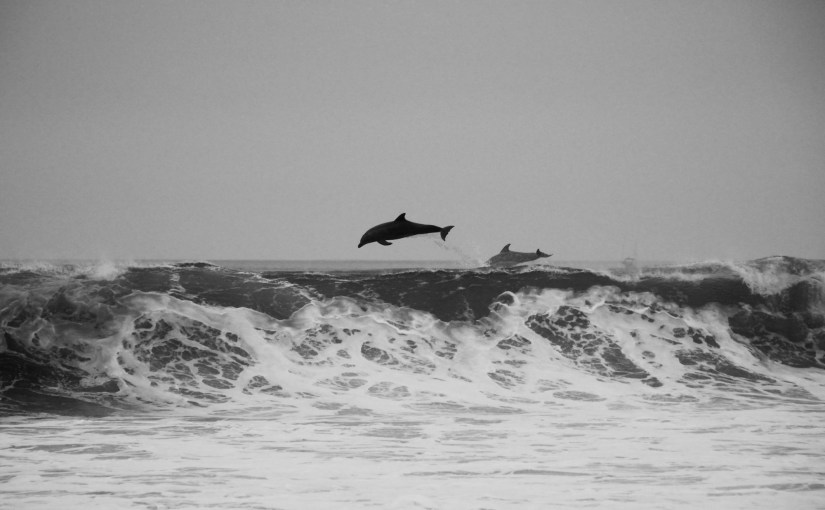
There’s an interesting psychological phenomenon observed in dolphins. Dolphins a particularly high ratio of brain size to body size. As humans, we are behind them. Generally, intelligence correlates to this metric, hence the claim that dolphins could be more intelligent than humans.

meditation techniques and accessories

When a dolphin does a trick you like – you positively reinforce it by giving him a treat. Rinse and repeat. A bit of operant conditioning never hurt anybody. However, to be clever about it, the trainer then gives the dolphin a treat only when the dolphin jumps especially well – let’s say higher, through a hoop, whatever. The trainer creates an understanding in the dolphin’s head that he must not just jump but give it all he’s got. The way this works best is when the trainer only rewards the dolphin sporadically. The dolphin isn’t quite confident he will always get the reward. This creates the infamous gambling-like anticipation. Does this remind you of anything? I think it is quite reminiscent of how managers assign promotions.

Bain & Co summarised the conventional thoughts on behaviour modification here. They got the basics down, but they preach that behaviour are modified best when the rewards are likely, immediate and positive. I guess likely doesn’t mean certain. The science behind this relates to how dopamine is released in response to anticipation, not reward. If the reward is uncertain – that causes more dopamine, hence the effect.

In short, if you want someone to always give it their best, be a tad sporadic with your rewards.

The overflowing cup

I heard this Asian parable today. A student wanted to learn from a master. He already considered himself a good student and quite intelligent. The master sat him down for tea. The master started pouring him tea. He filled the cup, but did not stop. The tea was spilling and running down the students legs. Eventually, baffled, the students exclaimed – what are you doing?! The master explained: you cannot fill a cup if it already full.

mindfulness-reassessing-beliefs

Asian culture is so interesting. Modern day Asia and the US value achievement. Modern day Europe and history book Asia value savouring and contemplation. The culture of letting go that is so central to the teachings of Asian religions and meditative practices seems counter-intuitive at first. Will you learn if you let go? Are you giving up? What is the difference between letting go and giving up?

It’s not like we are as finite as a cup. However, the most accessed memories are references are probably quite a small portion of everything we know. I think that above all it is letting go of stuff that’s not relevant any more. There’s learning and then there’s going around in filtered – not tinted – filtered glasses. Past experiences create distorting filters that add meanings to things that aren’t necessarily there. Staying in touch with reality is our biggest job. It is the one thing that allows people to figure out how to make their dreams come true: you need to always be aware of the ever-changing direction of the wind so that you can adjust the sails in order to get to where you need to be. You also need have a map, however. You need to learn to predict the weather – as much as it is possible.

The trick is to constantly reassess what should be in your cup. Beliefs shouldn’t just be formed by your own experiences, but constantly change with incoming information. An awareness of outside data is important, but an awareness of your own internal software is equally as important – that’s what mindfulness is for. It’s not just garbage in – garbage out. It is good data in – garbage out if the software is garbage. Every day is an iteration in testing both perception and our inner workings.

Why we do the things we do

I recall listening to a podcast with Naval Ravikant. He struck me as a super intelligent guy. He spoke about fear a lot – how so many seemingly diverse emotions are all just different forms of fear. I have come to agree with that view wholeheartedly. Anger is a form of fear – someone is breaching your borders and rules. Sadness is a form of fear – that something this good will never happen again. Anxiety is pretty close to being the same thing as fear. Then there’s the fundamental fear of not being good enough or deserving of a place in other people’s lives.

what-happiness-is-mindfulness

He also said: “Desire is a contract you make with yourself to be unhappy until you get what you want.”

At first, it seemed to make a lot of sense. It’s quite a mechanical definition: we couple outcomes with feelings and manipulate ourselves to accomplish the outcome with the nicest feelings. It is pretty obvious to me at this point that we are always after an emotion we will enjoy.

I don’t like the way he used the word “unhappy.” Maybe that’s not the best word to express his actual sentiment – after all it was a podcast and you don’t really have time to craft the exact sentence you want when you are talking. He didn’t strike me as a happy guy, neither does Tim, the host of the show. I think that betting your sense of happiness on outcomes is a bad strategy. In theory, it will make you work harder. However, if you look at yourself in the mirror and – regardless of what you actually look like – tell yourself that you are a fat bast*rd and the only way to not feel this bad about yourself is to exercise – then you’re not going to exercise, are you? If you promise yourself chocolate cake after a session in the gym, you are more likely to exercise – a bit of operant conditioning works wonders and has little to do with feeling bad. So it’s not putting yourself in an unhappy state with a promise to be happy given that you fulfil a condition one day, it is something else.

Naval also said this: “I actually think happiness is the absence of suffering. It comes from peace. That comes from being careful about desire, judgment, and reaction.” This makes more sense, supporting the hypothesis that he wasn’t very careful about his choice of words in the first quotation. Aristotle, Epictetus, Seneca, Confucius, Aldous Huxley, Victor Frankl, to name but a few, agree on one thing: that your emotions should not be directly dependent on what happens to you. Emotion, the word, means something that stimulates action. So these clever men tell us not to leave ourselves at the will of circumstance and stand for something independent of that. On a practical note, of the best books I’ve ever read in the business genre, What they don’t teach in Harvard Business School”, postulated that one of the most important things was to act, not react. Obviously, there is a time and a place for being reactive – mostly in survival situations. Fear is our friend here. However, while our brain constantly scans for these situations, they aren’t all that common, thankfully!

So the question arises: Why do we do the things we do? If we are happy already – because we chose to be – why should we bother putting in effort to strive towards things that are currently outside our reach? The only explanation is that happiness should have nothing to do with it. Everyone is motivated by slightly different things, but it is ultimately down to meaning. For some, a happy undisturbed life is meaningful. For some, it is a life of service – to their family, nation – or whomever they identify with most. Meaning is hard to measure because it is internal. I am sure there lived many a housewife who brought up 2 kids and probably felt as much or even more meaning than a military general who made it into history books. I think that’s why we do the things we do – we don’t chase after happiness, we chase after meaning.

The love of certainty: best lists and coloured ribbon

I have a lot of respect for Seth Godin, Nassim Taleb and Richard Feynman for one reason: they seem to detest best lists. Feynman accepted his Nobel prize but was reluctant at first – he spoke about how it is just a form of “epaulettes”: oftentimes overvalued markers of authority that give people certainty where there is none.

why-you-dont-need-to-be-the-best

The New York Times bestseller list can be gamed, this seems to be widespread knowledge. Seth Godin even said it was a scam. Maybe that’s too much, but it seems to give authority to The New York Times as much as it does to the books. It is a kind of marketing operation – like the Oscars. I mean how did it take what seems like 1000 years to give Leonardo DiCaprio an Oscar – and Johnny Depp still doesn’t have one, as of 2016!?

The worst thing about authority is how blindly people follow it. People are often told to not doubt themselves – but it seems to instrumental to doubt yourself on certain things. People have an aversion to questioning things and are naturally terribly uncomfortable with uncertainty. This is probably the reason why most people choose to be in employment rather than take a leap into the unknown by pursuing what they love. I think the blatant truth is that there is no certainty – and politicians have forever been selling the dream of certainty to gullible voters who seem to be gotten by it every single time.

Napoleon let the cat out of the bag when he said: “A soldier will fight long and hard for a bit of coloured ribbon.” This same logic is used by schools who condition people to be delighted with a star on their homework and subsequently by corporations who offer the dream of personal development and professional progress – because promotions can get too expensive. What a play on people’s yearning for validation. Could this apply to the reader?

It is terrifying that science has become a new religion. In the wake of disillusionment with organised religion, people choose to fulfil their need for certainty with science. The whole premise of science is to take nothing for granted, to always look for holes in an argument, to not shut down devil’s advocates – but to engage with them in an open-minded fashion in a communal effort to chisel away at data until we get to our best attempt at describing reality.

Even the distinguished gentlemen listed above aren’t the uncontested angels of great opinions. I quote people and tend to work off their opinions because they give me inspiration – not because I take them for granted. The celebrated Mr Feynman is more or less the guy behind the Manhattan project – which stills my blood. He had a turbulent relationship with alcohol. This doesn’t diminish Richard Feynman’s opinions and contribution to science and society in any way, shape of form. It is just a reminder that the halo effect wreaks havoc with our brain for the same reason – the need for certainty. This brings me back to the one quote that I really love: “I know one thing: that I know nothing.” I never thought that this was a paradox. I mean the words seem to imply it is one, but really, it makes perfect sense.

This gives rise to another interesting question. Seemingly, I am an ENTP. The stuff I preach is the stuff that the likes of Socrates and Feynman stand behind. They are, psychologists profess, also ENTPs. This is about to get a little meta… Why is it that I am so drawn to identify with their opinions? I guess I am drawn to the certainty that somebody sees the world in the same way that I do. Is this just the variety of certainty that I am hooked on? Being certain that certainty doesn’t exist is a form of hiding of a nihilistic variety and I don’t want to fall down that rabbit hole. I guess certainty does exist, but it is really conditional on a lot of things and there has to be a balance between practicality and over-simplification.