What happens to the kids who did well in school

Following on from my recent thoughts of what schooling does to our brain, I wanted to reflect on what happened to my friends who showed themselves to be remarkably intelligent in school. I have a circle of friends made up of people with IQs at least over 140 (sounds rough, I know, but thankfully it’s not limited to that). Seriously though, it’s interesting to reflect what had happened to my most intelligent friends over the 10 years that have passed since leaving school.They all did incredibly well in their exams. They all come from different countries and backgrounds: some come from well off families, which cannot be said of others.

I have observed a few different paths:

  • Join the biggest fanciest company I can find. Think Goldman, McKinsey, Google – and I don’t mean the HR department of those companies. Everybody left after a year. Why? I’ve gathered my people couldn’t tolerate the lethal combination of short-sightedness and narcissism that’s characteristic of middle management in these companies. It will take years and years of repetitive boring back breaking work – measured by the hour, not by output, before you actually get to make any interesting decisions.
  • Join the company that will take me with least resistance. We’re talking about less fancy firms – the big four, European investment banks, non-backbreaking medical jobs in fancy universities/hospitals or intense jobs in less famous ones. Interestingly, this has an almost 100% retention rate. I think these people are risk averse and comply with expectations set by their culture. They are capable of doing the same thing over and over and are able to see the greater context. They believe their labour now will lead to massive payoffs later – kind of the way it did 50 years ago. They often talk about how this job they have now gives them experience. Experience for what? I used to think there was some kind of substance behind this statement. However, now I think of it as a way of saying: what I am doing now isn’t a waste of time no matter how you look at it. A few of these people have even dipped their toes into entrepreneurship or trading – but they don’t seem to have any faith in their ability to succeed unless they are under the wing of a big company.
  • Do a Ph.D./advanced degree in the fanciest place that will take me and proceed the academic route. Think Oxford, Cambridge, Stanford. Here, I’ve observed a 50/50 completion/dropout rate. Those that dropped out went with start ups – with varying degrees of success. Those that continued the academic route are exceptional scientists. One is lazy af. He’s there for the good life. The other is the most industrious person I have ever come near. Madonna ain’t got nothing on her. This girl, let’s call her Anna, has gone after every degree, exam, medal and trinket she could. She is also unhealthily thin – to the point of bone brittleness – and always has been. I’ve wondered about her: what motivates her? Is it the pure validation and vanity of medals and awards? Is it that she is simply playing to her strengths? I don’t think she is: she went into medicine after doing a science degree. This was no backdoor entry: I mean a first class honours top of the class from a university everybody knows. She didn’t want to do medicine when she was 18. My own view is that she would have much interest in patients – she’s not mad into vulnerabilities and feelings. In fact, she first got into law – and switched to science on a whim.She did mention money though. I recall a conversation between the two of us and a veteran academic before either of us were in college. Her questions revolved around trends. Clearly, she had no direction. I think what drove her is neither validation nor a thought out plan. It was the desire for safety and certainty: law and medicine will always provide you with a reasonably paying job; a trend will always bring you in the right direction. This is another example of a situation where directionlessness has played havoc with a person. Is she happy now? I have no idea. I know that the guy who pursued academics because it ticks the box of having a job and brings in some income is indeed happy. What Anna lacks in direction, this guy lacks in ambition. Both are doing pretty well for themselves on paper though.
  • Doing something odd. I know a guy who started a science degree in a mediocre college, dropped out, started the same science degree in a very fancy college and went into finance after graduating. It’s not exactly a untrod path. The black swan who has managed to make billions in his twenties dropped out of an Ivy League college and was one of the founders of a tech start up. A number of friends have gone through a variety of things: medicine, startups and management consulting. All of these people tend to have excellent relationships with their parents: nothing promised, no regrets. There is an understanding there that the child doesn’t owe their parents the obligation of following a certain path past a certain point. The point seems to be after graduating and making some kind of money. These people tend to have a higher risk tolerance and put less value on conventional markers of success.

what happens to intelligent kids after they leave school
A black swan

Of note, none of them have children of their own at this point. Many of them have travelled a lot and even permanently immigrated, mostly to the United States.

All in all, I think all these superbly intelligent people have fallen into different categories driven by what they value most. In terms of their values the most important spectrum seems to be their appetite for risk. Is there success here? It all depends on how you define it. They are all doing well financially. They are all reasonably happy, it seems. There’s no one size fits all recipe for success here. They only one I can suggest is play to your strengths and go all in.
What schooling and culture does to our heads

All in all you’re just another brick in the wall.

The school system has conditioned us a certain way. Often this sort of criticism comes from people who did poorly in school. At best, it comes from self-made billionaires who weren’t academic or were dyslexic.

I never got anything other than the top possible grade in any state exam I sat (and I sat them in 2 countries). So while anyone could be open-minded on the issue, I feel my lack of a chip on the shoulder or any other incentive to diss formal education adds a little more credibility. What I have noticed is:

  • School doesn’t reward strengths as strongly as it punishes weaknesses. This makes us very aware of our weaknesses and gets us to associate weakness with pain. It tells us to direct our efforts towards our weaknesses, not our strengths. This is probably a bad thing because we can always pair up with someone who can compensate for our weaknesses. We cannot, however, make up for the chances we lost to further our strengths.
  • It asks us to follow instructions. Following instructions isn’t a skill rewarded in real life, unless you have just come from IKEA. Seriously though, maybe there was a time when one could get hired and be told what to do and paid well for it – but even I have missed that boat. Anybody currently in school is certainly not going to have that luxury.
  • It asks us to not make mistakes. While life appears to work on the mistake-learn-do better cycle, schools teach that mistakes are final failures and should be avoided at all costs. Rather than teaching people to pick themselves up and consider what they would do differently next time, school teaches people not to try. Fear of rejection, abandonment and judgement is everything within a school.
  • It teaches us to be compliant. What do I mean by that? You need to learn things you know you will never use in order to get a gold star on your homework. That’s compliance. That’s what employers want. This is a tough one to call as it is specific to a person. Compliance doesn’t necessarily encourage innovation, to put it politely, but it probably builds better teams. Further, if you aren’t a compliant agreeable person by nature, school probably isn’t going to make you so (unlike the previous points, this actually attacks a character trait).
  • It teaches us to revere authority. Authority is king in school. A teacher’s word is pretty much final. On the one hand, this translates pretty well onto how employers deal with their employees. On the other hand, it stops us from thinking outside the box. I can’t count the number of times I consciously remember debating something with kids – when I was a kid – and the final line coming from my opponent being: my mammy says so, so that’s the way it is. Schools only make this horrible addiction to certainty worse.

what society and schooling does to our brain

So now that we’ve been through this machine, how do we deal with it? How do we unlearn the nasty habits and build new and better ones?

  • Focus on our strengths. Screw the weaknesses. The rest of the world is there to constantly point at our weaknesses. We have to be the advocates for our strengths. I tend to be able to notice things from more angles that other people and be open minded. Hence, I am writing this.
  • Decide what we’re after. Yeah, sure, sounds easy. It’s so hard in reality. Different people have different values. Our values will determine what we want in life. Maybe you are one of the lucky ones and your values correspond exactly to what the values you learnt in school. It certainly pays to contemplate what our values are.

We have a very strong desire to be consistent. We hate being wrong, so it’s painful to deconstruct our values. It’s not just an ego thing – we are wired that way. It’s how the placebo effect works. Our brain will make up the difference between the physiological and the perceived through specific chemistry. This is the reason I love mindfulness so much: it helps to disconnect all those false pathways and expose what’s really going on.

Having an understanding of two cultures (the West and Russia), I have always been fascinated how people feel that the values of the place that they just happened to be born in are their very own personal deeply held values. I think one has to actually dig pretty deep to understand what they believe now and what they want to believe.

There’s a conundrum I’ve always struggled with. Ok, so you’ve stripped off the BS. You are ready to find out what you’re actually about. So you ask yourself the question: who am I?.. Only to hear silence in response – what does that mean?!

I think I have the answer to that.

It means you have finally become open-minded. You have finally recognised, on a visceral level, that your values aren’t imposed on you. It is what you make them. There isn’t a ready-made answer. We don’t all come with either an iOs or a Windows operating system. We decide what our own operating system is going to be. So if you are struggling to understand who you are: you are probably asking the wrong question. You are what you ask yourself to be. We are what we pretend to be. We are what we repeatedly do. That’s not me who said that, that K.Vonnegut and Aristotle. Choice is a really fundamental ability, a power even, that is often overlooked.

What’s it all for if…

I often say on my blog for secondary school students that it’s all about balance. I feel wishy washy about it when I say it, so I wanted to tell this story to explain.

I recall spending some time with a dear friend of mine. She is a hugely successful physician now in one of the world’s top universities. This is way back when we were about 19 – in the throes of medical student life.

mindfulness-how-to-find-balance

My friend, let’s call her Angela, is a particularly classy lady. She grew up in one of the finest neighbourhoods in a nice Irish city, educated privately, fancy extracurricular activities, the whole thing. She’s a gunner though, that girl. Being wealthy doesn’t automatically make you soft, and she’s the perfect example of that.

We were probably the only 19 year olds in Marks & Spencer’s buying things like dark chocolate and fresh linguini while our college classmates were out drinking 2 for 1 cocktails or Dutch Gold and eating frozen pizza. We spent our afternoons watching Gray’s Anatomy, The Other Boleyn Girl, Marie Antoinette, Coco Before Chanel, Gilmore Girls… And studying (her way more than me). You get the gist.

I never judge people for indulging. It would never occur to me to begrudge someone their luxuries or criticise them for being wasteful. So when I remarked on the fact that she has expensive taste, she was relaxed about it and said: If you can’t eat properly, what’s it all for?

This throwaway remark got etched on my brain. What’s it all for if you can’t be with your family? What’s it all for if you can’t sit and meditate for 10 minutes? What’s it all for if you can’t enjoy yourself for even a little part of the day? I don’t think she meant it that existentially. The way I took it was more in the stoic philosophy sense: live every day like it’s your last. As a true medical student workaholic fanatic, who was ready to give up everything for success, I never thought that living each day like it’s your last is about more than just achieving. I think if you work really hard, weirdly, sometimes it is easy to lose respect for yourself in a certain way. You become your own slave, the executive of your dreams, but not the person who actually gets to live them. That’s what I mean by balance.

Asking better questions

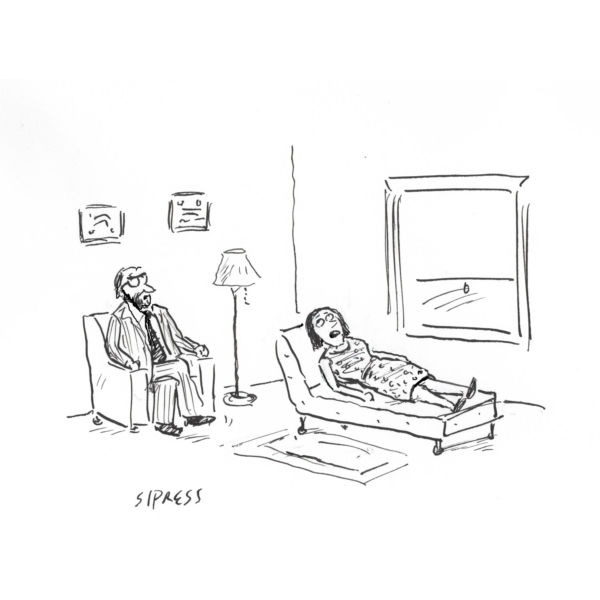
The American election is everywhere. I hate thinking about politics. It’s wrong to hate it because it is important. Whether you have an interest in politics or not, it has an interest in you. So it’s important to know what you think. This insanely funny cartoon is from The New Yorker:
asking-better-questions
“I had a dream that this election never ends and I never have to go back to worrying about my own problems.”

The kind of questions that seeing Clinton and Trump debating stimulates are all nasty. Who is lying? Who is lying more? How can we trust this person to be a president?
Asking these questions has me thinking in circles. A much better set of questions would be:
1. What future do we want for the world?
2. Who can help us achieve this future?
3. Do we have an election system that allows us to achieve this future?

The answer to the first question is muddled. The western world seems quite divided. With cracks in the EU and a painful election in the US, nobody is clear on what they want. The other two questions are simply worrying.

Doctors and social media

This post came out recommending things that doctors should and shouldn’t do on social media.

So the article sites these 5 things you should never post as a doctor on social media:
1. Inaccurate Medical Information
2. Anything that Violates Patient Confidentiality
3. Your Personal Information
4. Opinions on Controversial Issues
5. Complaints or Rants

doctors-and-social-media

Point 1 is universal. It has to do with due diligence and integrity, not with being a doctor. Point 2 – about patient confidentiality – is sacred. 100% agreed.

My questions is:
Must a doctor always continue to be a doctor on social media?

A doctor isn’t a public figure – with a few notable exceptions. Doctors don’t have a responsibility to treat every interaction with another human being (including virtual interactions) like they are consultations with a doctor. Anybody who perceives it that way is misguided. The same way you don’t expect a lawyer who sat down beside you in a coffee shop to give you bulletproof advice or a professional investor sat next to you on an airplane to tell you the next big stock – you shouldn’t expect a doctor to remain a doctor in non-medical situations.

The rules above are coming from a place of fear. While the above is probably meant as a recipe for an easier life, it seems to put constricting expectations on doctors that will ultimately harm them and their patients.

As it stands, doctors aren’t outspoken enough about problems they face. They are the last to complain, the last to go on strike, the last to give their opinions on how their own system could be improved. What if they talk about their problems? Is it going to get controversial? Hell, yeah!

A propagation of fearful attitudes called for by the author of the linked article couldn’t possibly alleviate the global healthcare problems that we are all facing. Yes, information should be accurate and useless rants are… useless. However, given the extent to which doctors like to follow rules verbatim, it seems that the above rules (“don’t speak unless spoken to”) wouldn’t serve them well in the long run.

What is the difference between skill and talent?

I was just reading my Myers-Briggs profile. I am convinced that I was born without whatever innate social skills most people are born with, my parents aren’t the most popular people, I am an only child – and was a sickly one and so had to be at home a lot. What a constellation. The house pet we had was a cat, so that was of no help (except understanding that being cute leads to cuddles). However, I pursue social skills – watch people who are charismatic and have gravitas, read about it, think about it and pay attention. Fundamentally, I think social skills are about paying attention to the people you are with.

what-is-the-difference-between-skill-and-talent-mindfulness

I think Johnny Depp is one of the most charismatic people on the planet. There are plenty of people who are even better looking that Mr Depp. In fact, he looks sort of niche, sort of ethnic, even though he’s not. Why do men, women and children swoon after him? I think it’s down to the way he acts – make sure that everyone around him feels good. Perpetually self-depricating and vulnerable. I believe that this too is an act – after all, he is a phenomenal actor. Having watched a huge number of interviews with him, I’ve noticed a few hints at the value he puts on being liked. So, he’s not just a genuine guy with a beautiful face – he’s a genius psychologist. Tip: if you want to see an interview with someone, check if Larry King interviewed that person – he is exceptional at getting people to open up.

Back to Myers-Briggs. As an ENTP, I cannot handle repetitive tasks and routine. If there are no decisions to be made, no alternative routes to be explored – I get bored. Then I thought of the cliche – repetition is the mother of skill. So… does this mean I am going to be useless? I think not. Ray Dalio is a well-known ENTP who is particularly outspoken about what he believes. He says that you can always get other people to do the *doing*, but you have to the one doing the *thinking*. Is thinking a skill? Am I good at it because I do it so much? Thinking, done right, certainly does not feel repetitive. Is it a talent?

Talent is something you are born with. Skill is something you acquire. I don’t think anybody ever taught me to or encouraged me tho think, yet it happens anyway. So maybe, skill is something we don’t inherently want to do. Entropy is always going against skill. Skill benefits from volatility and change, for sure, but within pretty narrow limits. Talent, I think, is far more antifragile, gaining new incarnations as the world around us changes.

Do we really need women role models?

I have never bought in to the radical feminism that is all around us. However, today, for the first time, I realised something: we do actually specifically need women role models – for a particular reason.

women-role-models-mindfulness

The way we learn seems to come from our ability to mimic. From Aristotle to Kurt Vonnegut, to the modern self-help industry, they all agree that we learn by modelling people. I think that toddlers learn to walk at least in part because they want to be like everyone else abound them. So it doesn’t matter to them how many times they fell on their a*s. Same thing with language. Monkey see – monkey do. That’s what learning is about. That’s why doctors in training shadow more experienced doctors. However, as is the case with toddlers, we learn just by being close to something – without necessarily having chosen to do so. It’s like walking into a room full of people who are laughing at something – it is hard to stop yourself from smiling, even though you have no reason to laugh and feel really awkward now! That’s why we become the average of the five people around us.

The clincher is in the fact that it is much easier to learn from someone who you can relate to more easily. When I heard Arianna Huffington speak about her career, it just made so much more sense to me than when I heard countless other men. It’s not that I didn’t learning anything from men – far from it. However, seeing women in business is life-affirming and whatever it is that my brain saw in this woman that I am not even aware of – I feel that it really made a difference. It added certainty. It’s not that I don’t get inspired by male role models, but there was this added “if she can do it – I can do it too.”