How to stop worrying about things that may never happen?

After blogging for less than a week, I am getting contacted by the audience – this makes me so happy! J. wrote:

I’ve recently started meditating and practicing mindfulness. I downloaded a couple of apps to help make it apart of my daily routine, but still have fears if I’m “doing it properly.” I guess this is a normal fear for most people starting out but I tend to overthink things that are seemingly out of my control. I’ve had this problem for as long as I can remember, dating back to my adolescence. I suppose my question to you is, how do we stop worrying about things and situations that are probably never going to happen?

The first thing that comes to mind is one of my favourite quotations from Mark Twain: “I am an old man and have known a great many troubles, but most of them never happened.”

Even the way J. phrased the question is so interesting: how do we stop worrying about things and situations that are probably never going to happen? Clearly J. cognitively understands  that his fears are unfounded: the things he fears are probably never going to happen. However, intellectually understanding something doesn’t always help us feel it. Depending on your personality, it may of may not be possible to outthink a feeling. As an ENTP, I only require a conscious realisation to change the way I feel. The answer is always within us.

What does worrying do for us? Why are we so addicted to it? How do we manage to continue to worry even though it hurts so much? The answer is that on some level we believe that worrying is better than not worrying. How can worrying be better? It is better because it keeps us safe. In a sense, it makes us feel like we are in control. If we are always looking out for what can go wrong – bad things are less likely to happen. This is a likely core belief for someone who worries a lot. Our brains are evolved for fear: fear is the software that keeps us safe. As a species who is only 200,000 years old and whose conditions have changed so starkly in the last few hundred years (food is more available and sabre-toothed tigers aren’t that common), we haven’t managed to change this core software of fear. Fear is our friend. It has kept us alive as a species. There comes a point where it just isn’t feasible to keep budgeting for the downside. Once you are prepared, once you have addressed everything that is in your control, that’s it. Fear is no longer useful (we’re not taking about survival situations).

how to stop worrying about things that may never happen

Seneca’s letters are incredibly helpful when it comes to dealing with anxiety in my experience. The thought of reading or listening to an Ancient Roman philosopher is daunting, but it is surprisingly approachable. Seneca wrote a bunch of letters to Lucilius – and these letters are often regarded as a key text in stoic philosophy. They read like a reddit post though! Letter XVIII. On Festivals and Fasting talks about putting yourself in controlled situations that you fear. It’s not about leaving your comfort zone or skydiving if you are afraid of heights. It is considering: what is the worst case scenario. The outcome is that you become less afraid.

It is easier to believe something when you see it. Everyone has friends who are chill no matter what happens – they are the people you want to spend more time with. Maybe that’s not possible, but you have the internet – lot of bloggers, youtubers etc, who laugh in the face of fear – people who do extreme sports, etc. Seeing that another point of view exists is always helpful in getting out of a rut.

You can also play word associations with yourself. No thinking allowed. Just blurt out the very first thing that comes to mind. Say fear – what would you say next?  I was very surprised when I did this exercise. The first thing that came to me was abandonment. Fear of abandonment is a very real thing. Cognitively, I thought that I would be afraid of not achieving certain goals. What bubbled up in this interesting exercise was that I was afraid for my relationships. It didn’t make cognitive sense before it happened, but when it did – it gave me a huge insight into a whole part of my life I was hiding from.

How does mindfulness make this better? It allows these fears to crystallise – when fears are less vague, they are easier to handle. It allows things that we are hiding from to bubble up and be dealt with. And of course worrying is a habit. It requires certain pathways to strengthen. By directing what your mind is doing, it is easier to replace the worrying habit with something much more productive. Scientific evidence that I will go through another time supports the idea that mindfulness helps with anxiety.

Some philosophers and psychiatrists believe that we only have two fundamental emotions: fear and love. It doesn’t make much sense at the start, but on reflection: what is anger? It is fear that someone is crossing your boundaries. What is regret? It is fear that you missed out. What is sadness? It is fear that life will never be this good again. The ultimate fear is that we aren’t deserving of other people’s love, that we’re not good enough.

In that vein, the only way to deal with fear is to focus away from it – onto something else. Instead of asking what can go wrong, ask how can I make it better? Instead of asking how do I avoid peril, ask how can I get what I really want? Instead of asking how do I stop worrying, ask how do I help my friend stop worrying? Our brains will probably default to looking for sabre toothed-tigers, unless we ask the right questions.
Sporadic rewards

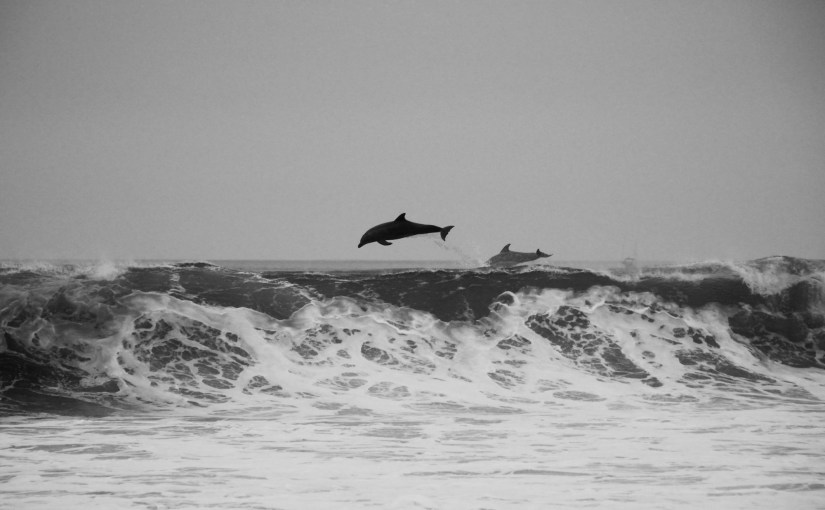
There’s an interesting psychological phenomenon observed in dolphins. Dolphins a particularly high ratio of brain size to body size. As humans, we are behind them. Generally, intelligence correlates to this metric, hence the claim that dolphins could be more intelligent than humans.

meditation techniques and accessories

When a dolphin does a trick you like – you positively reinforce it by giving him a treat. Rinse and repeat. A bit of operant conditioning never hurt anybody. However, to be clever about it, the trainer then gives the dolphin a treat only when the dolphin jumps especially well – let’s say higher, through a hoop, whatever. The trainer creates an understanding in the dolphin’s head that he must not just jump but give it all he’s got. The way this works best is when the trainer only rewards the dolphin sporadically. The dolphin isn’t quite confident he will always get the reward. This creates the infamous gambling-like anticipation. Does this remind you of anything? I think it is quite reminiscent of how managers assign promotions.

Bain & Co summarised the conventional thoughts on behaviour modification here. They got the basics down, but they preach that behaviour are modified best when the rewards are likely, immediate and positive. I guess likely doesn’t mean certain. The science behind this relates to how dopamine is released in response to anticipation, not reward. If the reward is uncertain – that causes more dopamine, hence the effect.

In short, if you want someone to always give it their best, be a tad sporadic with your rewards.

What mindfulness teaches you

I had a really hard time trying to do mindfulness last night. It took me a good 30 minutes to even get into my first proper breath that I could focus on. This is unusual for me. At this point I’ve been a pretty decent meditator for about 1.5 years.

What was it? Procrastination. Why? Falling asleep and meditating is effort. It takes effort to not go down 10 million rabbit holes. Saying no is more difficult than it may initially seem. However, it is completely necessary. Focus is the mother of execution. The only way to execute is by focusing on one thing at a time. It’s unitasking. Even if it seems like you are multitasking: you are only ever doing one thing at any given time – just switching more often than you think. Multitasking is a form of hiding: if you fail, you had “so much going on.” Whereas if you are working on just one thing – you can’t really run and hide from it, it is staring you in the face.

The other thing that mindfulness teaches you is that it’s not how many times you fail, it’s all about getting back up on your feet. It doesn’t matter how many times your mind wanders. Every single time you bring it back – you got back up on your feet. The neural pathway that is responsible for bringing you back has just gotten that little bit stronger. It’s like a biceps curl for your focusing muscles.

Does it only do focus? No. It also gives breadth somehow. There’s a technique called noting. So when a memory comes in: you say memory. A plan, an idea, a fantasy, an itch, a dart of pain, a noise and so on. Identifying things helps to deal with them.

Once I was able to get past the initial wall of procrastination and actually went and did it, straight away – I got an amazing reward. I saw the sky as cloudy and then my mind just shifted to the other side of the clouds – where is was sunny and still. Maybe this was just a really small hypnagogic hallucination, but it gave me an insight. Cognitively, it is such an obvious thing: we all know that things have different meanings depending on what side you look at them. To really feel it, to really internalise the meaning of this is something much deeper.

Asking better questions

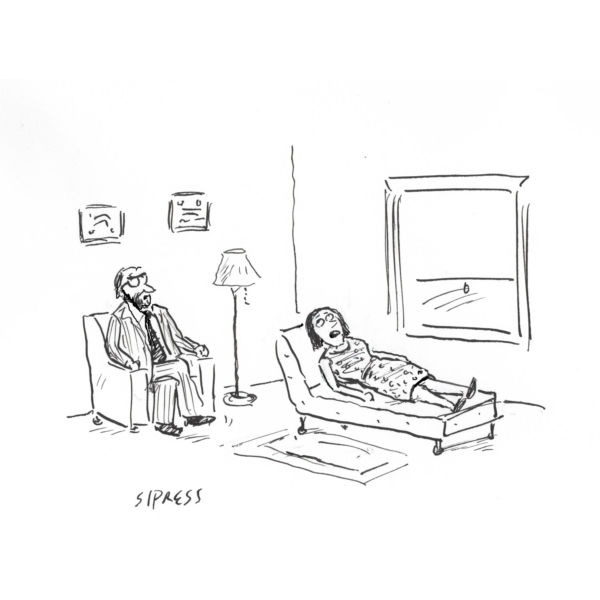
The American election is everywhere. I hate thinking about politics. It’s wrong to hate it because it is important. Whether you have an interest in politics or not, it has an interest in you. So it’s important to know what you think. This insanely funny cartoon is from The New Yorker:
asking-better-questions
“I had a dream that this election never ends and I never have to go back to worrying about my own problems.”

The kind of questions that seeing Clinton and Trump debating stimulates are all nasty. Who is lying? Who is lying more? How can we trust this person to be a president?
Asking these questions has me thinking in circles. A much better set of questions would be:
1. What future do we want for the world?
2. Who can help us achieve this future?
3. Do we have an election system that allows us to achieve this future?

The answer to the first question is muddled. The western world seems quite divided. With cracks in the EU and a painful election in the US, nobody is clear on what they want. The other two questions are simply worrying.

What is the difference between skill and talent?

I was just reading my Myers-Briggs profile. I am convinced that I was born without whatever innate social skills most people are born with, my parents aren’t the most popular people, I am an only child – and was a sickly one and so had to be at home a lot. What a constellation. The house pet we had was a cat, so that was of no help (except understanding that being cute leads to cuddles). However, I pursue social skills – watch people who are charismatic and have gravitas, read about it, think about it and pay attention. Fundamentally, I think social skills are about paying attention to the people you are with.

what-is-the-difference-between-skill-and-talent-mindfulness

I think Johnny Depp is one of the most charismatic people on the planet. There are plenty of people who are even better looking that Mr Depp. In fact, he looks sort of niche, sort of ethnic, even though he’s not. Why do men, women and children swoon after him? I think it’s down to the way he acts – make sure that everyone around him feels good. Perpetually self-depricating and vulnerable. I believe that this too is an act – after all, he is a phenomenal actor. Having watched a huge number of interviews with him, I’ve noticed a few hints at the value he puts on being liked. So, he’s not just a genuine guy with a beautiful face – he’s a genius psychologist. Tip: if you want to see an interview with someone, check if Larry King interviewed that person – he is exceptional at getting people to open up.

Back to Myers-Briggs. As an ENTP, I cannot handle repetitive tasks and routine. If there are no decisions to be made, no alternative routes to be explored – I get bored. Then I thought of the cliche – repetition is the mother of skill. So… does this mean I am going to be useless? I think not. Ray Dalio is a well-known ENTP who is particularly outspoken about what he believes. He says that you can always get other people to do the *doing*, but you have to the one doing the *thinking*. Is thinking a skill? Am I good at it because I do it so much? Thinking, done right, certainly does not feel repetitive. Is it a talent?

Talent is something you are born with. Skill is something you acquire. I don’t think anybody ever taught me to or encouraged me tho think, yet it happens anyway. So maybe, skill is something we don’t inherently want to do. Entropy is always going against skill. Skill benefits from volatility and change, for sure, but within pretty narrow limits. Talent, I think, is far more antifragile, gaining new incarnations as the world around us changes.

Psychopathy vs control of emotion

I recently learnt that I have the val-val variety of the COMT gene. This piece of information means I respond to stress pretty well – the weight I attribute to it is tiny, but it is also characteristic of the ENTP personality type, so I will roll with it.

psychopathy-vs-control-of-emotions

Looking at other women freaks me out sometimes – they are so emotional. Everything seems to matter. I feel like I have the full range of emotion, but being around these super intense women sometimes makes me feel like either a man – or a psychopath. I just can’t relate – and it makes me feel isolated. Furthermore, I never thought of myself as being super-empathetic (though I still cannot watch A Christmas Carol even without crying.) So I don’t know what to make of it and am starting to wonder if I am a tad psychopathic.

Controlling emotion, being aware of emotion and using it rather than allowing it to use you is fundamental to getting anything done. I struggle sometimes to understand the difference between controlling emotion, suppressing emotion and being a psychopath. In the words of Robert Frost, the only way out is always through, but sometimes it seems that the drama just passes me by.

So let’s say someone hurls an insult your way.

A number of things can happen:

A. You feel that the only thing you can do is react. [Stupidly reactive]

B. You are in tune with your emotions, you will feel the anger as a response within you. Having this awareness will allow you to then decide: ok, there has been an insult, now I feel angry, but what am I actually going to do? [Zen master]

C. You know that this person’s opinion isn’t everything, so you don’t care, so you don’t get angry. You respond is an entirely calculated way. [? Psychopath]

D. You feel the anger, feel offended, but you are the bigger person, so you delay the response – and think of a way to respond while feeling vulnerable and under attack. [Suppressing emotions]

B and C seem like good options. The problem with C is that most people would regard it as psychopathy. But what if you control your emotions from a cognitive perspective? If you develop a belief that a person’s opinion isn’t important – that’s not psychopathic. And the fact that it diminishes your emotional response to the point of not existing – is also understandable. As a baby you could be afraid of the loud noise that the hoover makes, but when you get a little older – you understand that there’s nothing to be afraid of, and so the fear that had previously made you cry – goes away. Similarly, not every person is entitled to an opinion on every subject. **A conscious decision to not care with good reason is different to being someone who is unable to care, i.e. a psychopath.**

Do we really need women role models?

I have never bought in to the radical feminism that is all around us. However, today, for the first time, I realised something: we do actually specifically need women role models – for a particular reason.

women-role-models-mindfulness

The way we learn seems to come from our ability to mimic. From Aristotle to Kurt Vonnegut, to the modern self-help industry, they all agree that we learn by modelling people. I think that toddlers learn to walk at least in part because they want to be like everyone else abound them. So it doesn’t matter to them how many times they fell on their a*s. Same thing with language. Monkey see – monkey do. That’s what learning is about. That’s why doctors in training shadow more experienced doctors. However, as is the case with toddlers, we learn just by being close to something – without necessarily having chosen to do so. It’s like walking into a room full of people who are laughing at something – it is hard to stop yourself from smiling, even though you have no reason to laugh and feel really awkward now! That’s why we become the average of the five people around us.

The clincher is in the fact that it is much easier to learn from someone who you can relate to more easily. When I heard Arianna Huffington speak about her career, it just made so much more sense to me than when I heard countless other men. It’s not that I didn’t learning anything from men – far from it. However, seeing women in business is life-affirming and whatever it is that my brain saw in this woman that I am not even aware of – I feel that it really made a difference. It added certainty. It’s not that I don’t get inspired by male role models, but there was this added “if she can do it – I can do it too.”