Book Review: The Elephant in the Brain

Trying to decide whether I will like this…

This is a very good video by one of the authors.

Update:

  1. The book seems to support the hypothesis that we do things because of the signal it sends to other members of our species about us rather than for the direct, obvious reason. The authors appear rather non-committal about it, at the same time.
  2. I preferred watching a one hour video to reading an Oxford University Press book. Times are changing, indeed! Having said that, my motivation (as far as I can tell) wasn’t just laziness, but also tiredness from the whole behavioural econ/bias stuff after it was that was so brilliantly explored by Kahneman and the fact that this is a recent book, in a time when I would prefer to read something more tested 😦

TheZvi's avatarDon't Worry About the Vase

We don’t only constantly deceive others. In order to better deceive others, we also deceive ourselves. You’d pay to know what you really think.

Robin Hanson has worked tirelessly to fill this unmet need. Together with Kevin Simler, he now brings us The Elephant in the Brain.

I highly recommend the book, especially to those not familiar with Overcoming Bias and claims of the type “X is not about Y.” The book feels like a great way to create common knowledge around the claims in question, a sort of Hansonian sequence. For those already familiar with such concepts, it will be fun and quick read, and still likely to contain some new insights for you.

Two meta notes. In some places, I refer to Robin, in others to ‘the book’. This is somewhat random but also somewhat about which claims I have previously seen on Overcoming Bias

View original post 9,383 more words
Being motivated isn’t pleasant

“It’s never as good as it looks and it’s never as bad as it seems.”

The 16-17 year old students I work with often ask me how to get more motivation.  They believe that it is some kind of fairy dust capable of turning you an accomplishment-machine, realising all your potential and aiding you in changing the world.

Perhaps. They forget that motivation resembles hunger. You may feel energetic but also increasingly agitated, nauseous and sore. Your mind is focused on getting your gullet filled, that’s it. You feel unsettled and uncomfortable. You feel anxious as you mightn’t last long enough to find food. You think of all the different ways to satisfy the hunger – doing nothing is just not an option.

Being motivated isn’t pleasant.

Sometimes, we all feel excitement at a new beginning, at how much we are going to accomplish. This pleasant sensation differs from what I would call motivation. We all need such an elated state sometimes to carry us through, but we borrow it from the emotional bank and will have to pay it back with interest. This loan covers over the obstacles that will get in our way and helps us to get started. If you want to feel elated, all you need to do is ignore reality.

Not a sustainable solution.

I think all productive people oscillate between feeling hungry and transiently being satisfied with what they accomplished.

https://www.instagram.com/p/BdOyZO0h5fw/


September to December in review

As 2017 comes to a close, it is time to reminisce, review and plan.

In September, I set out to do the wonderful things highlighted in bold.

A recount of what actually happened.

  • “add photos of me to this blog and make it more personal”
    • I added just a few personal photos.
    • Lessons:
      • Most of the time I don’t carry a proper camera and iPhone pictures aren’t that hot in my uninitiated hands.
      • I spend a lot of time in my office at home. It’s just not a very portraitogenic environment.
    • I think I started writing more personally. I also changed the name of the blog to my own name. This makes me very happy.
  • “instead of only making a list of what I plan to do the next day, start also writing a list of things I accomplished today”
    • I did this for a little while and gave up.
    •  Lessons:
      • It’s super useful when I felt like I’m not making progress despite all my efforts. It showed me just how much I am actually doing and helped me understand its relevance. However, on days when I feel like all is good anyway, it just felt like another chore.
      • A little trick occurred to me while doing this: I would write things in a numbered list and circle the number when it is something I did and I would put a square around the number when it is something that happened to me. This was probably the biggest source of insight.
  • “do a basic course in coding (xhtml? html5?) and see if I want to continue with it”
    • I did a super basic Khan Academy course in html. Frankly, I had done most of this in primary school. It didn’t particularly ignite a desire to learn more at this stage as I don’t have a purpose for it.
    • Buuut!… I found an easier way to change the features of my education website than going back to first principles of coding
    •  Lessons:
      • Learning for the sake of learning may be fun, but not necessarily when it comes to html!
      • A solution to the practical problem I didn’t even realise was stimulating me to do this in the first place can jump out from the good old academic approach, i.e. books are great nutrition for bookworms, “play to your strengths”, etc.
  • “sort out my car”
    • That’s a work in progress. I am relying on other people to help me with this as I am not very passionate about cars. It’s just a utility to me.
    • Lessons:
      • I got quite disheartened when I asked for help and didn’t get immediate results. After all, do I ask that often, ffs?! It made me feel like people abandoned me. This isn’t a closed chapter yet, but I suspect that I need to cut others more slack. There have been countless situations when I worked and worked and worked – but the results came in all at once, not in a stepwise manner in proportion to my work. This must happen to others too. See point about a list of things I accomplished today above.
  • “bring Mam to the theatre”
    • Complete fail on this front, however, I did a load of other things with my mom which I think sort of makes up for it.
    • Lessons:
      • Planning sucks sometimes.
  • “go on a short holiday”
    • Tick!
      • Proof: here is me with the river Volga in the background. This river would have been a big deal for my ancestors, I imagine.

Processed with VSCO with m5 preset

  • “go to the gym at least 40 times”
    • Yeah right. I only managed 23 in September, October and November. This still means gym every 3-4 days. Oh well, should have been more realistic!
  • “read 3 books”
    • I shouldn’t have badmouthed Taleb, The Black Swan is really good past the nauseatingly familiar first 150 pages or so.
    • The Handmaid’s Tale was underwhelming
    • Boris Akunin’s Love for History and Photo as a Haiku were also rather underwhelming (published in Russian).


Adulthood as a social construct

This article in the Atlantic posits that adulthood is a social construct.

Any time I’ve heard the term social construct, I’ve been skeptical.

This time, the expression seems to have touched me.

Perhaps, that’s just a reflection on me being a millennial in her late twenties yet to produce any offspring. Any excuse to feel better.

But perhaps, it is actually somewhat true. The article highlighted having children and financial independence as the keys to adulthood.

Of course, independence is a key part, but it wouldn’t be fair to say that the elderly or the infirm who need additional support aren’t adults.

For a wild Homo sapiens, independence would have had more to do with physical strength and mental agility. For a modern Homo sapiens, independence is more about convincing other homos that this homo can be useful to them.

Independence is a social thing by definition, where other human beings perceive that they depend on you no less than you depend on them – and the more they feel that they depend on you, the more they will be willing to pay, subject to demand and supply.

At the same time, the most independent of our ancestors depended on other people too: someone had to keep the fire lit, share the food etc. But I am not sure that back then there was such a thing as independence as we understand it today. There was no office you could go to that would tell you whether you are above or below a certain line.

Were the males in their prime really independent? It seems that they would have had a high chance of being killed if they were seen by members of another tribe. Today, the equivalent man can arrive in another tribe and work for Google, etc.

As for the children part, the biological part is perhaps less important to becoming an adult than the act of caring and taking responsibility for another human being – which is also entirely social.

Thank you everyone for a fantastic blogging year – I gladly we are now 1500 strong. I wish you all a happy holiday season 🌲❤️

Happy Christmas, everyone!

Some December highlights:

IMG_7904.JPG
Santa’s train in Connolly station
IMG_8194.JPG
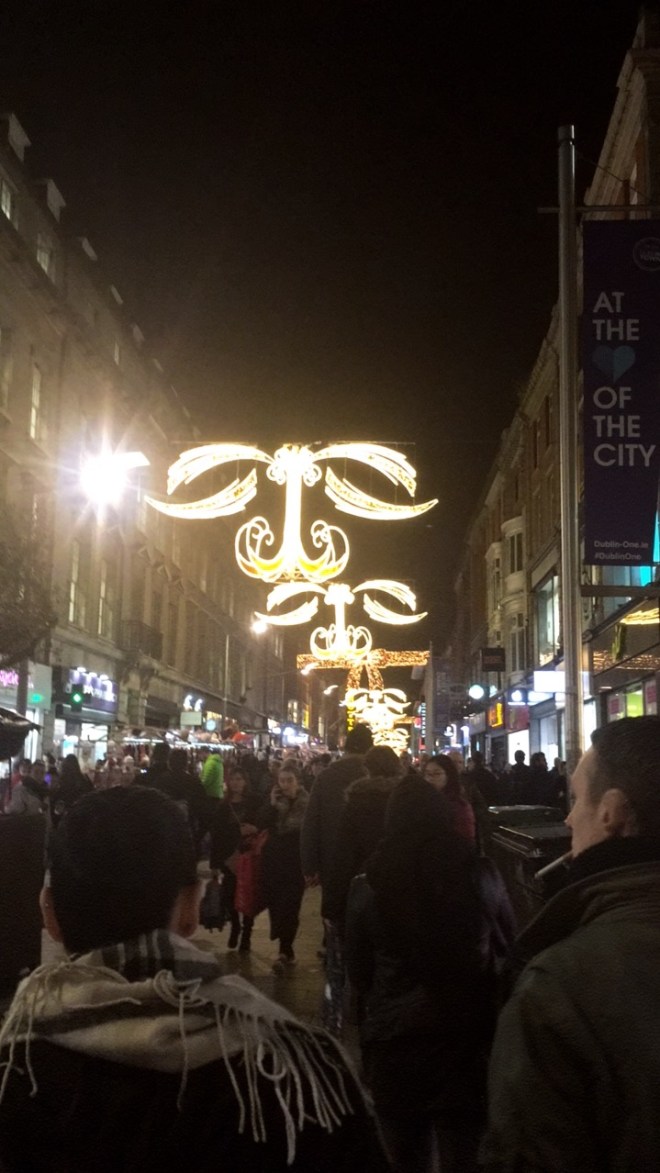
Peculiar-looking Christmas decorations on Henry Street
IMG_8225.JPG
DIY, the festive edition


IMG_7868.JPG
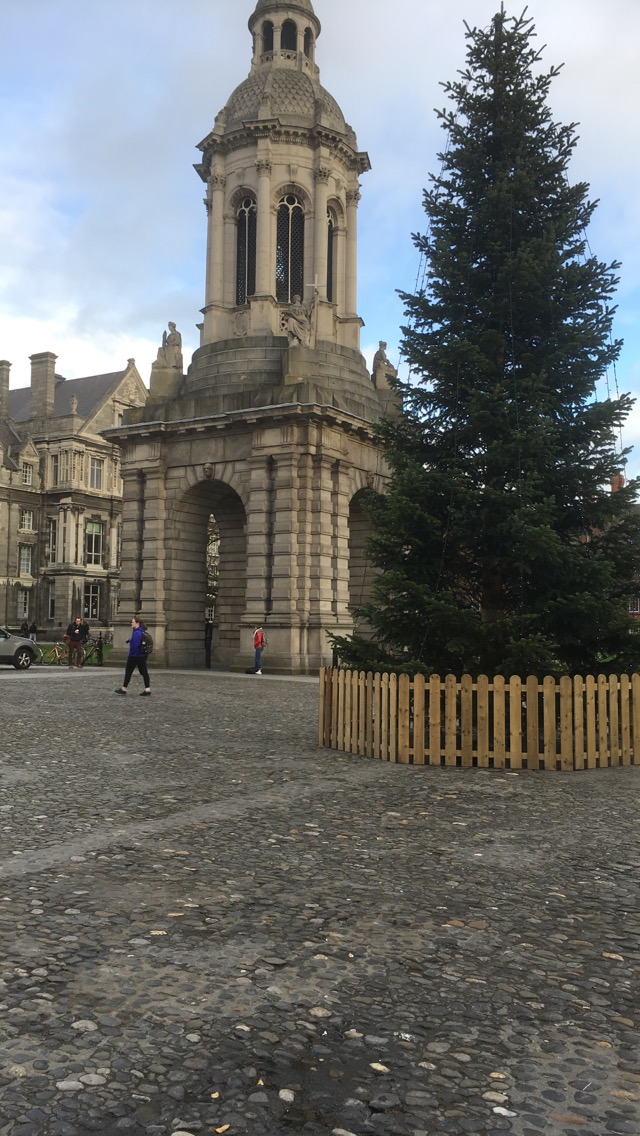
Trinity looking well at Christmas
IMG_8135.JPG
House parties look different when the older generation is involved
IMG_7824.JPG
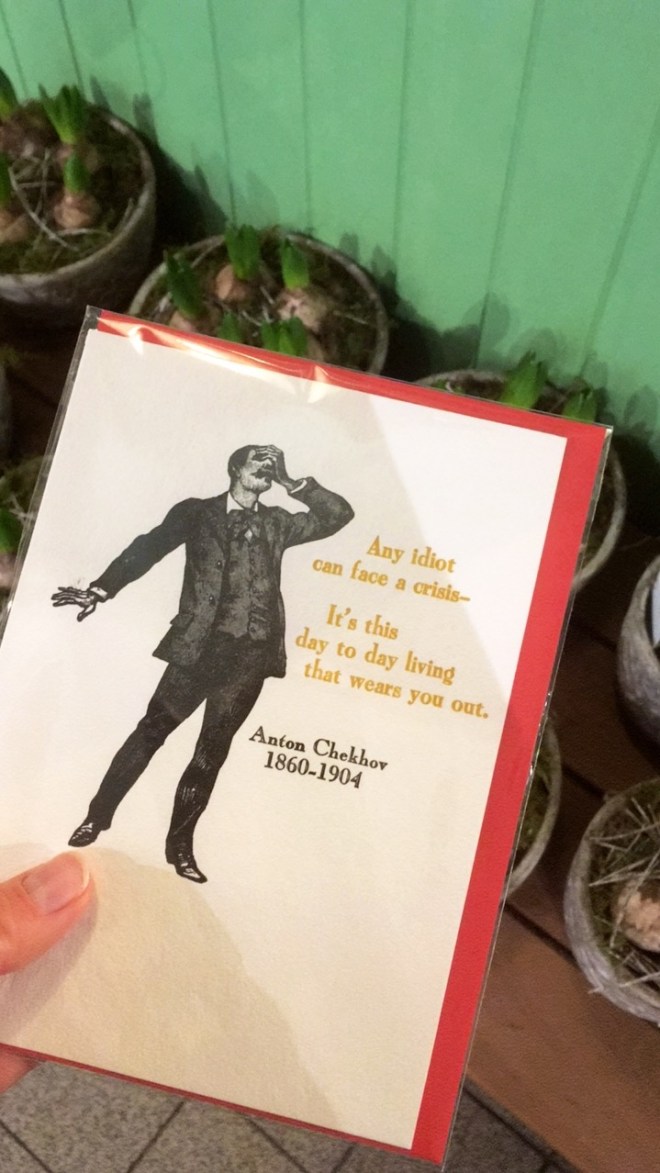
A wrongly attributed statement sold as a Christmas card in a posh garden shop
IMG_8206.JPG
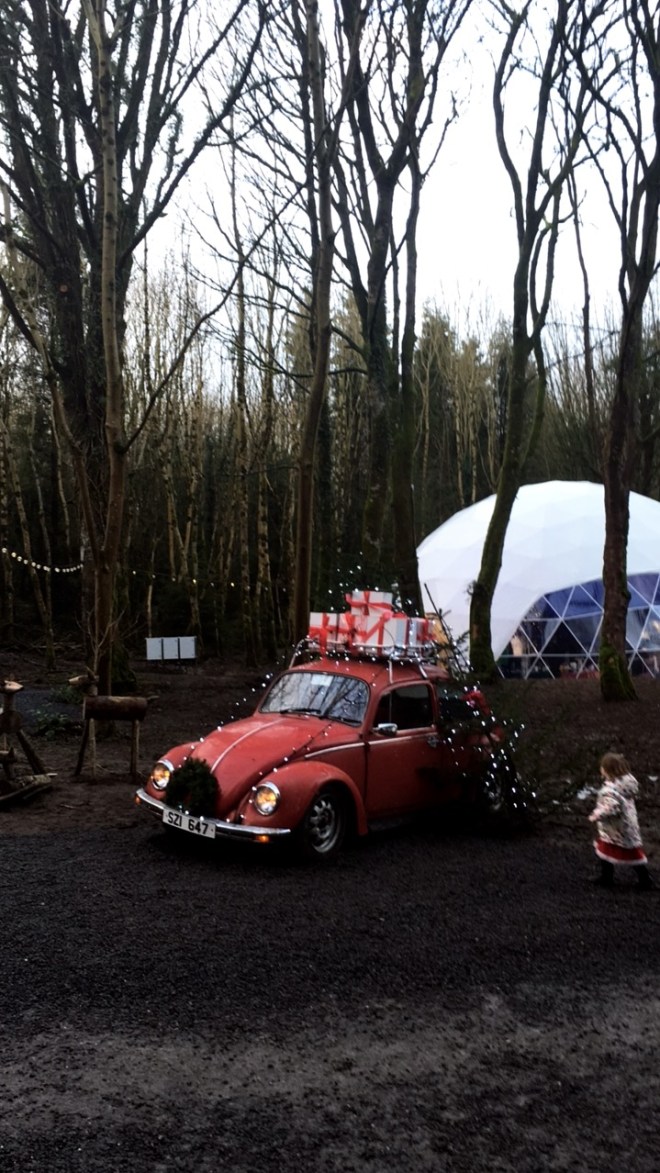
Harry Potter-y car with a matching child


Isn’t poetry the most magical form of expression?

Pangur, white Pangur, How happy we are
Alone together, scholar and cat
Each has his own work to do daily;
For you it is hunting, for me study.
Your shining eye watches the wall;
My feeble eye is fixed on a book.
You rejoice, when your claws entrap a mouse;
I rejoice when my mind fathoms a problem.
Pleased with his own art, neither hinders the other;
Thus we live ever without tedium and envy.

– an translation of an Irish poem written by a monk around the 9th century

P.S. I just made a guide to D.H. Lawrence’s poems as part of my educational platform, but I am missing one called Baby-Movements II, “Trailing Clouds”. I wasn’t able to find in Trinity’s library, so don’t even know where to look! If anyone has seen such a thing, please send it to me! (It’s not copyrighted at this stage.)

Do you read any poets yourself? Any modern ones? Recommendations are welcome 🙂

🕵️‍♂️ 📲 🕵️‍♀️

Edward Snowden developed a physical (anti-)spying app. Maybe you would like to install it if Aunt Minnie is staying with you over Christmas.

Interestingly, it’s only for Android. It’s a strange idea as it involves you not having your phone on your person.

Snowden has also said that he doesn’t carry a smartphone. I guess if I were him, I wouldn’t either.

Best films lists

Christmas is the time to watch awesome films. One instinctively searches for the “best films ever made” lists. I was fascinated by the virtual irrelevance of the films on the Wikipedia page. IMDb has a much better listing, in my view.

Chinatown: what an amazing film.

Jack Nicholson looked entirely different when he was young. I don’t think I’ve ever seen someone who changed so much with time.

The ending broke my heart, so it’s not what you would call an uplifting Christmas film, but it’s so well made. A two hour film barely had any scenes that were in any way superfluous. It’s rare to see a film that has so much to offer as opposed to the current films that have deliberately protracted scenes of celebration or fighting near the end.

Don’t ask me how I ended up watching Daddy’s Home 2, but I was actually pleasantly surprised. This is 80% due to my low expectations and 20% due to a trace of honesty that managed to work its way into a Hollywood Christmas film.


Funny how we always fall for the narrative

Stop at Nothing: the Lance Armstong Story is a fascinating film. It follows Lance’s rise and fall from the early 1990s till his interview with Oprah.

What stood out the most to me was how the other athletes and their wives seem angelic compared to Lance when they are, of course, guilty of the same crimes. Funny how we always fall for the narrative.

The prevalence of Irish accents in the film is quite surprising.

It also made me think of Wikileaks. What a fascinating organisation in this day and age.