Roger Scruton on modern art

I came across this philosopher, Roger Scruton.

There are a number of things that scare me about him, not least his appetite for listing his awards on his landing page. The man who claims to be a philosopher has prioritised telling his visitors who has handed him medals and ribbons and when – over telling us what he believes. Oh well.

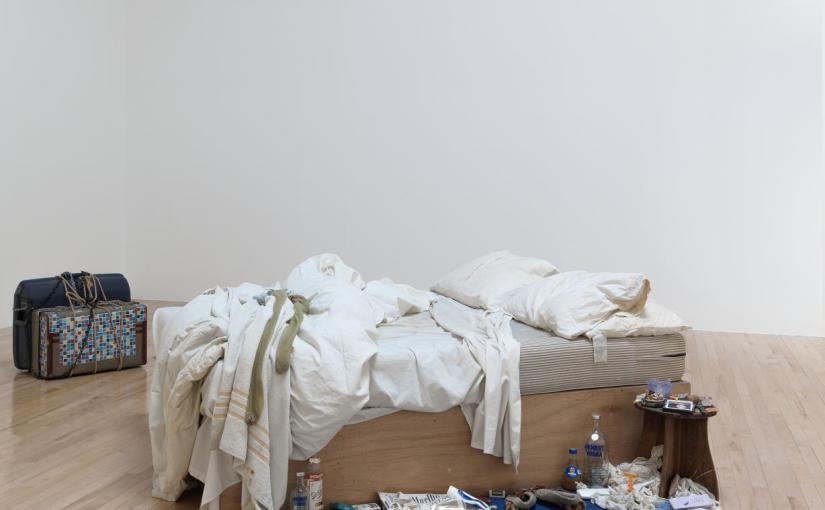
He has produced this interesting video on modern art. I believe that some of what is created today is art. Some of it is, in my view, so vacuous, and it is soul-destroying to see it being put on a pedestal.

Image: Tracey Emin, My Bed, 1998 via the Tate


Path dependence, Chekhov and control

Blogging resides on the boundary between personal and literary for most people.

I just read a heart-wrenching piece, and it’s impossible to comment on it because it is so personal, but for me, it is also impossible to walk past it without reflecting on it given how sorrowful it is.

Anton Chekhov said something that resonated with me:

“If I had left my family and handed them over to the mercy of fate, I would try to find an excuse in my mother’s inadequacy, in my TB, and so on. This is natural and excusable. This is just human nature.” (my translation)

I think the original blog piece is more about gender, but my point is more about sovereignty, a kind of independence from the past.

We are all functions of what we were yesterday, no doubt about it. My argument isn’t about outcomes, it’s about motives.

Our motives cannot be subverted and limited by what happened to us in the past. This doesn’t mean that we have unlearn what we learnt, but rather find the strength to learn even more about that little bit of space in this world where we do have some control.

Inci-dental findings

I have found 2 phenomenal dental things recently even though I wasn’t really looking:

Tepe easy picks

They’re basically like floss, only you can dip them into mouthwash, they don’t hurt and they clean really well. I use the orange ones because my teeth are a lil crowded.

These things are much better than their flagship interdental brushes that stick right into your gums if they’re not perfectly aligned (which is very hard if you’re cleaning the 7 and 8s). Even the smallest calibre of these is too big for me 😦

I also like dental harps. Basically, anything other than the Oral B Satin floss that all dentists seem to love, but I find really unpleasant.

Colgate’s deep clean toothpaste

Definitely the best commonly available toothpaste I’ve ever used.

As an aside, I also used this toothpaste from India that contains some magical herb – which seems to have had good results for me after my teeth faced a bit of a chemical/laziness attack.*

*Basically, I used to live in an apartment in Dublin city centre and work in a busy hospital. After a year of that, I went to the dentist to discover I needed a ridiculous amount of work. I couldn’t figure out why that was.

Fair enough, going around the hospital eating Milk Tray and Celebrations that patients kindly bring in to thank us the nurses isn’t helpful. I had to be up very early for work and I think I neglected to brush my teeth quite as diligently because coffee was a higher priority. But still, it just didn’t seem to explain the extent of my troubles.

So, I decided I wanted to measure the pH of the water supply. The easiest available method for me was a urine dipstick, so I went right ahead and dipped it. 5.5! No wonder my teeth were melting away!

Water pH has to be no less than 6.5 to be safe. Obviously, my measurement may have been artefact, because urine and water aren’t really all that similar. I asked my rocket scientist friends who work in labs if they had access to a way to measure pH. Those came back at around 7 and they gave me rocket-sciency explanations that basically when pH is around 7, you have to use some other method to measure pH to see how close it is to being deionised. A commercially available lab charged something like 400 euro, so I didn’t go with that.

I contacted the official water people with my concerns anyway. They got back to me quickly, to be fair, and told me that they have arranged to flush the area.

So, in line with the scientific method, I went back to my original testing method after the intervention. I urine-dipped it after the flushing – and it came back at pH of 7 – not 5.5. Go figure.

Anyway, I haven’t had any problems since – is that due to better water or to the magical Indian herbs? We will probably never know.

I am trying to figure out why it occurred to me to blog about teeth. Not the sort of subject that lends itself to producing a good long read. I think the reason is that my Image Experiment has demanded discipline. I have the work ethic of a horse, but my discipline may not be so so stellar. Who knew they were different things – and what you can discover when you have to put creme on your face everyday.


Being motivated isn’t pleasant

“It’s never as good as it looks and it’s never as bad as it seems.”

The 16-17 year old students I work with often ask me how to get more motivation.  They believe that it is some kind of fairy dust capable of turning you an accomplishment-machine, realising all your potential and aiding you in changing the world.

Perhaps. They forget that motivation resembles hunger. You may feel energetic but also increasingly agitated, nauseous and sore. Your mind is focused on getting your gullet filled, that’s it. You feel unsettled and uncomfortable. You feel anxious as you mightn’t last long enough to find food. You think of all the different ways to satisfy the hunger – doing nothing is just not an option.

Being motivated isn’t pleasant.

Sometimes, we all feel excitement at a new beginning, at how much we are going to accomplish. This pleasant sensation differs from what I would call motivation. We all need such an elated state sometimes to carry us through, but we borrow it from the emotional bank and will have to pay it back with interest. This loan covers over the obstacles that will get in our way and helps us to get started. If you want to feel elated, all you need to do is ignore reality.

Not a sustainable solution.

I think all productive people oscillate between feeling hungry and transiently being satisfied with what they accomplished.

https://www.instagram.com/p/BdOyZO0h5fw/


Critical thinking or empathy?

Another thought experiment, inspired by a conversation with this blogger*.

If you had to live in a world where, compared to this one, people had

A. 50% more critical thinking and 50% less empathy

B. 50% more empathy and 50% less critical thinking,

which would you choose?

I would choose A. I sometimes find myself in situations where I can barely talk to people who others consider “aww, they’re so nice!”… Makes me feel like I am a cold b*tch, but it is because these people would choose to live in A.

In B, you side with the first person you meet.

Empathy, today, is being used as a word for kindness, but it isn’t. Kindness is an outcome. Neither is empathy conflict-aversion. Some have began talking about effective altruism as an upgraded version of empathy. Problem is that effective altruism is as close to empathy as effective evilness. Empathy is just the ability to understand the feelings of another person. It leads to a congruent emotional response.*

People assume that once one understand how someone feels, one will immediately want to side with them. That simply can’t be.

Spite is the ultimate proof of this: you need to understand your opponent very well in order to be spiteful. The most spiteful are the most empathetic, not the most psychopathic. Psychopathy isn’t necessarily evil and empathy isn’t necessarily good.

Who is the most caring person in your life? Have you ever seen them being spiteful to anyone you know?

A resident of B wants better outcomes for people they feel a kinship with. In other words, they feel spite for people they don’t feel close to – there is no other way in a zero sum short term scenario. They are the ultimate tribalists.

An empathetic person with deficient critical thinking can never agree to disagree.

Good critical thinking is not exactly a solution to a lack of empathy. It’s virtually impossible to become part of a tribe if you’re a deficient in empathy. Critical thinking also loses its potency if you can’t understand the other guy’s feelings. The decision making process is much slower in an unempathetic person. A lot of problems, in short.

Daniel Goleman talks about how members of the “dark triad” become great at social skills because they learn the stigmata of common emotions which is a legitimate way around it for unempathetic people.

It’s like hardcoding vs proper code. Empathy is hard code: quick, unconditional and generally correct.

I know some people who are almost 100% empathetic, but I’ve never met anyone who has 0% empathy, which makes me think empathy is an older, more important trait (quick decisions, Kahneman’s system one, etc)

Obviously, you would prefer to be optimally capable at empathy and critical thinking, but if you had to choose, which would you choose?

Some other places talking about empathy:

The Atlantic, ViceThe Guardian

* I made the point that non-religious people can be “religious” about certain things, e.g. politics, e.g. in WW2. He made the point that it’s down to a lack of critical thinking.

** George F.  brought up the point that the definition of empathy is not only the understanding but the sharing of a feeling. I think that’s a step too far if taken literally. There is some intermediary step where a person can appreciate the feelings of another and either decide to take them as their own or else to revel in their misfortune. We don’t just literally take other people’s feelings as our own, we just get a good insight into them. The most empathetic of people would be rather harmful if they literally shared the feelings of someone in need of help.

A little thought experiment

You’re about to open results of psychological tests comparing atheists and agnostics. What do you expect to find?

I wonder if agnostics are more conflict averse, better at abstract thinking and have a sense of humour.

Also, how do atheists who have children deal with the concept of Santa? Santa is a real world conspiracy theory – and possibly a much more pagan one than a Christian one. I imagine that there has to be a “herd immunity” for the concept of Santa to survive in creches and primary schools. Do religious parents arrive at the door step of atheists and be like, stop your child from spreading heresy!..

P.S. It is snowing in Ireland. I was in the Midlands today and it’s a Winter Wonderland.

IMG_7942


Ordeal By Innocence

Presuming one’s innocence means presuming that the plaintiff’s lying. In certain cases.

The presumption of innocence works well when we don’t know who committed the crime. The paradigm breaks down when fighting over whether a crime was committed.

Whoever solves this philosophical puzzle will do a lot for justice. The current rules fail both the victims and the accused. And the bystanders – all the people who worked on “Ordeal by Innocence” whose work will never be recognised.

The BBC said Friday that it will not air upcoming Agatha Christie special “Ordeal by Innocence” while an investigation into actor Ed Westwick on allegations of sexual assault proceeds. Filming has been disrupted as well on another BBC series starring Westwick, “White Gold,” which is available on Netflix outside of the U.K. “Ordeal by Innocence” […]

via BBC Pulls Drama Starring Ed Westwick; Filming Disrupted on His Comedy Series ‘White Gold’ — Variety

Trying to be old

I loved how the sun lit up the windows of the ostentatiously classy restaurant come wine bar on St. Andrew’s Street in Dublin called Stanley’s. The bleached turquoise exterior with golden letters spelled understated chic.

A few doors down from the expensive Trocadero, the location seemed perfect for such a place.

It opened about 2 years ago. Today I found that it’s been replaced with a place called Kathmandu, a gerrish, bright orange Nepalese eatery. Full of people. 

Stanley’s was never full of people.

Why? Where did they go wrong? Where didn’t they go right, more like? The broadly positive Irish Times review and then another even more positive one? The perfect location? The classy interior in modern blues and grays? What more could people want?

Or is it maybe that classy is old-fashioned. Maybe these things don’t sell anymore.

I love old books, films, chandeliers, even houses. Often these things sell at a perplexing yet welcome discount.  Has it always been this way – that old things are cheap?

Writing up my list of the Christmas gifts I want to give, I realised that I strongly prefer older things. I think it’s from reading too many XIX century novels…

Which would you rather get for Christmas, a new iPhone or an antique chandelier? 

It turns out that the iPhone is about five times the price. This raises another point: did old things always go at a discount?

And finally, maybe that’s why Stanley’s closed down. Perhaps their bet was on people’s vanity, a desire for a classy place to shorten the protracted winters nights. But it never caught on.

Trying to be old without actually being old may be a hard sell. 

I am not Atlas, nor was meant to be

The New Year forces us to do a reality check. Accomplishments. Failures. Expectations. Sage books. Bad politics. Mistletoe. The CO2 from sparkling wine hitting you in the nose. Deep breaths and realisations. Shy wishes for the future.

The light and exciting feeling of starting something big pushes me on.

Coming to conclusions reminds me of herding cats. In a big dark room.

Conclusions lead to learning. I want to learn. Learning means order and understanding. Sometimes, stormy randomness prevents linear learning. What was it all for then I wonder? Just to be lived?

A sarky friend of mine calls this “the syndrome of searching for deeper meaning”, a disorder more prevalent in women. One step away from calling me a conspiracy theorist, the sneaky fk!

Why do I want to learn? To feel less pain by stepping on the same rake, as the Russians would say? I prefer the more subtle term, adaptation.

I resolve this by looking for ways to tame uncertainty. Work around it. Turn anxiety into excitement. Think probabilistically. Find people who have the same thoughts and dreams. Remember that I can always rely on myself.

My temptation to justify, to over-explain, to over-plan and catch that finer insight comes from a heightened, unhealthy sense of personal responsibility.

Aged 5, I fell and hurt myself during play. Nothing major. My grandmother came over. I expected her to help me up and console me. Hold me and tell me it’s all ok. She lifted me alright, but then gave out to me for not looking where I was going.

I think I am still running on that software. I always look for ways in which I caused what happened to me.

In some ways, it’s helpful. In others, I am Atlas with the weight of the world on my shoulders. Why haven’t I given up that horrible mentality?

Personal responsibility motivates like nothing else. It’s the fuel of making dreams come true, so it’s hard to give it up.

My learning from this is that feeling like Atlas is frighteningly egocentric. I am not Atlas, nor was meant to be. The world will keep on turning without my help.

What makes me want to bang my head against the wall is the obviousness of it all. Again and again, I arrive at these thoughts. However, it seems that understanding what is within my control is a daily exercise. Thinking about it every day is vital to being productive and at peace.

Meanwhile, I am building up my progress report from September to the end of November. Be ready with yours for 1 December 😉

Mood: T.S. Eliot

And indeed there will be time
For the yellow smoke that slides along the street,
Rubbing its back upon the window-panes;
There will be time, there will be time
To prepare a face to meet the faces that you meet;
There will be time to murder and create,
And time for all the works and days of hands
That lift and drop a question on your plate;
Time for you and time for me,
And time yet for a hundred indecisions,
And for a hundred visions and revisions,
Before the taking of a toast and tea.