Adult books for children

Do you think that certain books should be kept away from children?

I would generally have said no:

Freedom of speech! No to censorship!

Being in touch with reality is important!

It’s preparation for the real world!

But then I realised that as a teenager I’ve read a few of those books and sometimes I wish I hadn’t…

  1. Fowles’ The Collector. I still struggle to find the artistic value in it.
  2. Three Comrades – pretty dark. I guess given the amount of “white lies” we tell kids the disillusionment has to start at some stage, but there is something hope-shattering in this. Same as in Maupassant’s Bel Ami 
  3. Anthony Burgess’ Clockwork Orange.
  4. I won’t make many friends by saying I don’t like The Catcher in the Rye – and it fascinates me how it became popular among teenagers. Ew though.
  5. Lolita. Goes without saying.

When you think about it, Anna Karenina even is quite PG. Then again so is nearly all of Shakespeare. I think that it’s easier not to suspend disbelief with things written in super archaic or unfamiliar language – same with the Greek myths, hence they don’t hit as hard. Perhaps that’s the reason most of my books non grata come from the last 150 years.

Have you ever regretted reading a work of fiction?

Adulthood as a social construct

This article in the Atlantic posits that adulthood is a social construct.

Any time I’ve heard the term social construct, I’ve been skeptical.

This time, the expression seems to have touched me.

Perhaps, that’s just a reflection on me being a millennial in her late twenties yet to produce any offspring. Any excuse to feel better.

But perhaps, it is actually somewhat true. The article highlighted having children and financial independence as the keys to adulthood.

Of course, independence is a key part, but it wouldn’t be fair to say that the elderly or the infirm who need additional support aren’t adults.

For a wild Homo sapiens, independence would have had more to do with physical strength and mental agility. For a modern Homo sapiens, independence is more about convincing other homos that this homo can be useful to them.

Independence is a social thing by definition, where other human beings perceive that they depend on you no less than you depend on them – and the more they feel that they depend on you, the more they will be willing to pay, subject to demand and supply.

At the same time, the most independent of our ancestors depended on other people too: someone had to keep the fire lit, share the food etc. But I am not sure that back then there was such a thing as independence as we understand it today. There was no office you could go to that would tell you whether you are above or below a certain line.

Were the males in their prime really independent? It seems that they would have had a high chance of being killed if they were seen by members of another tribe. Today, the equivalent man can arrive in another tribe and work for Google, etc.

As for the children part, the biological part is perhaps less important to becoming an adult than the act of caring and taking responsibility for another human being – which is also entirely social.

Thank you everyone for a fantastic blogging year – I gladly we are now 1500 strong. I wish you all a happy holiday season 🌲❤️

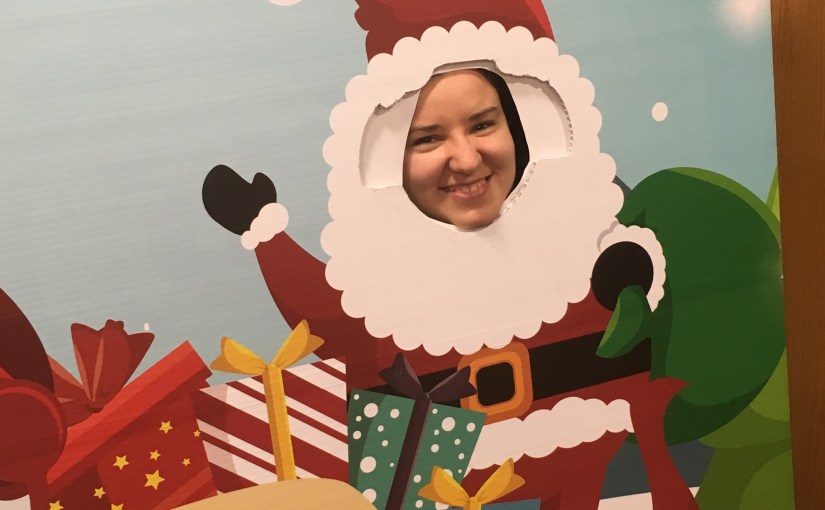
Happy Christmas, everyone!

Some December highlights:

IMG_7904.JPG
Santa’s train in Connolly station
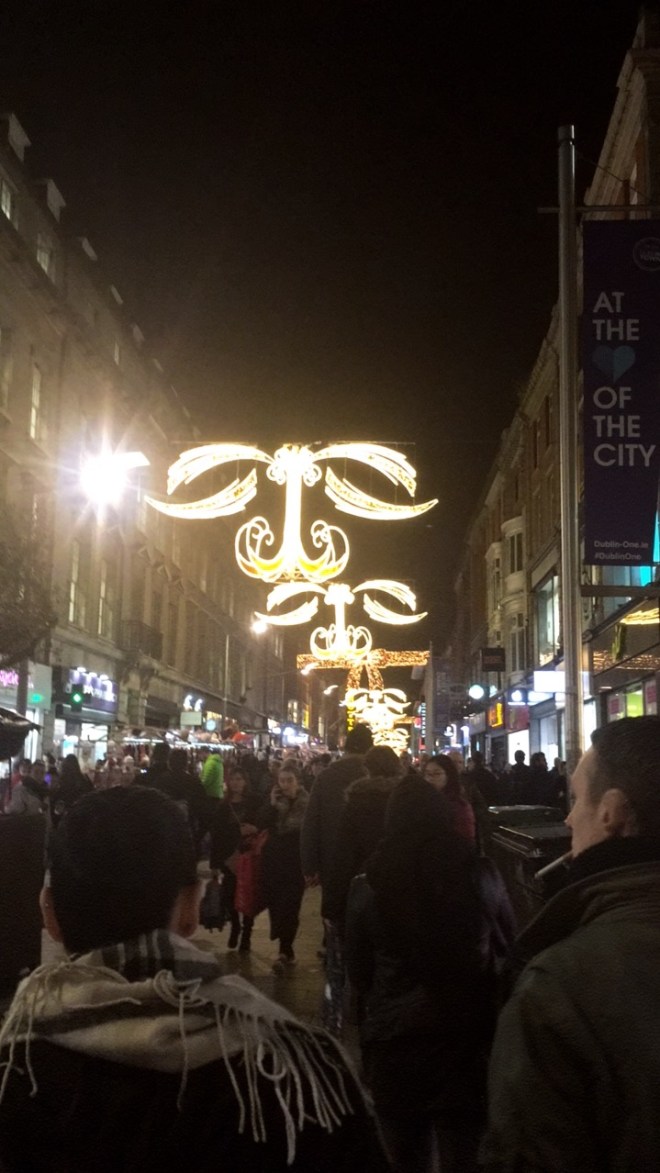
IMG_8194.JPG
Peculiar-looking Christmas decorations on Henry Street
IMG_8225.JPG
DIY, the festive edition


IMG_7868.JPG
Trinity looking well at Christmas
IMG_8135.JPG
House parties look different when the older generation is involved
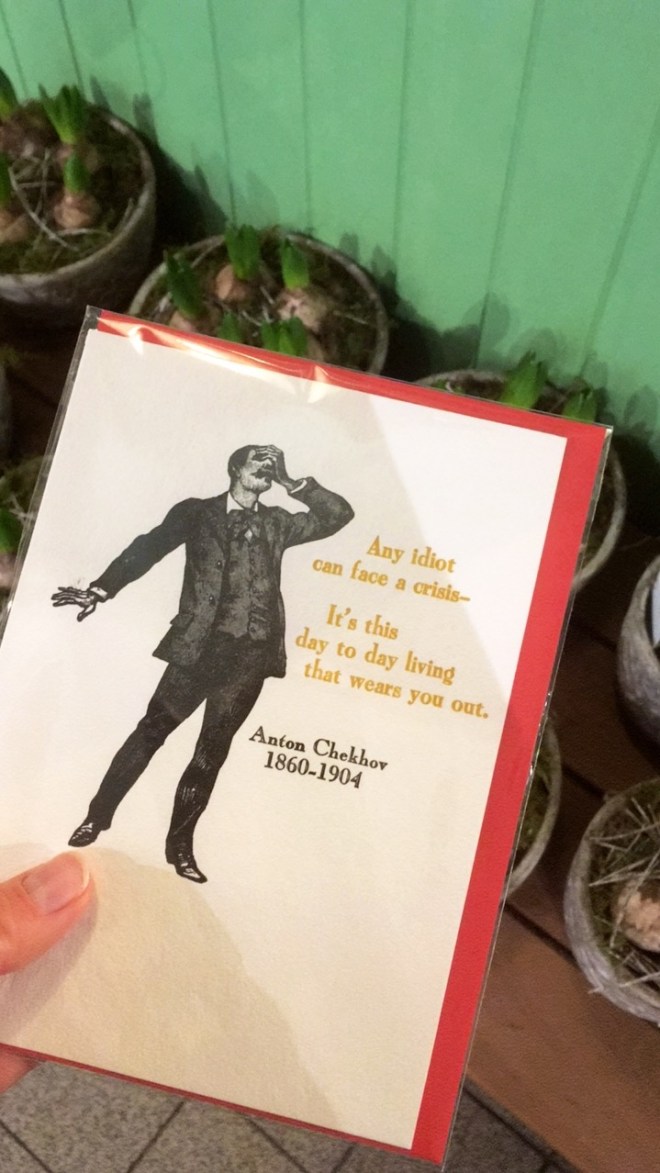
IMG_7824.JPG
A wrongly attributed statement sold as a Christmas card in a posh garden shop
IMG_8206.JPG
Harry Potter-y car with a matching child


Isn’t poetry the most magical form of expression?

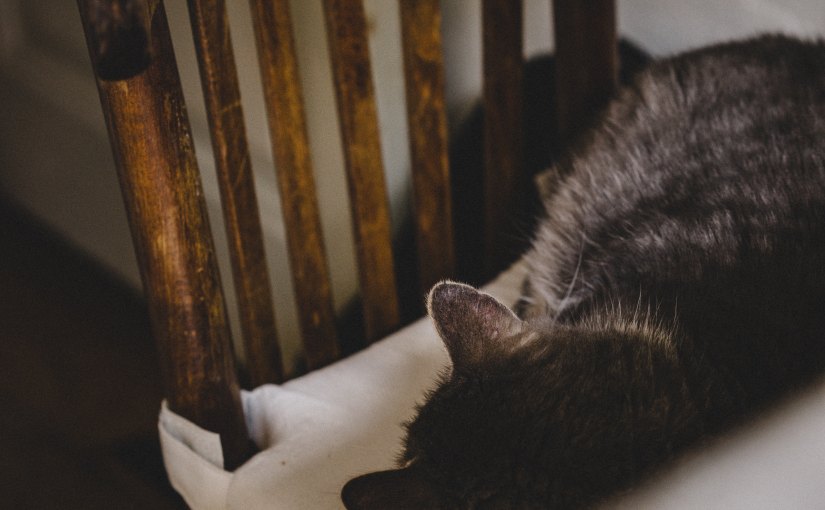
Pangur, white Pangur, How happy we are
Alone together, scholar and cat
Each has his own work to do daily;
For you it is hunting, for me study.
Your shining eye watches the wall;
My feeble eye is fixed on a book.
You rejoice, when your claws entrap a mouse;
I rejoice when my mind fathoms a problem.
Pleased with his own art, neither hinders the other;
Thus we live ever without tedium and envy.

– an translation of an Irish poem written by a monk around the 9th century

P.S. I just made a guide to D.H. Lawrence’s poems as part of my educational platform, but I am missing one called Baby-Movements II, “Trailing Clouds”. I wasn’t able to find in Trinity’s library, so don’t even know where to look! If anyone has seen such a thing, please send it to me! (It’s not copyrighted at this stage.)

Do you read any poets yourself? Any modern ones? Recommendations are welcome 🙂

🕵️‍♂️ 📲 🕵️‍♀️

Edward Snowden developed a physical (anti-)spying app. Maybe you would like to install it if Aunt Minnie is staying with you over Christmas.

Interestingly, it’s only for Android. It’s a strange idea as it involves you not having your phone on your person.

Snowden has also said that he doesn’t carry a smartphone. I guess if I were him, I wouldn’t either.

Best films lists

Christmas is the time to watch awesome films. One instinctively searches for the “best films ever made” lists. I was fascinated by the virtual irrelevance of the films on the Wikipedia page. IMDb has a much better listing, in my view.

Chinatown: what an amazing film.

Jack Nicholson looked entirely different when he was young. I don’t think I’ve ever seen someone who changed so much with time.

The ending broke my heart, so it’s not what you would call an uplifting Christmas film, but it’s so well made. A two hour film barely had any scenes that were in any way superfluous. It’s rare to see a film that has so much to offer as opposed to the current films that have deliberately protracted scenes of celebration or fighting near the end.

Don’t ask me how I ended up watching Daddy’s Home 2, but I was actually pleasantly surprised. This is 80% due to my low expectations and 20% due to a trace of honesty that managed to work its way into a Hollywood Christmas film.


Funny how we always fall for the narrative

Stop at Nothing: the Lance Armstong Story is a fascinating film. It follows Lance’s rise and fall from the early 1990s till his interview with Oprah.

What stood out the most to me was how the other athletes and their wives seem angelic compared to Lance when they are, of course, guilty of the same crimes. Funny how we always fall for the narrative.

The prevalence of Irish accents in the film is quite surprising.

It also made me think of Wikileaks. What a fascinating organisation in this day and age.

The Bed of Procrustes: 15 highlights

  1. Studying neurobiology to understand humans is like studying ink to understand literature.
  2. People reveal much more about themselves while lying than when they tell the truth.
  3. Mental clarity is the child of courage, not the other way around.
  4. Most info-Webmedia-newspaper types have a hard time swallowing the idea that knowledge is reached (mostly) by removing junk from people’s heads.
  5. Supposedly, if you are uncompromising or intolerant with BS you lose friends. But you will also make friends, better friends.
  6. True humility is when you can surprise yourself more than others; the rest is either shyness or good marketing.
  7. Another marker for charlatans: they don’t voice opinions that can get them in trouble.
  8. You can only convince people who think they can benefit from being convinced.
  9. Even the cheapest misers can be generous with advice.
  10. Trust those who are greedy for money a thousand times more than those who are greedy for credentials. [Curious what people think about this. In some cases credentials can mean reputation.]
  11. When conflicted between two choices, take neither.*
  12. They think that intelligence is about noticing things are relevant (detecting patterns); in a complex world, intelligence consists in ignoring things that are irrelevant (avoiding false patterns).
  13. In twenty-five centuries, no human came along with the brilliance, depth, elegance, wit, and imagination to match Plato—to protect us from his legacy.
  14. For the classics, philosophical insight was the product of a life of leisure; for me, a life of leisure is the product of philosophical insight.
  15. The first, and hardest, step to wisdom: avert the standard assumption that people know what they want.

More from Taleb’s own website

Evolution’s black swans

Nature must want us to be bad at understanding black swans. (I am still, sort of, listening to The Black Swan.)

The guy who discovered that carrots are edible didn’t really think, “Hmm, there is a small chance that this is a strange variety of hemlock and I will die and thus my family will die as I won’t be there to feed them, but the odds are that I will be fine”*. The man who ate the first carrot was playing Russian roulette, like the guy who lived across the way from Nero Tulip.

Evolution is playing her own game and worries more about the species rather than the individual. Hence, it is in her interest to instil into us a blissful ignorance for hidden risks and a strong hope for hidden rewards. She stands to lose, what, just a few individuals? – but to gain a carrot-induced reproductive boost! And of course, our enterprising caveman introduces carrots to the wider populace, takes a nice cut for himself and his genes.

It’s like that old adage they pass around in finance classes: what is the best way to make money in the casino?

Answer: own it.

* It’s quite possible that his other option was certain death by starvation, which legitimises his decision entirely.

** Just something that came out of a reddit debate:

It is more correct to replace the word “species” with “kin group” and my point still stands (and I guess a species is just a large kin group). Any group that produced the risk-taking individual (phenotype) is likely to still have those genes in its gene pool (genotype). Thus, if it benefits the group, they expand in number. If such a group were basal to all modern humans, it would explain why we view risk in a way that the average insurance broker would disagree with. Consider 2 options, A and B, where A has a higher expected value. A would seem to be the right choice, but if B has a huge payoff, then an individual who does the WRONG thing and gets lucky will be selected for and expand his lineage very quickly. Yes it will be disadvantageous in the long run, but i) nobody said humans are built for the long run and ii) if he has extinguished his rivals’ lineage by sheer weight of numbers by the time luck runs out, and then there is a mutant descendant that corrects his “genetic mistake” and becomes risk averse, it doesn’t matter if all the other descendants do badly, he has still propagated his genes into the future in a way he would not have been able to had he evolved to always make the correct decision based on expected value.

If you don’t think that eating carrots is an evolutionary jackpot, think about rice. The man who discovered rice did very well genetically. But how many like him died eating random stuff?

Btw, I am not attributing a metaphysical guiding hand to evolution.

Critical thinking or empathy?

Another thought experiment, inspired by a conversation with this blogger*.

If you had to live in a world where, compared to this one, people had

A. 50% more critical thinking and 50% less empathy

B. 50% more empathy and 50% less critical thinking,

which would you choose?

I would choose A. I sometimes find myself in situations where I can barely talk to people who others consider “aww, they’re so nice!”… Makes me feel like I am a cold b*tch, but it is because these people would choose to live in A.

In B, you side with the first person you meet.

Empathy, today, is being used as a word for kindness, but it isn’t. Kindness is an outcome. Neither is empathy conflict-aversion. Some have began talking about effective altruism as an upgraded version of empathy. Problem is that effective altruism is as close to empathy as effective evilness. Empathy is just the ability to understand the feelings of another person. It leads to a congruent emotional response.*

People assume that once one understand how someone feels, one will immediately want to side with them. That simply can’t be.

Spite is the ultimate proof of this: you need to understand your opponent very well in order to be spiteful. The most spiteful are the most empathetic, not the most psychopathic. Psychopathy isn’t necessarily evil and empathy isn’t necessarily good.

Who is the most caring person in your life? Have you ever seen them being spiteful to anyone you know?

A resident of B wants better outcomes for people they feel a kinship with. In other words, they feel spite for people they don’t feel close to – there is no other way in a zero sum short term scenario. They are the ultimate tribalists.

An empathetic person with deficient critical thinking can never agree to disagree.

Good critical thinking is not exactly a solution to a lack of empathy. It’s virtually impossible to become part of a tribe if you’re a deficient in empathy. Critical thinking also loses its potency if you can’t understand the other guy’s feelings. The decision making process is much slower in an unempathetic person. A lot of problems, in short.

Daniel Goleman talks about how members of the “dark triad” become great at social skills because they learn the stigmata of common emotions which is a legitimate way around it for unempathetic people.

It’s like hardcoding vs proper code. Empathy is hard code: quick, unconditional and generally correct.

I know some people who are almost 100% empathetic, but I’ve never met anyone who has 0% empathy, which makes me think empathy is an older, more important trait (quick decisions, Kahneman’s system one, etc)

Obviously, you would prefer to be optimally capable at empathy and critical thinking, but if you had to choose, which would you choose?

Some other places talking about empathy:

The Atlantic, ViceThe Guardian

* I made the point that non-religious people can be “religious” about certain things, e.g. politics, e.g. in WW2. He made the point that it’s down to a lack of critical thinking.

** George F.  brought up the point that the definition of empathy is not only the understanding but the sharing of a feeling. I think that’s a step too far if taken literally. There is some intermediary step where a person can appreciate the feelings of another and either decide to take them as their own or else to revel in their misfortune. We don’t just literally take other people’s feelings as our own, we just get a good insight into them. The most empathetic of people would be rather harmful if they literally shared the feelings of someone in need of help.