Adult books for children

Do you think that certain books should be kept away from children?

I would generally have said no:

Freedom of speech! No to censorship!

Being in touch with reality is important!

It’s preparation for the real world!

But then I realised that as a teenager I’ve read a few of those books and sometimes I wish I hadn’t…

  1. Fowles’ The Collector. I still struggle to find the artistic value in it.
  2. Three Comrades – pretty dark. I guess given the amount of “white lies” we tell kids the disillusionment has to start at some stage, but there is something hope-shattering in this. Same as in Maupassant’s Bel Ami 
  3. Anthony Burgess’ Clockwork Orange.
  4. I won’t make many friends by saying I don’t like The Catcher in the Rye – and it fascinates me how it became popular among teenagers. Ew though.
  5. Lolita. Goes without saying.

When you think about it, Anna Karenina even is quite PG. Then again so is nearly all of Shakespeare. I think that it’s easier not to suspend disbelief with things written in super archaic or unfamiliar language – same with the Greek myths, hence they don’t hit as hard. Perhaps that’s the reason most of my books non grata come from the last 150 years.

Have you ever regretted reading a work of fiction?

Are email and meetings actually a waste of time?

I recently discovered this fantastic blog by Paul Graham. Like so many others, he mentions that email is a digital time sink:

Some days I’d wake up, get a cup of tea and check the news, then check email, then check the news again, then answer a few emails, then suddenly notice it was almost lunchtime and I hadn’t gotten any real work done. And this started to happen more and more often.

He decided he would have one computer to browse the web and another to work:

My rule is that I can spend as much time online as I want, as long as I do it on that computer. And this turns out to be enough. When I have to sit on the other side of the room to check email or browse the web, I become much more aware of it. Sufficiently aware, in my case at least, that it’s hard to spend more than about an hour a day online. Source

check email or browse the web – wtf?

A huge amount of my work is done through email. Because some work involves other people, putting things in writing and communicating quickly.

How have the internets, including some of the founding fathers, deemed email so useless?

The Guardian rants:

In the Harvard Business Review, three consultants from Bain report the results of an exercise in which they analyzed the Outlook schedules of the employees of an unnamed “large company” – and concluded that one weekly executive meeting ate up a dizzying 300,000 hours a year. Which is impressive, given that each of us only has about 8,700 hours a year to begin with. Including sleep.

And The Washington Post weighs in:

Any cubicle drone with a corporate email address knows this well already, of course, but a new report from Adobe describes the problem with some pretty startling numbers. According to its data, which is sourced from a self-reported survey of more than 1,000 white-collar workers in the country, we spend an average of 4.1 hours checking our work email each day. That’s 20.5 hours each week, more than 1,000 hours each year, more than 47,000 hours over a career.

In that time, you could have learned two dozen languages. Or hiked the Appalachian Trail 100 times! Instead, you were tapping out gems like “plz acknowledge receipt, ty” and “ok sounds good, let’s meet at nine.”

Yeah… so it takes a lot of time. That doesn’t mean it’s a time waste.

Yes, you can do it all wrong and waste time, but you can do anything wrong.

I doubt Paul Graham gets less important email than I do. Yet he still calls it “not work”.

It’s actually kind of rude to the people who send you email to say that email is a waste of time.

It sounds so much like just another quick fix from the “productivity” industry, but it seems unlikely that a dude like Paul Graham would get trapped by that.

The only reasonable answer is that your work is something solitary. Same with “meetings” that people so hate. You can call yourself a team player all you want, but if you think email, or to use plain English, communicating is a waste of time, maybe you just aren’t?

When you’re browsing the web, no one cares. But when you don’t answer your emails or don’t turn up to/pay attention in meetings, somebody does.


Notes on The Last Psychiatrist

I love few things more than a great blog. My latest find: The Last Psychiatrist, an archived blog, mostly about narcissism.

I was so excited to learn his insights… I made notes.

What follows are his finest insights about narcissism and my comments.

Imagine a crowded subway, and a beautiful woman gets on. Hyper-beautiful, the kind of woman who can wear no makeup, a parka, earmuffs and a bulky scarf and that somehow makes her look even prettier. A handsome man about her age in an expensive suit gets up and says, “please, take my seat.” She smiles, and hastily sits down.

TLP (The Last Psychiatrist), as the author refers to himself, gives us two options as to how the woman should think about this:

  1. This was a sexually motivated act as far as the man was concerned
  2. He was just being nice

If you think of narcissism as grandiosity you miss the nuances, e.g. in her case the problem is narcissism without any grandiosity:

she is so consumed with her identity (as not pretty) that she is not able to read, to empathise with, other people’s feelings. Source

In another post, TLP explains why narcissism isn’t necessarily about grandiosity. This is a blatantly obvious point that escapes most people, unfortunately.

Being the main character of your own film isn’t necessarily grandiose. It is narcissistic though because all the other characters are only important because they help the viewer to understand the main story line.

Here are some less obvious traits of narcissism TLP outlined:

Shame over guilt (I think this is because shame is an emotion directed at the self, whereas guilt is an emotion directed at your victim)

envy over greed (greed would be a primary reason to look for something, whereas envy is only a desire to catch up because otherwise otherwise it’s a bad reflection on you. I liked how this was called “existential agency” here.)

He [the narcissist] thinks the problem is people don’t like him, or not enough, so he exerts massive energy into the creation and maintenance of an identity: if they think of me as X… (and that’s one of the reasons why we love brands)

The narcissist feels unhappy because he thinks his life isn’t as it should be, or things are going wrong;  but all of those feelings find origin in frustration, a specific frustration: the inability to love the other person.

And this really brings it back to the original myth that TLP broke down beautifully here:

Narcissus mother took him to a clairvoyant who said, “He’ll have a long life as long as he never knows himself.

Narcissus kept rejecting people who fell in love with him because they weren’t good enough.

One rejected lover was furious and begged Nemesis, the goddess of vengeance, for retribution.  “If Narcissus ever falls in love, don’t let the love be returned!”

Nemesis  heard the prayer and caused Narcissus to fall in love with himself: he was lead to a  pool of water, and when he looked into it, he fell in love with what he saw.  And what he saw wasn’t real, so of course it couldn’t love him back.  But Narcissus sat patiently, forever, hoping that one day that beautiful person in the bottom of the pool was going to come out and love him.

Because he never loved anyone, he fell in love with himself. That was Narcissus’s punishment.

This brings up an interesting point: how are you meant to feel about yourself?

Let’s first look at what we want. What we pay for. A huge portion of marketing directly helps us to be in love with ourselves, because we’re worth it. They’re not even trying to hide that the feeling of being in love with yourself is what they’re selling. And it’s not punishment as we see it – otherwise we wouldn’t buy it. I suppose it’s a psychic equivalent of putting a person on heroin. You mightn’t feel it’s a punishment, but it is.

Then there are the more subtle “intellectual” publications that help you love yourself (see the distinction from being in love with yourself? Cause that would be shallow.) I wonder how many pages were dedicated to helping people see Narcissus’ infatuation as Buddhist acceptance or some other high and mighty concept.

There isn’t really anywhere that would tell you that you’re meant to not love yourself.

What happened to Narcissus doesn’t really sound so horrible in today’s culture. Maybe he wouldn’t have even retaken a selfie if he lived today and been happy with the first shot? That level of self-acceptance is just enviable! He’s winning at life by millennial standards!… Indeed, TPL calls narcissism “a generational pathology”.

TLP goes on to discuss Narcissus’ parents’ role, which I thought was priceless:

He will have a long life, if he never knows himself.

Forget about whether the prophecy is true.  Ask instead, “what would the parents have done once they heard it?”…

Next time I feel insignificant and weak, maybe I need to hold on to that feeling, because my culture will obviously infuse me with my own grandiosity without me ever trying.

TLP has another explanation for why Narcissus stayed looking at the primordial selfie lake though.

He didn’t stay there for years because the reflection had pretty hair.  He stayed because daydreaming takes a lot of time.

In other words, Narcissus didn’t recognise himself and spent all that time conjuring up images of how wonderful life would be with that person in the reflection…

And the DSM says exactly that, only it adds a grandiose twist: “preoccupation with fantasies of unlimited success, power, brilliance, beauty, or ideal love”.

I am confused now.

Narcissus fell in love with himself, only he didn’t know if was himself.

So, as far as Narcissus was concerned, he was genuinely in love with another human being – only they were unreachable. Their personality was entirely a figment of his imagination…

Wait, that’s not Narcissus, that’s Gatsby! (Who also dies in a body of water, fair dues to FitzGerald).

Narcissus’ crime wasn’t being in love with himself at all. Phew, it’s ok to let L’Oreal and #positivethinking to get money and likes.

Narcissus’ crime was not knowing himself.

Actually, no, again.

TLP puts it better:

The moral of the story of Narcissus, told as a warning for the very people who refuse to hear it as such, is that how Narcissus came to be is irrelevant.  What was important was what he did, and what he did – was nothing.

And that’s his main crime: he never cared about anyone real. To me that’s all one ever needs to know to understand narcissism.

TLPs advice on how to not be a narcissist is to fake it. I think what TLP’s getting at is that your behaviour is much more important than your identity.

Kids: a moral dilemma

I am aware of the nihilistic tendencies of some of my readers and I think they would enjoy reading this essay entitled Kids? Just say no. A professor of philosophy, David Benatar argues the merits of anti-natalism.

My first objection is that this is fundamentally against nature – and there is no winning against her. Evolution. Selfish genes. It’s obvious and I don’t need to explain it. To be fair, the professor recognises this and establishes his argument as applying to a minority of people.

My second objection is that there is always a way out. I don’t necessarily mean the “happy kind”. One of this professor’s readers wrote to him about his very unhappy life and concluded that he was sentenced to suffering by his parents. I think the author of the letter miscalculated what is within his control and what isn’t. He is no longer the helpless child in his mother’s arms. He has choices. While on a human level, my heart goes out to him, on an intellectual level I feel that blaming your parents on your death bed is denying your own sovereignty.

A man I know well, one of the kindest people I ever met, once expressed his views on sperm donation. He was strongly against it and one of his points was “is this world really that wonderful”, which shocked me at the time. Clearly, this point of view is much more common than I originally thought. I am just hearing Freddie Mercury’s whaling: “Mama, ooh, I don’t want to die I sometimes wish I’d never been born at all”.

My third objection is against the author’s assertion that “life is simply much worse than most people think”. This is just a random, unfalsifiable, unsupported thought. Very relatable of course, as we all have our darker moments, but ultimately how is this a reason? The professor argues that optimism bias is a reason, but there are so many counter reasons! Most cognitive distortions drive our estimations of life down, not up. And if his assertion is true, isn’t the answer to be more in touch with reality, especially in terms of what we tell our kids about the world, than to annihilate your genes from the planet?

The author then goes on to say that “life is a state of continual striving”. I vaguely agree, but our interpretations are entirely different. The author seems to believe that anything other than pure bliss is unpleasant. For sure, if you define it this way. His whole essay seems to be based on disillusionment, from a pretty self-centred point of view.

My last objection is as follows. The author argues that we, humans, cause a lot of damage, “every human (who is not a vegetarian or vegan) is, on average, responsible for the death of 27 animals per year.” Is that his definition of damage? Isn’t it a little arrogant to talk this way about humans when it wouldn’t occur for us to say this about, say, lions?

Of course, we all pick our battles and I don’t at all judge people who don’t want kids. The benefit of the professor’s work would have been obvious 200 years ago as it would have clicked some people out of the mindless default mode that one must have kids, no other options, and highlight the wider responsibilities of parenthood. In today’s world, it’s just another ode to nihilism.

On a personal level, I see so many of my friends who have kids and do you know how I feel? I feel that these people jumped off a cliff and survived. The responsibility of it has been painted as being so humongous to educated people that reading Prof Benatar’s essay is just unhelpful to someone like me. I already know.

P. S. I have also been pointed to this blog. It would still your blood.

My favourite blogs

I’ve recently been in the mood to read blogs – not books. And since I didn’t know where to go for new ones, I decided I would reread my old favourites (is that even a thing?)

I remember when LiveJournal became a thing – we’re talking pre-Facebook now, maybe 2005. I was finishing off school. I had moved to Ireland then to live with my father’s side of the family, from Russia — leaving all my school friends behind.  Then I somehow found out that many of them are on LJ – and I was so excited, I literally couldn’t sleep. You know that feeling of dopamine, or whatever sweet chemical, the sort that you get on Christmas morning when you’re five years of age?

Since that time, blogging/reading blogs occupied a pretty important role in my life. Hobbies, even jobs, came and went, but blogging was more or less a constant.

I thought about what blogs I like and don’t like. Here are some things I do and don’t like in personal blogs. Let me know what resonates with you.

I don’t want advice

That’s probably a pet peeve. I’ve written at length that most advice online is either

  • a fact – and blogs aren’t the best for facts
  • a sales pitch – which may not be a bad thing, but often it is
  • isn’t applicable to everyone. One size doesn’t fit all.

In all cases, the blogger has no skin in the game giving me advice. If Medscape gets the dose of metoprolol wrong on their site, they will suffer reputational damage. If the author of a blog tells me that eating kiwis within 10 minutes of exercising is going to lead to some insulin/cortisol magic – and they’re wrong, it’s inconsequential for them.

I do want the author to share their experience

And if the author can be emotional and even curse. I don’t particularly want them to tell me about their tampons, but it seems that experience-based blogs are the most interesting. (Not really my own forte.)

As a derivative of the author’s experience, a how-to is good, but that’s not the same brand of preachy advice as in the above point.

I don’t want life lessons or rules

By and large, people’s conclusions – especially if they sound like generic common sense – are pretty useless. I am much more interested in opinions, thoughts and emotions — bias and all. I really don’t like it when people, or news outlets, say they are “unbiased”. They just look like they lack the insight into their own inevitable subjectivity.

I want (a) character

A blogger is basically a book character that updates him/herself every day — to me, that is. Or maybe a cartoon character, depending. I want to engage with them the same way I did with those addictive characters like Nick Carraway,  Jane Eyre, Andrey Bolkonsky, Scarlett O’Hara, Sherlock Holmes, Hercule Poirot and Harry Potter. I care what happens to them and what they think and building up that puzzle of who you are is the best fun.

I don’t want the blogger to be politically correct

I also don’t want you to drink decaf coffee, down alcohol-free beer and have orgasm-free sex. There is nothing correct about opinion. Obviously, don’t be hateful, but political correctness is not an excuse for being bland.

In addition, I will never understand a person’s values if you don’t express some negative opinions. All those value statements at the back of corporate cups are meaningless. Why? They don’t alienate anyone. Nobody tattoos Procter and Gamble on their ass, but a brand that stands for something (and inevitably has at least theoretical enemies) has a chance of being meaningful.

I do want pictures

It helps to relive the experience. The pictures should be taken by the blogger. They don’t have to be beautiful, but they have to be relevant either to the story or to you. Funnily enough, Instagram never did it for me – it seems that writing something down is so much more personal. And when a lot of my blogging friends moved to Instagram, I really didn’t get it.

So who are these wonderful bloggers?

Friends of friends and their friends – all people I like in some way. Friends of former classmates, etc. It seems that the network effect is pretty important. And not in the sleazy marketing way, but literally, knowing that my friend Anna reads her friend Mary’s blog tells me more about Anna – and I want to understand her better (welcome to a cozy echo chamber). It’s probably not a good idea to bash Discover, but I do find it sort of bland.

But I am really on the hunt for more! 

Please recommend bloggers you like. They don’t have to be anything like the above. I am really lucky to have some amazing people commenting, so please do let me know who you’re reading.

Five in one

Here are four five pretty unrelated things that have been on my mind:

Entrepreneurs: sell vs befriend

I, like I am sure millions of other people, keep getting followed by all sorts of dealers who promise to “help small business” and lead to “explosive growth” on social media. Why do these people exist? How have they not been banned by everyone? Or will selling hope always be big business?

It would be nice to have a community of entrepreneurs. But what do entrepreneurs do? They sell and they compete. Trying to have a community of entrepreneurs is like trying to farm spiders. They will eat each other.

A community of this nature could only form based on prior friendship, where social bonds are stronger than the need to sell. But most of these communities offer to put you into a network for a small fee: this doesn’t exactly inspire warm and fuzzy feelings. The circular nature of their business is also worrying. Conferences, seminars, mindset trainings, honestly…

I have, on the other hand, made many friends online, who happen to be entrepreneurs, but never directly in connection with their entrepreneurship. (You know who you are. Perhaps, some of you would like to meet my recently acquired Buddhist friend.)

Nietzsche: is it all lies?

I am quite worried about how things are unfolding in the US.

Nietzsche keeps getting brought up. He has to be the most misunderstood philosopher. Did his relatives doctor his writings too much after he died? Or is he just forever contradicting himself?

Any Nietzsche scholars very welcome to comment on this article of Nietzsche and the alt-right.

Curate or censor?

In other news, Google recently stopped Gab, apparently a sort of Twitter for people who get banned from Twitter, from being able to be downloaded from their Playstore. Apple stopped them a little earlier this year. Also, Instagram’s Kevin Systrom wants to curate the Internet.

Taleb is in a new battle with the establishment.

Vaccinate or die

France is tightening vaccination requirements. I support vaccines, of course. As a society though, are we better off having people die from preventable diseases or limiting their freedoms?

Diabetes is a preventable disease, but I don’t see anyone being confined to a gym by law. Though the herd immunity argument makes vaccines different. In addition, the fact that it is children who are affected makes vaccines different, but then again we can’t stop some people overfeeding their children with junk. I’ve taken enough trips on routes that serve hospitals to know that you don’t have to be above one year of age to be served Coke in your bottle.

Control

There is a philosophy that suggests that taking responsibility for everything that happens to you is the best way to live (e.g. William James).

I think that the world is one giant furnace of entropy and within that we each have a small island we call the self, where we can affect things. I cannot force someone to ask me to come to their party, but there is a myriad of things I can do to try to gently weasel my way into it.

The single most damaging thing I do, my worst bad habit, is fretting about things I cannot control. In other words, I feel responsible for things that are beyond my reach. I sit there and feel like a failure if I am not invited to the metaphorical party.

The question is: does this fretting push me to look for solutions that I wouldn’t have found if I just rested within my boundaries? Or are parts of William James and his followers’ philosophy just soothingly empowering wishful thinking? Or am I even doing damage by fretting and preventing myself from seeing ways to get into the party? Please share your thoughts on this last thing.

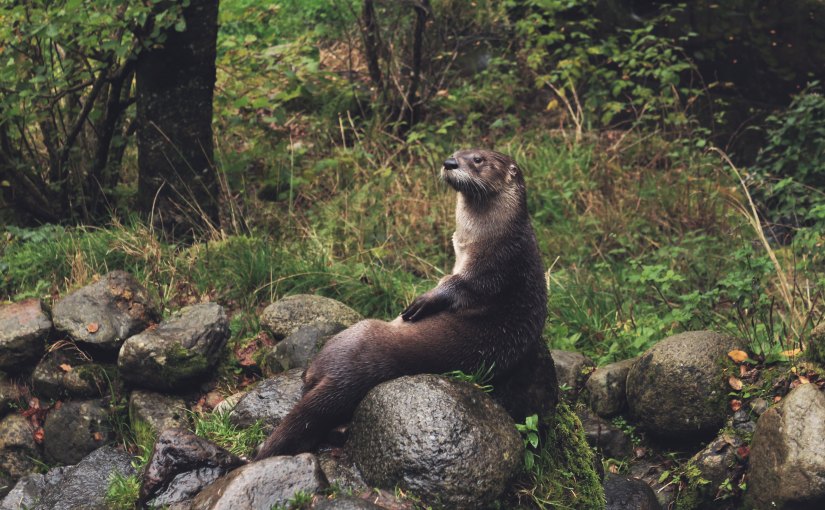
P.S. I couldn’t find a picture of a weasel, so here is a nice chilled out otter. I must take some of my own pictures soon.

Can we have both equality and diversity?

About the infamous Google Memo… Here is a review of reactions to the controversial piece.

Facts:

  • A Google engineer, James Damore, wrote a memo entitled Google’s Ideological Echo Chamber. [Read original]
  • It went viral via internal communication means within Google.
  • He got fired because of it.
  • (A less relevant, but curious fact: Julian Assange, the founder of WikiLeaks who is holed up in the Ecuadorian Embassy in London, offered him a job and accused Google of censorship.)

Here are some interesting articles from both sides:

The Economist (sits on the fence)

“This isn’t a question of legality or policy. This is a question of virtue-signalling” [Read]

Bloomberg (argues it was wrong for Google to foreclose the debate so crudely)

“An employee trying to grapple with these problems — clumsily but earnestly — has now been shown the door, thanks mostly to performative online outrage.” [Read]

The Financial Times (denounces the author)

“Responding to the memo is somewhat challenging because it is almost pure drivel, offering up a mix of fallacies, mindless reductions of popular social science and hand-waving at ‘research.'” [Read]

The Atlantic (addressing the error-full coverage of the matter)

“To object to a means of achieving x is not to be anti-x.” [Read]

The Atlantic, again (agrees memo is discriminatory)

“The memo… seemed to dash hopes that much progress has been made in unraveling the systemic conditions that produce and perpetuate inequity in the technology industry. “[Read]

Slate (is pretty enraged)

“The manifesto suggests a culture that is inviting enough for someone who views some of his fellow employees as lesser to share his opinions and be cheered on” [Read]

Business Insider (highlights authors vulnerable legal position in the context of free speech)

The First Amendment to the US Constitution prevents the government from restricting your speech. It doesn’t restrict your employer from controlling your speech when you are at work, citing a Google manager: “freedom of speech is the right to freely express an opinion. It is most assuredly not the right to express an opinion with freedom from the consequences.”

Quillette (has four psychologists sustain points made my memo author)

“Psychological interchangeability makes diversity meaningless. But psychological differences make equal outcomes impossible. Equality or diversity. You can’t have both.” [Read]

Right-wing Twitter is rallying to support the author of the memo:

Google memo right wing twitter commentary

A Linked influencer, Adam Grant (argues that differences between men and women are exaggerated)

“Across 128 domains of the mind and behavior, “78% of gender differences are small or close to zero.” A recent addition to that list is leadership, where men feel more confident but women are rated as more competent.” [Read]

Scott Alexander of Slate Star Codex (refutes Grant’s points)

“Suppose I wanted to convince you that men and women had physically identical bodies. I run studies on things like number of arms, number of kidneys, size of the pancreas, caliber of the aorta, whether the brain is in the head or the chest, et cetera. 90% of these come back identical – in fact, the only ones that don’t are a few outliers like “breast size” or “number of penises”. I conclude that men and women are mostly physically similar. I can even make a statistic like “men and women are physically the same in 78% of traits”.”

Something that occurred to me that I haven’t seen anywhere – and this neither disproves not confirms the memo author’s argument, but it’s something that I feel is important.

Assuming that average men and average women are different in their precise cognitive and emotional strengths, this bears very little significance when it comes to outliers. For its tech roles Google hires from the very top, i.e. from the extreme “end” of the right tail. Outlier men and outlier women don’t behave the same way as average men and women. In fact, outliers are virtually impossible to study with the same confidence that we study average people.

Very curious what you think.

And let’s keep the mood light 🙂

UPD: somebody invited me to Google image “white man and white woman” and “European people history”. What Google shows is below.

Screen Shot 2017-08-09 at 12.58.28Screen Shot 2017-08-09 at 12.58.46

One more point of information: Duck Duck Go search results are virtually the same. Make of it what you will.

UPD 2: Jordan Peterson, who himself was nearly kicked out of Google’s YouTube recently, interviews James Damore [Video]

Words as violence

The Russians have a law against offending the feelings of religious followers.

It came up again today because a magazine did a (somewhat) explicit photoshoot in a church they considered abandoned:

offending feelings of religious people russia ethics
Source: Vkontakte

It turns out the church wasn’t entirely abandoned and was occasionally used. This may result in a court case against the model/photographer/publication involved: not because they perpetrated land belonging to the church, but because they offended people’s religious beliefs.

A man recently received a suspended sentence for catching Pokemon in another church for this reason.

Is the fact that the Russians want to protect the religious any different to the snowflakery millennials are getting accused of?

In West it is kind of the opposite, but the same principle applies. We’re most worried about offending those who fight for more modern things, e.g. non-traditional genders.

It’s a past time of mine to observe the parallels between two places that most people consider as different as night and day. And it allows me to ask: why is there such a global cross-cultural tendency to protect the feelings of minorities through law?

In a recent case, a woman was found guilty of involuntary manslaughter because of what she said. Of course, her words were evil. It was emotional abuse taken to the limit.

But can words really be equated to violence?

I think that this would only encourage physical violence by closing a steam valve. It makes little of victims of real violence. There’s something wrong with putting genuinely violent people in the same category with someone who likes to rant.

Incitement to hatred? Obviously it would be ideal if we all agreed and lived in peace and love. But assuming that we’re not moving to a utopia any time soon, isn’t it better to allow people to peacefully rant and speak freely than to encourage them to band into groups and get violent against the establishment which is what we achieve by marginalising them? In fact, ranters of a denomination could verbally spar with other types of ranters. Might it even be a healthy debate?

Perhaps non-violent hating is like a small forest fire:

“Small forest fires periodically cleanse the system of the most flammable material, so this does not have the opportunity to accumulate. Systematically preventing forest fires from taking place ‘to be safe’ makes the big one much worse.” – Nassim Taleb. Antifragile : things that gain from disorder.

Similarly, marginalising the “haters” just leads to real violence.

Having said that, I can relate. I have often felt like I needed trigger warnings. I get very upset at certain images in films and documentaries. But I would never feel that someone owes it to me to prevent me from them: if I made a choice to watch a film, that’s just part of the consequences. Being honest, I don’t watch that many films for this precise reason.

Virtually every book or film I process results in an overwhelming spillage of thoughts and emotions (hence, this blog). In fact, I am still haunted by a number of books I read.

When I was in school, we were always given a book list for the summer. Part of me wishes I’d never read Three Comrades and The Collector. Part of me is enraged that there wasn’t a trigger warning on those books. But by reading these books I learnt what I do and don’t like – and why.

But let’s just imagine that words aren’t violence and flip the question: should it be a crime to offend people’s feelings?

P. S. I am meant to be working on Philip Larkin‘s poetry, but I’m not a fan, hence, all this 🙂

The wheat from the chaff: philosophy vs self-help

There is something cringy about the notion of self-help. Yet blogging in the philosophical rambling genre invariably has a whiff of it. Even more generally, be it the Bible, Seneca, Leo Tolstoy, Viktor Frankl, Daniel Kahneman or Oprah, or in fact, any autobiography, aren’t they all essentially trying to answer the same question, namely how to make the most of our time here?

what is the difference between philosophy and self-help

Where do we draw the line?

Some writers, psychologists and philosophers have been using a quagmire of specialist terminology to warden off any suspicion of belonging to the self-help family. Religion is many things to many people, but it definitely ticks all the self-help boxes. What about picking up a new hobby? Is that a self-help action? What about ringing up a friend? What about going to the gym to get some endorphins? While we usually draw the line at solitary activities, preferably done alone, by overweight single middle-aged single women called Bridget in the company of Ben and Jerry… But being serious, it isn’t clear how to actually draw the line between legitimately working on oneself and being the gullible victim of charlatans.

Following a discussion on a wonderful Facebook group, Scott Brizel suggested an interesting approach: the problem is solved by noting the distinction between philosophy and ‘wisdom traditions’, even though wisdom traditions are (possibly wrongly) often called philosophies. Wisdom traditions propose strategies for living well, while philosophy is a method of inquiry into the meaning of ideas. Despite the loose use of ‘philosophy’ with respect toward it, Buddhism, for example, is a wisdom tradition, not ‘philosophy’ nor even ‘religion’. Religions tell creation stories, yet they may attempt to add value by establishing an associated wisdom tradition. The three ideas are often conflated, with some systems being both religions and wisdom traditions, but if you note the distinctions I draw, it will be easy to distinguish them.

Why people buy self-help books

The biggest predictor of whether a person will buy a self-help book is whether they have bought one before.

It is possible that the soothing feeling people get from buying and/or reading literature in the self-help genre is simply the reassurance that there is a solution to the problem.

As human beings, we have a profound desire to affect the world around us. This even applies to very young children, who can be taught to pedal a bike. While they don’t understand the significance of pedalling, the fact that the wheels are turning seems to motivate them to do more of it. Seeing tangible results of our actions gives us the feeling of control.

The feeling of control, the belief that our actions will deliver an impact, is probably our number one motivator. So no wonder people buy these books: by buying a book, they are buying equity in the belief that they can change themselves or even the world around them.

why people buy self-help books

Anyone who questions the ability of self-help methods to genuinely address the problem they aim to address seems like a party pooper who is stealing our dream of control. Indeed, Maslow’s hierarchy of needs, safety and security, in this case it is the belief that there is an answer and a role model to guide hold our hand, is more important than the need for self-actualisation.

Self-help books give a sense of safety and certainty. Placebo and religious texts have this in common too.

The authors inevitably portray themselves as a role model for whom these rituals have worked. Indeed, studies done on laboratory animals in helpless positions try to do things that are somehow associated with a reward or schedule. It’s an anxiety-defying ritual, not a solution to the problem per se.

As a child I spent a lot of time in Russia where books were very cheap and ubiquitous – and in the pre-internet era, well, they were the internet. Fiction never really did it for me, unless it was detective stories, and they, as we know, tend to be less than well written for the most part. Encyclopaedias were a bit hit with me, but also books on psychology.

As Western culture came flooding in, so did Dale Carnegie, Tony Robbins and their friends becoming an instant hit with a society turned upside down. My peers and I read some of these books, and they’ve left a negative impression congruent with the aftertaste of much of the rest of Western culture with its endless brands: the obvious repackaged and presented as a revolutionary discovery.

By the time The Secret came around, I was starting college. It wouldn’t occur to me to read that. I got a summer job in a book shop (the shopkeeper suggested I take the academic section, hmm, wonder why). The manager, when he wasn’t schooling me for being late, was perplexed at the proverbial middle-aged women who buy The Secret merchandise: he wasn’t sure how an adult could be convinced that by writing their wishes in a notebook that says The Secret on it (€7.99) as opposed as normal writing pad (€1.99) is better. I guess he just didn’t get why people buy things.

Years later I saw the film Little Miss Sunshine that I would highly recommend to anyone who wants to forget that they’ve held a self-help book in their hands.

why self-help doesn't work

What does the self-help obsession tell us about the society we live in?

Based on my reading of Durant’s The Lessons of History, the rise of the self-help genre is nothing unusual: whenever the role of religion diminishes in society, we flee to other sources of wisdom, or surrogate wisdom as the case may be.

For most millennials I see around me, our moral word seems to be a quilt of Christianity, Western liberalism with a touch of yoga-driven mysticism. I often think that it’s better to be confused and forced into questioning values than to unconditionally accept a bunch of dogma.The wishful thinking of self-help puzzled me for a long time. Is it really that different to a prayer? As a professor of psychology Rami Gabriel puts it:

Popular psychology comes with a message about the possibility of surmounting obstacles through the free will of the almighty self, as well as continual exhortations to practise hopeful optimism and disable despair and hopelessness: in all, a reflection of an individualistic, even narcissistic, culture in the contemporary US.

I would change US to the West. The cultural shifts in the US may be modulated as the cross the Atlantic, but Europe feels the reverberations of these developments for decades. I strongly agree with the narcissistic piece: all of this literature proclaims that you can change the world by changing yourself. While it may seem humble at first, it is actually enragingly self-centred. Of course, the purpose isn’t to be self-centred. It is to keep building the sense of control that would (in theory) allow one to rise above whatever circumstances that are holding them back.

So what is the difference between philosophy and self-help?

Self-help is hedonistic: do this and life will get better. Philosophy doesn’t aim to change one’s life, only to understand it.

Philosophy doesn’t provide any real recommendations. Self-help is bursting with answers: it is prescriptive. I guess the reason I am even asking this question is because if I hear someone say “don’t think about the negative”, I am keen to think of what the reasons and implications are, in other words, I think of the philosophy of the recommendation. To me, self-help is a truncated philosophy, though it doesn’t try to be.

Philosophers don’t tend to solve problems, they tend to ask and sometimes try to answer questions. Self-helpers have all the solutions. In fact, they tend to only have one solution, for all ills.


How to not feel dirty all over after looking at the fake spirituality of the boho goddesses of Bali

Goddessism is big among our millennial ladies. This article isn’t about the fact that social media and real life are different. It is about the cheapening of real philosophy that happens on social media and goes unnoticed by too many people.

As you will know, I am not big into positive thinking, at least the inspirational Insta-motivation variety. I have yet another issue with Instagram. It is the one social network that makes me feel kind of icky, and for ages I couldn’t understand why. We all know that social media is a highlight reel, a filtered version of another’s life, etc – but Instagram accentuates this empty feeling. I think it’s because it lacks the option of having any depth.

You can link to a thoughtful article on most networks, but you deliberately need to judge everything by its cover on Instagram.

One could argue it is some kind of inferiority that I am feeling. And it is. It’s a fear that I could never be as perfect as the people in the pictures. Indeed, I couldn’t be. They couldn’t be either. In fact, the subspecies I will discuss below follows a very clear prescribed regimen specifying their clothes, food, wisdom, aspirations, art, fitness, other half and much more. But the point is the horrible fake “spirituality” of these accounts.

coping with fake mindfulness of instagram
Are the comments written by real people or bots? Fakeness traded between fakeness merchants

Instagram is so full of beautiful, minimalist, natural, spiritual, compassionate, eco-friendly yoga-practicing perfect people, women, to be specific.

They look out over the ocean and look so dreamy with the sunset backdrop. The pictures are full with gentle sunlight, smiles and smoothies made of the most righteous greens and the caption inevitably features love of the world, the followers or something trendy. Obviously, these “tropical feels” exist on other media, but Instagram seems to have thousands of accounts with virtually the same vibe. The content clearly has a lot of work dedicated to it, but I struggle to see why people enjoy it. Perhaps, some find that it is genuine?

Whenever I encountered these insta-perfect people in real life, they tend to be highly cynical and critical of others, curse like sailors, yell at their children in a way that makes me worry about the integrity of the windows, drink (not just the smoothies), are insecure about their appearance and just generally be far removed from the fairy tale vibe of their Instagram account.

Many of them go from one beautiful location to another; the further removed from the West, the better –  or at least create the impression that they do. More often than not, the photos are made over a few weeks (of what I assume is pretty hard work of shooting) and then released over the following months.

fake mindfulness of instagram positive thinking
Wisdom meets commerce

Their work is always something special, magical and sacred. There is much about happiness, love of simple things, spirituality, being natural, a wanderer, a wild child, a vagabond, giving hugs and so on.

By playing bingo with the above you can create a nice tagline for the top of the page: “Don’t let your dreams just be dreams” obtained Lisa Smith of @lisadanielle_ It seems that the expertise behind these statements is rather limited and largely repeated by/from other Instagram users in a nice Pacific ocean echo chamber. I doubt that the subscribers care very much. They look for pictures of a life

…from another place, tropical and blue,

We have never been to.

This is from Sylvia Plath’s “Finisterre”. I love the emotion behind these words: they got etched into my mind straight after the first reading. I doubt she would have liked Instagram very much.

fake mindfulness of instagram bali goddesses
Why wouldn’t you be wild and free?

These women tend to paint, create jewellery, produce their own make up lines or run seminars. The more competent ones paint and the really great ones photograph: weddings, editorials and so on. I shudder at their daily routine of waking up and knowing that they need to go out of their way to take shots of things that will appear good to thousands of people. Perhaps, they shudder at the thought of writing an essay, especially one that is clear to the point which can only be obtained by being honest. Not honest like an eco-friendly coffee brand is honest; honest like a best friend is honest. The high quality pictures make it into the Instagram feed; the less artsy are only dignified with a place in the Stories.

contrived mindfulness of instagram
“Be yourself, you’re beautiful”, but make sure you are young, actually beautiful and totally carefree

Their appearance is uniformly the sort that can only be obtained by strenuous HIIT and no carbs. Don’t forget the tan.

The goal is to look like the perfectly accepted idea of female beauty, but with a spiritual twist.

A half-naked woman in her late twenties with a body fat of about 18% with a dreamy smile will caption her photo with something like “Remember, everyone is beautiful. Accept your self fully. Love is everything.”

fake pretentious contrived instagram accounts
Soulful gratitude, it’s not for show

The more thorough Instagramers will have a story of how they used to hate their body/themselves/their failures, but came to be in a healthy relationship with themselves and now it is their life’s mission to bring this harmony into the world.

They frequently have a soul mate whom they tag in their Instagram and express their gratitude at least twice a week. Don’t be alarmed if some of these bits of wisdom have a tag like for some minimalist watch maker or a boho clothes vendor, usually with an eco-twist:

coping with the Instagram goddesses of Bali
Lost fishing nets with a purpose

The perpetual summer bodies don’t come easy, I am sure, but the Insta goddesses never bother to make a big deal out of it. However, a nice yoga pose with a “thoughtful” quote is a must. Mindfulness goes without saying. Are there still people who don’t practice mindfulness? Myself, I doubt that between reaching out to bikini manufacturers and running contests for a handmade fairtrade eco-friendly blanket and shooting non-contrived photos of their rigorous relaxation routines they have much “time” for real mindfulness.

Clothes-wise, less is more – because why should we hide? That’s just wouldn’t be that spiritual or close to nature. The boho-twise requires the addition of a hat and numerous bracelets to the bikini bottoms. The top is covered by the long beach-wave hair.

What do goddesses eat? It’s all vegan, raw, super-foody and green. Banish gluten, lactose and all other negativity. The tone of their remarks is so matter of fact, like they’ve never seen a BLT in their lives.

dealing with the fakeness of instagram
Apparently this is a smoothie. You learn something new everyday.

So for example, a goddess could start every morning with 20 sun salutations and a green smoothie. They charge her up with the sort of energy the no coffee could ever do (throw back to her life before she entered the true world of Bali). It is usually followed by the description of the unfolding life force of nature filling her within and she literally can’t imagine having it any other way.

how to stop feeling bad after instagram
Give and you shall receive

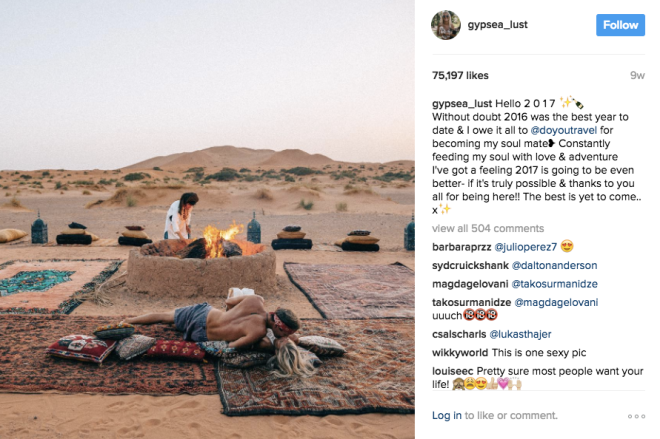
I have no reason to stick it to Lauren Bullen of @gypsea_lust in particular. They are legion. They come from all countries and write in all languages (though they all spend time in Bali). You know a few people like this. So alike, that you weren’t sure I wasn’t writing about them until you checked the username. They run Instagram-supported businesses, that’s fine, but it is the fact that they are selling something that isn’t real that bothers me.

It seems obvious that people would be able to tell that this is an account made for marketing. But because of this spiritual vibe, insidiously, this affects the moral compass for many otherwise bright people I know.

My millennial peers are often unable to see the difference between shallow marketing and deeper philosophy. Has it always been this way I wonder?

This kind of stuff makes me want to clear my head. So if, like me, you come across this phenomenon, don’t be down. Breath.

P.S. Sorry for the radio silence. I’m moving. It’s a journey. Many journeys back and forth between two houses, in fact. Lots of challenges of all sorts and remembering to breath has been my number one rule. I will write about the whole experience once the dust resettles on my suitcases.

Credit: inspired by Varvara Gorbash