I took the day off yesterday. For the first time in I don’t know how long.
Being a bit of a rebel, I chose the day that bookings start for a course I run.
Contrary to my expectation, my email wasn’t full of people wondering where I was. After all, how dare I not get back to them within 30 minutes?
I did have about 110 unread emails, but nothing unmanageable.
It’s good to be reminded that the life goes on without me trying to control it.
When you put it like that, I can see the appeal of nihilistic thinking. But even if I am a lowly non-flaggelated bacterium living on the eye of a blue-eyed giant, I want to be good at being such a bacterium.
According to my family, interactions with me felt qualitatively different today, now that I was rested. A remark I didn’t specifically seek out.
I also slept much longer than I normally do, suggesting that I was able to break out of fight or flight. (Alternative explanation: Merlot).
The morning was a haze: I dreamt of being with my friends, who travel to places man hasn’t really spent much time in, occasionally interrupted by some more frontal part of my brain reminding me of items from my list, concerning appointments and credit card details.
I also realised just how little time I actually spend producing anything. Instead, I expend a huge amount of energy on being in that anticipatory stressed state. Like Rocky waiting to be punched in the stomach.
Music profoundly changes our emotions. Sound has the potential to turn our feelings inside out.
In September, I committed to bringing my mother to the theatre. Local theatres do a lot of film screenings, I found with disappointment. Among them, I spotted The Graduate. I don’t understand why, but I love the film.
The events and characters are grim. The atmosphere is anxious. The ending is certainly filled with angst. But that’s not the aftertaste it leaves.
I rooted out The Graduate in college. Third year of medicine, a year dedicated to learning ginormous amounts of information, weighed heavy on my mind.
It was the weekend. Alone, I had nothing to do other than study and the mood dwindled. Somehow The Graduate lifted me out of melancholy.
In an essay filled to the brim with reference to science, a music cognition scientist (yes, that’s a thing), says:
We never just hear music. Our experience of it is saturated in cultural expectations, personal memory and the need to move.
The revelation reminded me of something a friend said. She shocked me with a simple truth: you start having sex long before you enter the bedroom.
So yeah, our perception runs away from reality at the first chance it gets. I am sitting here imagining: in a film about Macbeth, what soundtrack would I choose? And when you think about it like that, you see that music manipulates emotion like nothing else.
I am aware of the nihilistic tendencies of some of my readers and I think they would enjoy reading this essay entitled Kids? Just say no. A professor of philosophy, David Benatar argues the merits of anti-natalism.
My first objection is that this is fundamentally against nature – and there is no winning against her. Evolution. Selfish genes. It’s obvious and I don’t need to explain it. To be fair, the professor recognises this and establishes his argument as applying to a minority of people.
My second objection is that there is always a way out. I don’t necessarily mean the “happy kind”. One of this professor’s readers wrote to him about his very unhappy life and concluded that he was sentenced to suffering by his parents. I think the author of the letter miscalculated what is within his control and what isn’t. He is no longer the helpless child in his mother’s arms. He has choices. While on a human level, my heart goes out to him, on an intellectual level I feel that blaming your parents on your death bed is denying your own sovereignty.
A man I know well, one of the kindest people I ever met, once expressed his views on sperm donation. He was strongly against it and one of his points was “is this world really that wonderful”, which shocked me at the time. Clearly, this point of view is much more common than I originally thought. I am just hearing Freddie Mercury’s whaling: “Mama, ooh, I don’t want to die I sometimes wish I’d never been born at all”.
My third objection is against the author’s assertion that “life is simply much worse than most people think”. This is just a random, unfalsifiable, unsupported thought. Very relatable of course, as we all have our darker moments, but ultimately how is this a reason? The professor argues that optimism bias is a reason, but there are so many counter reasons! Most cognitive distortions drive our estimations of life down, not up. And if his assertion is true, isn’t the answer to be more in touch with reality, especially in terms of what we tell our kids about the world, than to annihilate your genes from the planet?
The author then goes on to say that “life is a state of continual striving”. I vaguely agree, but our interpretations are entirely different. The author seems to believe that anything other than pure bliss is unpleasant. For sure, if you define it this way. His whole essay seems to be based on disillusionment, from a pretty self-centred point of view.
My last objection is as follows. The author argues that we, humans, cause a lot of damage, “every human (who is not a vegetarian or vegan) is, on average, responsible for the death of 27 animals per year.” Is that his definition of damage? Isn’t it a little arrogant to talk this way about humans when it wouldn’t occur for us to say this about, say, lions?
Of course, we all pick our battles and I don’t at all judge people who don’t want kids. The benefit of the professor’s work would have been obvious 200 years ago as it would have clicked some people out of the mindless default mode that one must have kids, no other options, and highlight the wider responsibilities of parenthood. In today’s world, it’s just another ode to nihilism.
On a personal level, I see so many of my friends who have kids and do you know how I feel? I feel that these people jumped off a cliff and survived. The responsibility of it has been painted as being so humongous to educated people that reading Prof Benatar’s essay is just unhelpful to someone like me. I already know.
P. S. I have also been pointed to this blog. It would still your blood.
I’ve recently attended a Catholic funeral. At one stage the priest said that the deceased wasn’t really dead. That was the point at which my suspension of disbelief painfully broke down.
I have respect for both religious people and atheists. The likes of Ricky Gervais with their cutting comments aimed at the religious folk are really cutting at people’s refusal to think critically, not their faith.
Your God is the best God.
In fact, he’s the only God.
All other Gods are ridiculous, made up rubbish.
Not yours though. Yours is real.
If it were any other way, there would be no such thing as fanatical atheists. Or reasonable religious people. Most of all I think that people who claim that they are atheist do have a religion, they just don’t call it a religion.
Some have turned to science. Science has the answers, they say. Not really. Science is all about questions. “But science has proven…” Science has never proven anything. It has only ever said that within this narrow range of values and under these ten unrealistic assumptions, a relationship between two variables doesn’t break down. That’s science.
And don’t get me started on social science. Anyone who has handled data and statistical packages will know how to ask the right questions to get the right answers. That too is called science these days.
Then there is yoga, fitness, self-help, vitamins and mindfulness and all that other stuff that is basically a pagan pantheon in the context of weakened organised religion. Its importance ebbs and flows and whenever it’s not doing well, people find new unofficial deities. These things answer the same need that religion does: what to do when you don’t know what to do.
I’ve yet to meet a person who has the tolerance of uncertainty strong enough to not have a religion, whether it is officially called one or not.
David Foster Wallace comes to mind yet again:
“Because here’s something else that’s weird but true: in the day-to day trenches of adult life, there is actually no such thing as atheism. There is no such thing as not worshipping. Everybody worships. The only choice we get is what to worship.”
P.S. I am aware that many of my readers aren’t Irish, so for anyone who has even a remote interest in Ireland/ rural life/ religion/ comedy, you need to watch a few Father Ted episodes. Daily Motion seems to have all of them.
Here are four five pretty unrelated things that have been on my mind:
Entrepreneurs: sell vs befriend
I, like I am sure millions of other people, keep getting followed by all sorts of dealers who promise to “help small business” and lead to “explosive growth” on social media. Why do these people exist? How have they not been banned by everyone? Or will selling hope always be big business?
It would be nice to have a community of entrepreneurs. But what do entrepreneurs do? They sell and they compete. Trying to have a community of entrepreneurs is like trying to farm spiders. They will eat each other.
A community of this nature could only form based on prior friendship, where social bonds are stronger than the need to sell. But most of these communities offer to put you into a network for a small fee: this doesn’t exactly inspire warm and fuzzy feelings. The circular nature of their business is also worrying. Conferences, seminars, mindset trainings, honestly…
I have, on the other hand, made many friends online, who happen to be entrepreneurs, but never directly in connection with their entrepreneurship. (You know who you are. Perhaps, some of you would like to meet my recently acquired Buddhist friend.)
Nietzsche: is it all lies?
I am quite worried about how things are unfolding in the US.
Nietzsche keeps getting brought up. He has to be the most misunderstood philosopher. Did his relatives doctor his writings too much after he died? Or is he just forever contradicting himself?
In other news, Google recently stopped Gab, apparently a sort of Twitter for people who get banned from Twitter, from being able to be downloaded from their Playstore. Apple stopped them a little earlier this year. Also, Instagram’s Kevin Systrom wants to curate the Internet.
France is tightening vaccination requirements. I support vaccines, of course. As a society though, are we better off having people die from preventable diseases or limiting their freedoms?
Diabetes is a preventable disease, but I don’t see anyone being confined to a gym by law. Though the herd immunity argument makes vaccines different. In addition, the fact that it is children who are affected makes vaccines different, but then again we can’t stop some people overfeeding their children with junk. I’ve taken enough trips on routes that serve hospitals to know that you don’t have to be above one year of age to be served Coke in your bottle.
Control
There is a philosophy that suggests that taking responsibility for everything that happens to you is the best way to live (e.g. William James).
I think that the world is one giant furnace of entropy and within that we each have a small island we call the self, where we can affect things. I cannot force someone to ask me to come to their party, but there is a myriad of things I can do to try to gently weasel my way into it.
The single most damaging thing I do, my worst bad habit, is fretting about things I cannot control. In other words, I feel responsible for things that are beyond my reach. I sit there and feel like a failure if I am not invited to the metaphorical party.
The question is: does this fretting push me to look for solutions that I wouldn’t have found if I just rested within my boundaries? Or are parts of William James and his followers’ philosophy just soothingly empowering wishful thinking? Or am I even doing damage by fretting and preventing myself from seeing ways to get into the party? Please share your thoughts on this last thing.
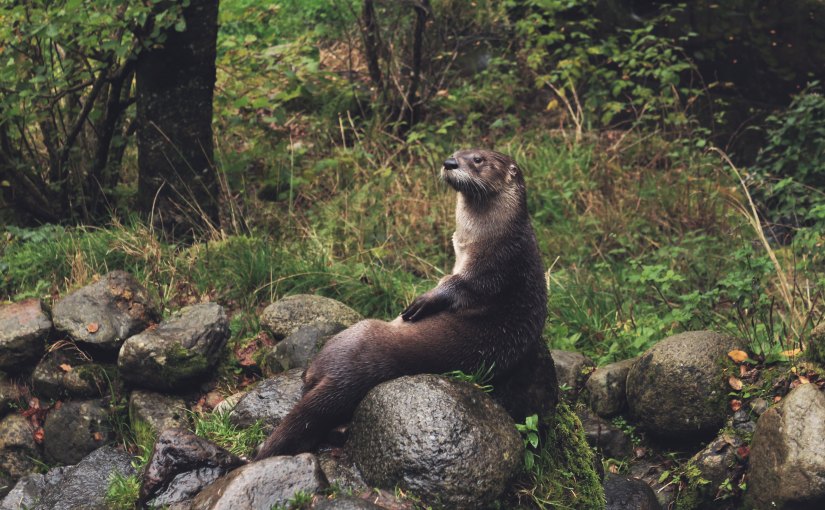
P.S. I couldn’t find a picture of a weasel, so here is a nice chilled out otter. I must take some of my own pictures soon.
“Alexander to Aristotle greeting. You have not done well to publish your books of oral doctrine; for what is there now that we excel others in, if those things which we have been particularly instructed in be laid open to all? For my part, I assure you, I had rather excel others in the knowledge of what is excellent, than in the extent of my power and dominion. Farewell.”
And Aristotle, soothing this passion for preeminence, speaks, in his excuse for himself, of these doctrines, as in fact both published and not published: as indeed, to say the truth, his books on metaphysics are written in a style which makes them useless for ordinary teaching, and instructive only, in the way of memoranda, for those who have been already conversant in that sort of learning.
– The Life of Alexander the Great By Plutarch
Besides the fact that Alexander was a paranoid megalomaniac, this occurred to me:
Learning begets more learning.
As well as:
Fitness begets more fitness.
Money begets more money.
Friendship begets more friendship.
Even children – traditionally people tended to either have none at all or a good few.
There is positive feedback (all up to a point of course and then returns diminish).
Why are societal things positive feedback loops whereas biological things are generally negative feedback loops? There are exceptions of course, notably the use it or lose it principle in anything neurological/behavioural as well as in exceptional situations like labour.
Can we think of any examples where there is a negative feedback loop in a sociological context?
It doesn’t have to be limited to humans by the way.
I can think of the following examples of negative feedback in society:
Election fatigue or the general situation of chasing after someone who isn’t interested be it in marketing or in interpersonal situations (for clarity, we can phrase it as the more attention they receive, the less attention they return).
Obviously, there are lots of theories about how markets self-regulate, but they are filled with problems.
Prices vs demand and prices vs supply is another tempting one. However, here the relationship is more genuinely between supply and demand rather than between either of those and price – and that’s not a negative loop.
And if there aren’t very many examples of negative feedback, this explains that so many things in society follow the 80/20 rule rather than the normal distribution.
In fact, you can extrapolate the 80/20 rule. Then you get:
64% of outcomes come from 4% of causes,
51.2% of outcomes come from 0.8% of causes.
I have about 20 GB worth of songs on my phone and I listen to the same 10 tracks. In other words, because there is no negative feedback (up to a pretty high threshold), these 10 songs monopolise my listening “choices”. I have a whole wardrobe of stuff but I wear the same things all the time. Same with pots and pans. Apps on my phone.
Income inequality doesn’t quite as devilish when you think about it this way.
My thinking is that if we find more examples of macro scale negative feedback loops, we may be able to understand whether there is another way.
Or are we just always going to be in a use it or lose it situation? Are we just one giant self-similar network of walking talking neurons?
The Russians have a law against offending the feelings of religious followers.
It came up again today because a magazine did a (somewhat) explicit photoshoot in a church they considered abandoned:
Source: Vkontakte
It turns out the church wasn’t entirely abandoned and was occasionally used. This may result in a court case against the model/photographer/publication involved: not because they perpetrated land belonging to the church, but because they offended people’s religious beliefs.
A man recently received a suspended sentence for catching Pokemon in another church for this reason.
Is the fact that the Russians want to protect the religious any different to the snowflakery millennials are getting accused of?
In West it is kind of the opposite, but the same principle applies. We’re most worried about offending those who fight for more modern things, e.g. non-traditional genders.
It’s a past time of mine to observe the parallels between two places that most people consider as different as night and day. And it allows me to ask: why is there such a global cross-cultural tendency to protect the feelings of minorities through law?
In a recent case, a woman was found guilty of involuntary manslaughter because of what she said. Of course, her words were evil. It was emotional abuse taken to the limit.
But can words really be equated to violence?
I think that this would only encourage physical violence by closing a steam valve. It makes little of victims of real violence. There’s something wrong with putting genuinely violent people in the same category with someone who likes to rant.
Incitement to hatred? Obviously it would be ideal if we all agreed and lived in peace and love. But assuming that we’re not moving to a utopia any time soon, isn’t it better to allow people to peacefully rant and speak freely than to encourage them to band into groups and get violent against the establishment which is what we achieve by marginalising them? In fact, ranters of a denomination could verbally spar with other types of ranters. Might it even be a healthy debate?
Perhaps non-violent hating is like a small forest fire:
“Small forest fires periodically cleanse the system of the most flammable material, so this does not have the opportunity to accumulate. Systematically preventing forest fires from taking place ‘to be safe’ makes the big one much worse.” – Nassim Taleb. Antifragile : things that gain from disorder.
Similarly, marginalising the “haters” just leads to real violence.
Having said that, I can relate. I have often felt like I needed trigger warnings. I get very upset at certain images in films and documentaries. But I would never feel that someone owes it to me to prevent me from them: if I made a choice to watch a film, that’s just part of the consequences. Being honest, I don’t watch that many films for this precise reason.
Virtually every book or film I process results in an overwhelming spillage of thoughts and emotions (hence, this blog). In fact, I am still haunted by a number of books I read.
When I was in school, we were always given a book list for the summer. Part of me wishes I’d never read Three Comradesand The Collector. Part of me is enraged that there wasn’t a trigger warning on those books. But by reading these books I learnt what I do and don’t like – and why.
But let’s just imagine that words aren’t violence and flip the question: should it be a crime to offend people’s feelings?
P. S. I am meant to be working on Philip Larkin‘s poetry, but I’m not a fan, hence, all this 🙂
As the world ages, we gain collective experience. Relationships between things are clarified: insecurity gives way to confidence, truth, gained through an insufferable struggle, turns into familiar axioms that don’t demand any sort of struggle.
The well-intentioned man who once encouraged our predecessors to remind themselves of humility, would be the very first to be ashamed of his naiveté, should he rise from the grave and see the successes of his descendants.
In every way, we have succeeded; in every way, we have become enlightened. As we progress, our beliefs become firmer: they morph from vague illusions into something tangible.
The thunder rattles, the dog barks, the stubborn halfwits triumph – these are the simple truths that we have garnered and on which our future well-being relies. We recognise as truths only those truths that smack us right in between the eyes and physically stimulate our senses. We record in our annals only those facts that have the advantage of being in the perfect tense.
Everything else is labelled as lacking evidence and attributed to the realm of nonsense, and because nonsense is axiomatically useless, we treat this “everything else” with skeptical condensendence if not with outright hatred.
Where our unquestionable truths come from, what effects the thunder has, why a dog barks, why stubborn halfwits triumph, and not good people – we don’t think about it and aren’t interested in explanations. We just take it as fact, immutable and irresistible. On hearing the thunder, we say: this is thunder. On hearing a barking dog, we say: this is a barking dog.
The meaning of all our aspirations and worries is to be free from all doubts forever and to create for ourselves a position of flawless confidence in which we could live without thinking.
Each individual has a preference for a certain framework: we each create a comfort zone, and then we only need to make sure that we don’t venture into the unknown. In front of us, a prize dangles on a string, on which our eyes are fixated and which serves as a guiding star in our journey.
It wouldn’t be fair to say that creating the comfort zone is easy – quite the contrary! There is nothing more fragile than the framework to which we so diligently cling, nor is there anything more insistent on disturbing it than the unknown, from which we so stubbornly run. Staying in the comfort zone requires us to constantly repel the unknown with hard work and even violence… But we persevere. Assuming that our morals have been simplified enough that they don’t impede us in the our zealous quest for the said prize, what happens when we finally sink our teeth into it? I will tell you: the minute we reach the prize, when we feel it in our hands at last, it turns out that its richness isn’t quite what we thought it would be – the prize itself has become a victim of the unknown that we so strenuously fought against. And so, even though we judge the dreamers with their nonsense, we too end up in pursuit of nonsense, crude and stupid.
The question is: what was it that we were fighting for?
…
This is my rather liberal translation from Mikhail Saltykov-Shchedrin’s Sign of the Times, c. 1863. Quite possibly its first English incarnation. Original text in Russian.
There is a nuclear war in morning. The capitals and major cities are all gone. You happened to have been visiting your aunt in Castle’elsewhere, a cute provincial town, and remained alive and well.
In the wake of the war, you realise that life will never be the same. There is an army barracks that remained unharmed down the road from your aunt’s house. The commanding officer is used to taking orders and is awaiting them. They aren’t coming. Your cousin just returned from the neighbouring Castle’nowhere and said that people have started looting the local shopping centre. Someone has to take charge and you’re not in the habit of relying on others. You win the trust of the commanding officer and now have an army at your disposal – although not much else.
What is the first thing that you do?
I would find food for the army. My particular Castle’elswhere happens to be in Ireland. We have milk and beef galore, and even some barley and rapeseed oil. Some artisanal cheese. Guinness and Jameson. But the ports are all in tatters and it will be a while until we will manage to import food. Scurvy is a real threat: there is no vitamin C on this island.
I am now Commanderina-in-Chief Martina and I have an army of malnourished men whose teeth will soon start falling out and their clothes are wearing thin. A man who used to grow a few carrots for himself arrives at my doorstep and explains that he can provide a steady supply of carrots, rich in Vitamin C. Let’s call him Captain Orange. Captain Orange is the only man in the country who had the foresight/luck/interest in growing carrots – and the ports are still closed, so he has no competitors. Captain Orange soon becomes a very rich and powerful man as he has something I need to retain my power. I make a deal with him that we should only supply a certain amount of carrots, enough to keep the army healthy and as for the general population we need to supply just over the scurvy-threshold because if we supply more that, it will weaken our power and if we supply less, there will be riots. Power, eh.
Back to the real world.
This got me thinking of the Googles and Facebooks – the multinationals in Ireland. The lads here aren’t the programmers/engineers that would be able to solve ubercomplex problems (I imagine they are mostly in California). They are human resources, corporate social responsibility, account managers, etc. In the event of such a near apocalyptic event, of what use are the official skills of the majority of these people?
During my short stint in a multinational, I used to always wonder how come there are so many people literally busy doing nothing, or something I simply didn’t understand. Making slides about making slides and trackers about other trackers.
The multinational is Captain Orange. They come to the government and tell them that they have what the government so needs to keep the population just over the (first world) poverty line: jobs. Not just in Ireland, but in lots of places. By moving to Ireland and paying let’s say 10,000 people wages to do nothing corporate back/middle office jobs, they still save money on tax. By coming to other countries they will gain something else: the points isn’t that Ireland is a tax haven. The point is about solving problems. As Arthur Schopenhauer used to say, talent hits a target no one else can hit and genius hits a target no one else can see. Yes, we all know their product is phenomenal. But the real problem they solve, and the reason they have so much clout, isn’t what it seems. Genius, not just talented. The more enduring the problem and the more efficacious the solution, the more leverage you get.
The next thing I wondered about were our first world problems. Are we living in an age that’s analogous to the end of the Roman empire?
Tremendous centralisation and its cousin globalisation.
Society is tearing itself apart: different camps of Westerners seem to have more in common with other “tribes” than with each other (just think Clinton supporters vs Trump supporters). Diversity of thought is good, but this is diversity of non-thought. Most of these people aren’t pro x, y, z, they are anti a, b, c.
Research is mass produced for the sake of being published and isn’t really coming up with anything hugely new or even worthwhile.
The buildings of today look worse than the buildings of 100 years ago, even accounting for survivorship bias. Same with music. Same with art.
Lack of innovation. True monopolies: the two main credit card companies, call them V and M, are basically the same entity in their business practices, they interchange staff and outsource to each other in different countries. And they are also indispensable as far as the state is concerned. They aren’t the only example, of course. We neither incentivise innovation, nor do we have as burning a need for it. And then we wonder where the inequality comes from.
Changes in sexual behaviour: described pretty well by Gary Wilson
I am by no means saying that things are worse today than they were 100 years ago. But it is a different environment: where do we go from here?
UPD:
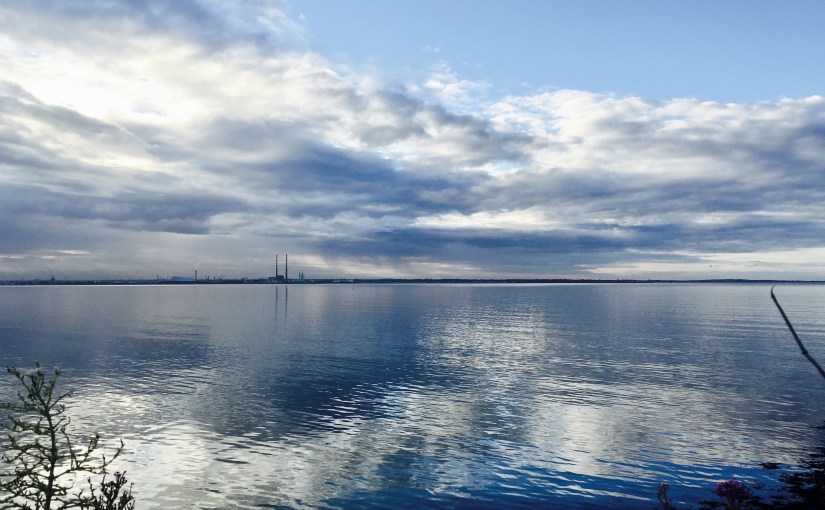
On a recent walk, I took these two pictures from the same place:
The above pier was built in 1821. Look dreamy.
The structure closest to us was built in the 1980s. Looks dystopian.
When they dig up our stuff in 5,000 years, what will they say?
And so we continue our search for the meaning of life. Robert Solomon’s The Passionsoffered an interesting take on this question. He proposed the idea that emotions are the meaning of life: as in they add the meaning in a life; emotions add meaning to our experience the world.
When I first came across this idea, I thought it was strange, but really it does make sense. Emotions have a strong effect of perception. Perception heavily influences our understanding of reality and thus has an impact on the meaning we attribute to things, life itself being one of those things.
Emotions are probably the strongest mental phenomena, built of thoughts and feelings – and very importantly, ultimately resulting in action, as the name suggests. Emotions are the driver of behaviour. My entrepreneurial soul was quite impressed when I heard that every sale is a promise of a future state. Emotions rule us, so we may try to be a little bit more aware – and perhaps less disrespectful to them.
Solomon argues that emotions are judgements rather than plain feelings arising from bodily reactions. Emotions tells us whether something matters – or is meaningful. Solomon also argues that emotions are in a sense chosen, sort of along the lines of stoic philosophy. As with beliefs, emotional judgements are often unintentional and unconscious, but we are still responsible for evaluating and changing them if that’s warranted.
According to Matthew Ratcliffe, Solomon sees emotions as the ‘meaning of life’, in the sense that they are a precondition for the intelligibility of all our goal-directed activities. If no actual or possible states of affairs were ever judged by us to be preferable to any other, we would have no grounds for action. Without emotions, we could have no projects, nothing to strive for, no sense of anything as worth doing:
“I suggest that emotions are the meaning of life. It is because we are moved, because we feel, that life has a meaning. The passionate life, not the dispassionate life of pure reason, is the meaningful life.”
Everything looks better in the sun
As someone who has spent some time studying emotions, I occasionally hold out hope that one day science succeeds in transcending the prism of bias and emotion and we are able to see the world without the emotional projections. Being that little bit pragmatic though – and seeing people like N. Taleb do it, I realise that we have to give up on overintellectualising and accept our limitations – or rather break up with our illusion that we are so above our lowly emotions.
The interesting thing about Solomon’s writing is that he emphasises the existential aspect of emotions: this our experience of being present.
The other interesting aspect is how neuroplasticity affects our perception: any time we experience an emotion a certain pathway gets potentiated and the next time we perceive similar inputs, the fact that we experienced an emotion relating to it previously will have changed the way we see the world. There is positive feedback here.
Neuroplasticity affects everything, but a lot of it is mediated through emotion. My personal working theory is that the meaning of life is the impact that you have (appreciating that that’s very vague, but the point here is that it’s different to the en vogue “the meaning of life is happiness”). But how do I decide what is full of impact? I need to feel that it has meaning. The exact values I consider to be full of impact may in theory be independent of emotion, but in reality they are completely affected by emotion. That warm feeling of satisfaction and accomplishment has to flow through me to know that what I am doing is meaningful. I usually only arrive there through what would look to an outside person as a silent CBT session with myself, so it isn’t entirely detached from intellectualising, but it has to feel right in order for me to know that it is right.
What if I do find something meaningful? It is going to invoke strong emotions. The common denominator of meaning does seem to be emotion.
Solomon drew a lot of Martin Heidegger’s concepts of mood. Mood is probably a more more precise word for what Solomon was talking about. The weather (emotion) matters less than the climate (mood) when we decide on the meaning of things around us. Our moods probably invoke the exact brands of biases and focuses of those biases that will allow us then to form our ideas on the meaning of what we see. Heidegger has an interesting definition for mood: it is a background sense of belonging to a meaningful world. That’s kind of like saying that I, as an object, have a relationship with all these other objects and I am trying to evaluate the condition of that relationship. “Sun’s out, so everything is good” or “Nobody is replying to my emails, so I feel like sh*t”. This certainly describes my mood a lot of the time, but then I slap myself and go back to a more Stoic/Nietzschean attitude to evaluating my own actions rather than the world’s response to me.
Reality is real no matter how we perceive it, but meaning is pretty personal.
…
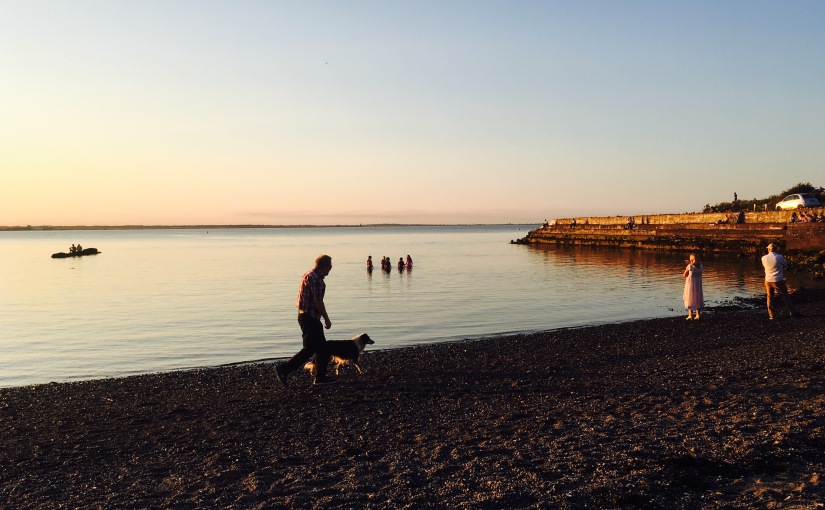
P. S. I wrote a Haiku while sitting on a beach in Dublin:
An old dog, once black, now wiser, at sunset.
Here is the culprit:
…
P. P. S. I also drew something mighty odd. Feel free to indulge in the madness mindfulness and colour it in.













 A millennial's musings