Saturday secret service psychologist: come play my mind game

More post-card philosophy for you!

We’re taking a darker shade today  to paint this fellow. Try to guess who said all this, you’ve definitely heard of him.

He is probably an INTJ. There is no consensus on his personality, but INTJ makes sense to me – clever, daring and ruthless! Put your guess in the comments and then Google any quote to get the actual answer. He said:

  • One must renounce the bad taste of wishing to agree with many people.
  • Morality is the herd instinct in the individual.
  • The visionary denies the truth to himself, the liar only to others.
  • One chooses logical argument only when one has no other means.
  • Convictions are more dangerous foes of truth than lies.
  • Without the errors which lie in the assumption of morality, man would have remained an animal.
  • All truly great thoughts are conceived by walking.
  • All credibility, all good conscience, all evidence of truth come only from the senses.
  • Thoughts are the shadows of our feelings – always darker, emptier and simpler.
  • The surest way to corrupt a youth is to instruct him to hold in higher esteem those who think alike than those who think differently.
  • In everything one thing is impossible: rationality.
  • The doer alone learneth.

Wishing you a wonderful weekend.

What psychiatrists think of Donald Trump

It is considered unethical and unprofessional for psychiatrists to hand out opinions about public personalities from afar. This rule was broken recently, with regards to, of course, Donald Trump.

Letter to the editor

A letter to the editor in The New York times, signed by Lance Dodes, an addiction psychiatrist, former Harvard assistant professor (and 34 other professionals) on the 13th Feb 2017 stated:

“Silence from the country’s mental health organizations has been due to a self-imposed dictum about evaluating public figures (the American Psychiatric Association’s 1973 Goldwater Rule). But this silence has resulted in a failure to lend our expertise to worried journalists and members of Congress at this critical time. We fear that too much is at stake to be silent any longer.”

“Mr. Trump’s speech and actions demonstrate an inability to tolerate views different from his own, leading to rage reactions. His words and behavior suggest a profound inability to empathize. Individuals with these traits distort reality to suit their psychological state, attacking facts and those who convey them (journalists, scientists).”

“In a powerful leader, these attacks are likely to increase, as his personal myth of greatness appears to be confirmed. We believe that the grave emotional instability indicated by Mr. Trump’s speech and actions makes him incapable of serving safely as president.”

A strongly-worded response to the letter

A pretty badass response came in the next day, 14th Feb 2017: a follow-up letter to the editor from Allen Francis, who wrote much of the DSM IV, including the diagnostic criteria for Narcissistic Personality Disorder. Much as the DSM IV has its flaws, this guy is really on point, in my more than humble opinion:

Most amateur diagnosticians have mislabeled President Trump with the diagnosis of narcissistic personality disorder. I wrote the criteria that define this disorder, and Mr. Trump doesn’t meet them. He may be a world-class narcissist, but this doesn’t make him mentally ill, because he does not suffer from the distress and impairment required to diagnose mental disorder.”

“It is a stigmatizing insult to the mentally ill (who are mostly well behaved and well meaning) to be lumped with Mr. Trump (who is neither).”

“Bad behavior is rarely a sign of mental illness, and the mentally ill behave badly only rarely. Psychiatric name-calling is a misguided way of countering Mr. Trump’s attack on democracy. He can, and should, be appropriately denounced for his ignorance, incompetence, impulsivity and pursuit of dictatorial powers.”

His psychological motivations are too obvious to be interesting, and analyzing them will not halt his headlong power grab. The antidote to a dystopic Trumpean dark age is political, not psychological.”

Should psychiatrists stay silent?

Looking down from her moral high ground on the 2 lads in a newspaper fight is the president of the American Psychiatric Association, Maria A Oquendo, who pointed out that while she could understand the desire to “get inside the mind” of a presidential candidate, having psychiatrists comment publicly about people they have not examined threatens to erode the public’s confidence in the profession.

“Simply put, breaking the Goldwater rule is irresponsible, potentially stigmatizing, and definitely unethical,” she wrote.

As for me, I believe that, psychiatrists shouldn’t be analysing living political figures – as psychiatrists. As people with opinions, however, I feel they should be heard – just like anyone else. They also happen to be very good at analysing people’s behaviour. It is up to the reader to understand that this is not an excerpt from Trump’s personal medical files, instead it is just another opinion made legitimate by our commitment to free speech.

What is this psychiatric condition they are debating about?

Narcissistic personality disorder is a mental disorder in which people have an inflated sense of their own importance, a deep need for admiration and a lack of empathy for others. But behind this mask of ultraconfidence lies a fragile self-esteem that’s vulnerable to the slightest criticism. For those of you not familiar with the DSM, it is a (the?) diagnostic guide for psychiatrists. We are currently of the 5th edition. Here are the criteria for NPD:

The essential features of a personality disorder are impairments in personality (self and interpersonal) functioning and the presence of pathological personality traits. To diagnose narcissistic personality disorder, the following criteria must be met:

A. Significant impairments in personality functioning manifest by:

1. Impairments in self functioning (a or b):

a. Identity: Excessive reference to others for self-definition and self-esteem regulation; exaggerated self-appraisal may be inflated or deflated, or vacillate between extremes; emotional regulation mirrors fluctuations in self-esteem.

b. Self-direction: Goal-setting is based on gaining approval from others; personal standards are unreasonably high in order to see oneself as exceptional, or too low based on a sense of entitlement; often unaware of own motivations.

AND

2. Impairments in interpersonal functioning (a or b):

a. Empathy: Impaired ability to recognize or identify with the feelings and needs of others; excessively attuned to reactions of others, but only if perceived as relevant to self; over- or underestimate of own effect on others.

b. Intimacy: Relationships largely superficial and exist to serve self-esteem regulation; mutuality constrained by little genuine interest in others‟ experiences and predominance of a need for personal gain

B. Pathological personality traits in the following domain:

1. Antagonism, characterized by:

a. Grandiosity: Feelings of entitlement, either overt or covert; self-centeredness; firmly holding to the belief that one is better than others; condescending toward others.

b. Attention seeking: Excessive attempts to attract and be the focus of the attention of others; admiration seeking.

C. The impairments in personality functioning and the individual‟s personality trait expression are relatively stable across time and consistent across situations.

D. The impairments in personality functioning and the individual‟s personality trait expression are not better understood as normative for the individual‟s developmental stage or socio-cultural environment.

E. The impairments in personality functioning and the individual‟s personality trait expression are not solely due to the direct physiological effects of a substance (e.g., a drug of abuse, medication) or a general medical condition (e.g., severe head trauma).

Friday’s 5 cognitive curiosities journal club

A weekly trail mix of thought-provoking essays and research.

1. I Asked a Psychopath How to Stop Caring About Rejection

From Vice

This brilliant article summarises the feelings of a psychopath with insight. I think is a valuable approach as instead of demonising people with psychopathy, it is better to understand:

  • With rejection, I always ask myself “why did this happen?” I never ask “why am I not worthy?” When I get rejected I feel bad for like negative-two seconds. It’s just, oh how do I fix it?
  • Everything for me is a percentage. For example if I think something’s against me at about 20:1, I’ll put in 20 different proposals or versions to make sure I get what I want. Doing that trains your expectations too. If your chances are 20:1 and you only put in one attempt, then you can’t get upset if it doesn’t work.

2. New research finds that dopamine is involved in human bonding

From Proceedings of the National Academy of Sciences

“We found that social affiliation is a potent stimulator of dopamine,” says Barrett. “This link implies that strong social relationships have the potential to improve your outcome if you have a disease, such as depression, where dopamine is compromised. We already know that people deal with illness better when they have a strong social network. What our study suggests is that caring for others, not just receiving caring, may have the ability to increase your dopamine levels.”

3. The reasons behind right- and left-handedness revealed

From eLife

Epigenetic factors appear to be at the root of it, reflecting environmental influences. Those influences might, for example, lead to enzymes bonding methyl groups to the DNA, which in turn would affect and minimise the reading of genes. As this occurs to a different extent in the left and the right spinal cord, there is a difference to the activity of genes on both sides.

Unlike other forms of caregiving, the act of mothers singing to infants is a universal behaviour that seemingly withstands the test of time.

4. Infant brains engage through song

From University of Miami

“High cognitive scores during infant-directed singing suggested that engagement through song is just as effective as book reading or toy play in maintaining infant attention, and far more effective than listening to recorded music.”

“Mothers around the world sing to their infants in remarkably similar ways, and infants prefer these specialised songs. The tempo and key certainly don’t need to be perfect or professional for mothers and infants to interact through song. In fact, infants may be drawn to the personalised tempo and pitch of their mother, which encourage them to direct their gaze toward and ultimately communicate through this gaze.”

5. Use it or lose it: how the brain chooses what memories to store

From eLife

“This goes some way to answering the long-standing question of whether the formation of generalised memory is simply a result of the brain’s network ‘forgetting’ incidental features,” Morrissey explains. “On the contrary, we show that groups of neurons develop coding to store shared information from different experiences while, seemingly independently, losing selectivity for irrelevant details.”

Have a lovely weekend everyone!


Happiness the Buddhist way as seen by Yuval Noah Harari

The recent  “Sapiens – A Brief History of Humankind” by Yuval Noah Harari attempts to be the meta-history book of our time. I heard that the book was excellent from a few friends who think that everything popular is excellent.

This passage on Buddhism and happiness confirmed my view that the book is politicised snake oil. I am very open to being convinced otherwise.

Harari: “For 2,500 years, Buddhists have systematically studied the essence and causes of happiness, which is why there is a growing interest among the scientific community both in their philosophy and their meditation practices.”

“Buddhism shares the basic insight of the biological approach to happiness, namely that happiness results from processes occurring within one’s body, and not from events in the outside world. However, starting from the same insight, Buddhism reaches very different conclusions.”

Me: So far so good. Happiness = reality – expectations, meaning that it isn’t only a product of the events of the outside world. The bit about the body is also pretty solid: serotonin, etc.

Yuval Noah Harari on Buddhism

You may also like Five philosophical myths about mindfulness that are sabotaging your practice

Harari: “According to Buddhism, most people identify happiness with pleasant feelings, while identifying suffering with unpleasant feelings. People consequently ascribe immense importance to what they feel, craving to experience more and more pleasures, while avoiding pain. Whatever we do throughout our lives, whether scratching our leg, fidgeting slightly in the chair, or fighting world wars, we are just trying to get pleasant feelings.”

Me: Thus spoke Sigmund Freud. We are all about seeking pleasure and even more so avoiding pain.

Harari: “The problem, according to Buddhism, is that our feelings are no more than fleeting vibrations, changing every moment, like the ocean waves. If five minutes ago I felt joyful and purposeful, now these feelings are gone, and I might well feel sad and dejected. So if I want to experience pleasant feelings, I have to constantly chase them, while driving away all the unpleasant feelings. Even if I succeed, I immediately have to start all over again, without ever getting any lasting reward for my troubles.”

Harari: “What is so important about obtaining such ephemeral prizes? Why struggle so hard to achieve something that disappears almost as soon as it arises? According to Buddhism, the root of suffering is neither the feeling of pain nor of sadness nor even of meaninglessness. Rather, the real root of suffering is this never-ending and pointless pursuit of ephemeral feelings, which causes us to be in a constant state of tension, restlessness and dissatisfaction. Due to this pursuit, the mind is never satisfied. Even when experiencing pleasure, it is not content, because it fears this feeling might soon disappear, and craves that this feeling should stay and intensify.”

Me: This is probably true about Buddhism (so not Harari’s problem), though it does strike me as being rather nihilistic. Feelings are biology’s way to tell us how we’re doing, so saying they are inconsequential, ephemeral and aren’t worth pursuing seems defiant of our very nature.

Buddhism and happiness Yuval Noah Harari

You may also like Why Christians practicing mindfulness should learn about the Gospel of Thomas

Harari:”People are liberated from suffering not when they experience this or that fleeting pleasure, but rather when they understand the impermanent nature of all their feelings, and stop craving them.This is the aim of Buddhist meditation practices.”

Me: Well, that’s not going to happen so long as we have an intact limbic system.

Harari: “In meditation, you are supposed to closely observe your mind and body, witness the ceaseless arising and passing of all your feelings, and realise how pointless it is to pursue them. When the pursuit stops, the mind becomes very relaxed, clear and satisfied. All kinds of feelings go on arising and passing – joy, anger, boredom, lust – but once you stop craving particular feelings, you can just accept them for what they are. You live in the present moment instead of fantasising about what might have been.”

Me: Things are about to get a little meta. What if you feel like pursuing your feelings? That’s a thought. Why reject it? Why disallow yourself from craving something? Isn’t that a “wrong” thing to do when you’re meditating? Harari is leading us down the road of blissful oversimplification. Unfortunately, it’s not that simple. Furthermore, our limbic systems will always crave certain feelings. That’s hard wired, and no amount of cognitive machinations or meditation is going to change that. So maybe these “accepting” people sitting in a lotus position on a green moral highground somewhere should accept their own biology instead?

Harari: “The resulting serenity is so profound that those who spend their lives in the frenzied pursuit of pleasant feelings can hardly imagine it. It is like a man standing for decades on the seashore, embracing certain ‘good’ waves and trying to prevent them from disintegrating, while simultaneously pushing back ‘bad’ waves to prevent them from getting near him. Day in, day out, the man stands on the beach, driving himself crazy with this fruitless exercise. Eventually, he sits down on the sand and just allows the waves to come and go as they please. How peaceful!”

Me: Miracle pill talk.

Yuval Noah Harari Sapiens book review

Harari: “This idea is so alien to modern liberal culture that when Western New Age movements encountered Buddhist insights, they translated them into liberal terms, thereby turning them on their head. New age cults frequently argue: ‘Happiness does not depend on external conditions. It depends only on what we feel inside. People should stop pursuing external achievements such as wealth and status, and connect instead with their inner feelings.’Or more succinctly, ‘Happiness begins within.’ This is exactly what biologists argue, but more or less the opposite of what Buddha said.”

Me: Nice summary, to be fair. However, he is calling people out on something he is also culpable of.

Harari: “Buddha agreed with modern biology and New Age movements that happiness is independent of external conditions. Yet his more important and far more profound insight was that true happiness is also independent of our inner feelings. Indeed, the more significance we give our feelings, the more we crave them, and the more we suffer. Buddha’s recommendation was to stop not only the pursuit of external achievements, but also the pursuit of inner feelings.”

Me: I am sorry, what? “True happiness is also independent of our inner feelings”? What is true happiness? Why is that not an inner feeling? How do you define true happiness as distinct from just, you know, normal happiness? I surmise that normal happiness is a fleeting ephemeral emotion that he denigrated earlier, but I am really confused, what is true happiness?! Is this just an epithet designed to make me feel like a mere mortal not worthy of understanding Harari’s grand opus?

Harari: In Buddhism, the key to happiness is to know the truth about yourself – to understand who, or what, you really are. Most people wrongly identify themselves with their feelings, thoughts, likes and dislikes. When they feel anger, they think, ‘I am angry. This is my anger.’ They consequently spend their life avoiding some kinds of feelings and pursuing others. They never realise that they are not their feelings, and that the relentless pursuit of particular feelings just traps them in misery.

Me: What are we then? What’s real? We’re in the Matrix, aren’t we?…

12 tips for thinking more clearly and making better decisions

This is one of those articles that I wrote for myself: for those mornings when the only things you want to do are browse Facebook and watch BBC1, or at least you think you do. Then you remember that you’ve about 20 problems to solve that day and get that feeling in your stomach like both your adrenal glands just emptied their contents into your bloodstream.

1. Enter into deep work mode

Wall off some distraction free time. The phone goes on airplane mode. Close all the tabs you don’t need.

Let’s be honest, if you are reading this, you are probably dealing with quite challenging and cognitively demanding.

These things require extreme levels of focus and uninterrupted immersion for an effective resolution.

As such, the goal is to enter into a state of flow. It is a paradoxical mix of mindfulness and being very goal-directed at the same time. Flow, also known as the zone, is the mental state of operation in which a person performing an activity is fully immersed in a feeling of energised focus, full involvement, and enjoyment in the process of the activity.

how to think more clearly deep work

2. Do a brain dump

If you are at a loss, the thoughts are messy and you don’t know where to start, an unstructured flow of consciousness style “brain dump” is required. It straightens out circular ruminations and allows the writer to identify what is really wrong. There is something liberating about getting things down on paper. You can always throw it out. Nobody has to see it. It is only for you to see.

In the best possible way, it lowers expectations and gives you the licence to be really honest.

I am putting my money where my mouth is with this tip: a lot of this blog is really me writing for me. I often reread what I have written because it answers questions that bother me (and catch a few typos on the way!) It turns out that the same questions bother a lot of people, hence our little community.

3. Draw a spider diagram

Difficulties in solving problems often arise from the fact that problems are interdependent, they are not isolated. Drawing a spider diagram (a mind map) is a very good way to figure out what’s going on.
how to think clearly

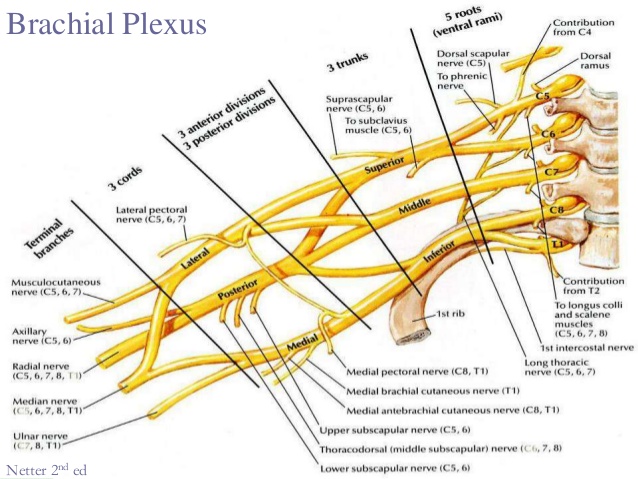
As a one-time medical student in the rather fundamentalist anatomy department, I had to learn everything about the brachial plexus (pictured above).  The structure was just the starting point of what I needed to know. The the origins at the spine and the muscle activation were at least as complex on top of that. I drew a spider diagram.

When my father was splitting from his second wife and I arrived home to find my stuff packed away in boxes by the latter, well, I also drew a spider diagram. Because I needed to understand what’s going, what everyone is thinking and where to move (not just literally) from there.

This approach to thinking is resonant with the structure of our brain with its nodes and links.

4. Make a to-solve list (not a to do list) and tell a story

Lists are great, says the ENTP. Even checklists. They really are great because they give us a sense of control. I have studied motivation in great detail as I deal with students doing their final school exams to get into college. They keep asking me about motivation. These 17 year olds have the most fine-tuned BS filter on the planet, so I really need to try hard. I finally found a solution for them, which is: a sense of control.

Feeling in control is the key to being motivated.

There is a mountain of evidence about this. However, a small study done on nursing home residents really illustrates it best. Some people who go into nursing homes don’t do well and fade away in less than 6 months. Others seem more alive than any of us. What’s the difference? Well, as one of the lively 85 year olds explained: “I trade my chocolate desert for a piece of fruit from one of the other guys at every dinner”. Why? Doesn’t he like chocolate? The answer lies in the fact that now he has control: in an environment where you are told when to sleep, where to sit and when to take your tablets, it is crucial to eke out a sense of control by being in charge of something small like that.

How do you structure a list? There are two great ways:

  • list of problems to solve
  • a chronological story-plan

A plain to-do list just makes you feel like you are doing chores. A list of problems to solve automatically gives both purpose and perspective.

As for the story plan, there is something about our brains that makes us dead set of prioritising stories over any other kind of information. It is therefore important to tap into that. A fair portion of NLP is snake oil, but their emphasis on story-telling is right on. Things seem far less daunting if you write them down on a piece of paper as bite-sized steps. For example, recently, I have been moving between countries. It’s an overwhelming amount of paper work, a complex process with many catch-22’s to machete through like you need a lease to set up utility bills, and a utility bill to set up a bank account and a bank account to set up a lease. By writing it down, it is easier to see solutions and the impossible soon becomes possible. There are 2 reasons for this:

  • we find it difficult to store long sequences in our heads, so a written down prop is key (this is mentioned a lot in Thinking Fast and Slow and GTD)
  • by going through the steps required to build out the story, we think of the entire contexts – the things we would have otherwise forgotten about

think more clearly write things down

5. Snap out of being on rails by getting perspective

It’s precisely when we are “on rails”, when we have some kind of contagious emotion unfolding in us, when we want to “just get this done”, that we need to pause and switch to something else. Ideally, we would go straight to taking 10 minutes to be mindful, but for most of us mortals that just seems impossible. Instead, it is a good idea to think of something completely different.

Let’s say there is an enraging email that you can’t wait to respond to so as to make it go away. Mindfulness? Now? No!…

To ease yourself out of the hijacked state, think of something completely different, preferably something even more challenging, that makes the original issue seem like nonsense.

Recently, I was dealing with an unruly real estate agent who just wouldn’t listen and kept sending me emails with unreasonable demands. I thought to myself: there are lots of people who don’t have this problem – because they simply cannot afford to live on their own. It’s not even that it made me feel grateful and empowered, that’s not the point, but it gave me perspective and an ability to deal with the tyrant in a way that accomplished my aims rather than just telling them “for the n-time, will you…”

6. Take 10 minutes to meditate

It is when we are busiest that we need to take the time to be mindful.

I recall Ray Dalio talking about it. Yes, the guy is filthy rich, but I can just imagine him losing a billion bucks (it happens in that business) and going into his office to do his TM routine. What else would he do? Shout at the researchers for not seeing into the future? The traders for not getting out of the trade earlier? There is no point. It is much better to get centred again and then do what is actually going to help the situation.

7. Have a cup of matcha, or any good green tea

I’ve always loved green tea. However, after my trip to Japan, it became clear to me that there is something quite magical about certain varieties of green tea. I am a big fan of Ippodo and specifically Ummon-no-mukashi.

Like salbutamol opens the bronchioles, this stuff clears the head.

For those who aren’t keen on concentrated green goo, a cup of Hosen Sencha will do wonders too. The way the Japanese drink tea is more or less an exercise in mindfulness, so I would make use of that aspect too. It is part of my morning routine. It is especially something that people who can’t drink coffee should consider. Unlike coffee, matcha doesn’t give you a jolt of energy and then a come down, but a steady state of clarity.

thinking more clearly mindfulness meditation

8. Listen to some upbeat classical music you’re not very familiar with

Listening to something you know well calls in all kinds of associations and other hardcoded Pavlovian nonsense we don’t always need.

Thankfully, there is so much classical music out there, we’re unlikely to ever be stuck. Some may prefer house music. Sometimes house music has lyrics or distracting sexy sounds. My personal recommendation would be listening to Béla Bartók or anything played by Lang Lang, a virtuoso pianist. You may also like some great apps for mindful focus.

9. Jump in for a very short burst of exercise

Even two minutes of HIIT or a quick few sets of sun salutations are likely to be quite refreshing. In an upcoming post, a neurologist will explain that

our adrenal medulla – the seat of the flight-or-fight response, the ultimate thinking and creativity saboteur, is controlled more by the motor cortex than it is by the conscious decision making centres.

10. Don’t even attempt it if you are tired

Sleep is massively undervalued in today’s society. Sleep deprivation has incredibly significant effects. Not that much sleep deprivation at all will give you the insulin resistance of a type 2 diabetic.

All the most intelligent people I know sleep at least 8 hours a night and don’t even attempt anything cognitively taxing unless they are refreshed.

This is obviously challenging for people with young children, for example, but if you can work to put yourself in a situation where you can be refreshed, it will really pay off.

11. Have a shower

Special troops are told to prioritise staying clean even in extreme circumstances. It raises morale. There is something life-affirming about water and cleanliness. The chemical changes, such as an oxytocin increase, is likely to have a positive effect on one’s emotional state.

12. Talk to a human being

We are social animals: that is just how we’ve evolved. Not all problems need to be attacked by the entire tribe, but calling in help is required sometimes because other will help us navigate through our weaknesses, see new perspective and just feel like a human being again.

think clearer mindfulness meditation deep work

Saturday secret service psychologist: come play my mind game

Rules: Resist the Googling trigger fingers and use your brain instead. All the quotes below reveal an interesting personality – and are attributed to one real person. Can you put your secret service psychologist hat on – and guess who said it?

Clues: Today we have an ENTJ. You all know him.

Quotations:

  • It is better to create than to learn! Creating is the essence of life.
  • I love the name of honour, more than I fear death.
  • What we wish, we readily believe, and what we ourselves think, we imagine others think also.
  • In the end, it is impossible not to become what others believe you are.
  • No one is so brave that he is not disturbed by something unexpected.
  • It is easier to find men who will volunteer to die, than to find those who are willing to endure pain with patience.
  • It is not these well-fed long-haired men that I fear, but the pale and the hungry-looking.
  • As a rule, men worry more about what they can’t see than about what they can.
  • In war, events of importance are the result of trivial causes.

Do comment if you wish – and especially if you don’t know the answer! I am very curious to see who you come up with 🙂 You all know this person. Next week I will up the ante!

Wishing you a wonderful weekend.

Friday’s 5 cognitive curiosities journal club

A weekly trail mix of thought-provoking essays and research.

1. The madness of mindfulness

From The Financial Times

Lately, there’s been more and more of a backlash against mindfulness. It’s only natural given the rate it is growing at and the unscrupulous many who try to earn some cash riding this wave and promising mindfulness as the true path to the moon and the stars.

An understandably overwhelmed mother standing amidst Lego pieces gets a push notification on her phone that it is time to be mindful. This seems to have been the straw that broke the camels back. She goes on a rant about the appful pursuit of happiness. Caustically, she remarks on the passive aggressive nature of the simplicity of the mindfulness proposition and the real-life difficulties of its application. Of course, the article isn’t about mindfulness, it is about the cult of commoditised mindfulness and its many apps. It is quite overwhelming indeed – if you are the kind easily gets swayed by trends.

2. Time will show – and only time

From N.N. Taleb

N.N. Taleb, the closest thing we have to a popular philosopher today, brings some seemingly obvious, yet profound, insights:

…Actors gossiping about other actors discovered that Broadway shows that lasted, say one hundred days, had a future life expectancy of a hundred more. For those that lasted two hundred days, two hundred more. The heuristic became known as the Lindy Effect. The Lindy effect is one of the most useful, robust, and universal heuristics I know…

Being reviewed or assessed by others matters if and only if one is subjected to the judgment by future –not just present — others

Academia can become a ritualistic publishing game

3. Music works the same way as heroin

From Nature Scientific Reports

Music’s universality and its ability to deeply affect emotions suggest an evolutionary origin. The research shows that endogenous opioids are critical to experiencing both positive and negative emotions in music, and that music uses the same reward pathways as food, drug and sexual pleasure. Our findings add to the growing body of evidence for the evolutionary biological substrates of music.

4. The internet and our brains are more similar than we think

From Neural Computation

The Internet relies on not being overloaded in order to work. The solution involves controlling information flow such that routes are neither clogged nor underutilised. To accomplish this, the Internet employs an algorithm called “additive increase, multiplicative decrease” (AIMD) in which your computer sends a packet of data and then listens for an acknowledgement from the receiver. If the packet is promptly acknowledged, the network is not overloaded and your data can be transmitted through the network at a higher rate. With each successive successful packet, your computer knows it’s safe to increase its speed by one unit, which is the additive increase part. This process is quite similar to our brain’s long term potentiation, i.e. memory formation. But if an acknowledgement is delayed or lost your computer knows that there is congestion and slows down by a large amount, such as by half, which is the multiplicative decrease part. This is called long-term depression (nothing to do with clinical depression).

5. The “bouba-kiki”effect: words sound sharp or soft on a subconscious level

From Psychological Science

The “bouba-kiki” effect, originally reported over 85 years ago and replicated many times since, shows that people consistently pair the soft-sounding nonsense word “bouba” with soft-looking, round shapes and they typically pair the sharp-sounding nonsense word “kiki” with spiky-looking, angular shapes.One may argue this is good old onomatopoeia, however, the researchers did a series of curious visual experiments showing people the nonsense word in a congruent (bouba-circle) or non-congruent (bouba-angular) shape. The images were shown in one eye, while the other eye was shown flashy distracting images. The congruent pair was noticed first, indicating that participants perceived and processed the relationship between word and shape before they were consciously aware of the stimuli.

Have a great weekend everyone.

Steal my checklist and stop feeling overwhelmed in the mornings

When I hear the word checklist, I think of bored looking men with clipboards standing by conveyor belts, doing quality control in a soulless brave new world factory worshipping Henry Ford. However, things changed when I first had to actually use one – during a flying lesson. It didn’t seem that bad at all, providing reassurance and a sense of completion. The negative reinforcement of doing 2g must have kept this thought dormant for a long time, but I decided to revisit these beacons of productivity that I imagine all the perfect people from Instagram tick off every day.

checklist to use in the morning
My first flight was out of Biggin Hill near London with flirty Irish-Italian instructor who insisted on doing 2g straight away

There are things that are inherently hard to do.

Realistically, getting out of bed is something that comes easily to a very select few – and these select few change every day, depending on what they expect from their day.

For those of us, who are less than euphoric on most mornings (i.e. slightly less than 100% of people, the slightly less bit accounted for mostly by people in acute mania or still high from the night before), a checklist could be a good way to ease the drift towards existential questions or reflection on the pressure of a brand new day, another attempt to achieve, another day to seize and make the most of, squeezing out the last drop where anything that wouldn’t make NutriBullet engineers blush simply isn’t enough.

That’s the real Nutribullet challenge. I cannot emphasise the usefulness of waking up at the same time every day. I use the iPhone Bedtime feature for this. It’s generally good for the circadian rhythm and creates a sense of control.

how to use checklists to make mornings easier
Sometimes you have to be on autopilot to enjoy the view

How do I keep up with being a doctor, an editor, a blogger, travel, house-hunt, read Nietzsche and get 8 hours of sleep? Well, my success rate is a little volatile.

In order to stay moving ahead, there are certain things that I simply must do every day. I have a startup checklist – things I do every morning – and things I do throughout the day. I use an app called Checklist+, or sometimes I just print it on a page.

My morning checklist achieves one main purpose: it takes out the need to make decisions.

Decisions are extremely consuming for our metaphorical RAM, especially when it is the morning and the possibilities seem so vast. It’s not like I will forget to brush my teeth if I don’t look at the checklist. It is that I don’t have to figure out: “what do I do first?” which can be extremely taxing when I just wake up.

checklist for the morning for a girl
There is something life-affirming about pink Edwardian letters

The alternative, on many mornings, is feeling out of control as I rush to work and resent having other people’s checklists imposed on me, or going straight to the laptop, surrounding myself with green tea paraphernalia and snacks, only to realise by midday that I haven’t actually done much other than worked in a virtual mailroom. The loss of productive time however, doesn’t stop there. It dictates how the rest of the day will unfold. It is the mood setting that matters:

You see the 10 push ups in the checklist? Do they build any real muscle? Hardly. What they do is they set me up to feel healthy and capable of overcoming challenges.

I am much less likely to go creeping on a former classmate’s Facebook page or drinking hot chocolate after doing even a few pushups than I would be if I had just spent the morning lazying around in my pyjamas. It’s that phenomenon of consistency that Cialdini talks about.

My next item on the agenda is the domino piece.

… As distinct from the Domino’s slice from yesterday’s dinner. The domino piece is the most important item on my work to-do list or the one that makes all other pieces irrelevant. I deal with the thing I resist the most first. Perhaps this is why I find mornings so cognitively taxing. [I will insert a proper reference for this soon]. However, having spent years chiselling out this productive approach, I wouldn’t trade it for anything else.

My 2nd checklist is the one for the day. It allows me to move forward. This isn’t work related, and it doesn’t change day to day.checklist for a successful dayMindfulness helps me to stay in touch with reality. Walking is simply good for us human beings, as N.N. Taleb says. He can nearly match a word count of his essay writing to his miles walked. It’s near impossible to stay cognitively refreshed unless one reads. Exercise goes without saying.

I have lots of other, more specific checklists. It’s an ENTP thing. We like lists. I don’t get them done perfectly everyday, but it is a good guide.

I mentioned the sense of control a few times here. The point isn’t to be a control freak.

One of the most important lessons I learnt from dealing with my own students is that a sense of control is the ultimate source of motivation and agency. It is the natural predator of learnt helplessness – which is far more pervasive in our lives than we think.

Checklists allow us to remain in control without investing expensive cognitive RAM – because they are our checklists, not Henry Ford’s.

Dearest reader, if you’ve read this far, you know what to do.

  1. Pick a wake-up time (or let your child pick it for you).
  2. Make your own checklist. Just one.
  3. Drop your expectations and keep it very simple.
  4. Do it for 10 days and reward yourself for doing it. Does Pavlov ring a bell?

You may also like: Top 5 music apps for mindful focus

Saturday secret service psychologist: come play my mind game

Resist the Googling trigger fingers and use your brain instead. All the quotes below reveal an interesting personality – and are attributed to one real person. Can you put your secret service psychologist hat on – and guess who said it?

saturday secret service psychologist mind game

Don’t let Sharon throw you off.

Clues: he is said to be an ENTP and very intelligent.

His quotations:

  • The noblest pleasure is the joy of understanding.
  • Men of lofty genius when they are doing the least work are most active.
  • Blinding ignorance does mislead us. O! Wretched mortals, open your eyes!
  • He who is fixed to a star does not change his mind.
  • The greatest deception men suffer is from their own opinions.
  • All our knowledge has its origins in our perceptions.
  • Where there is shouting, there is no true knowledge.
  • Iron rusts from disuse; water loses its purity from stagnation… even so does inaction sap the vigour of the mind.
  • Poor is the pupil who does not surpass his master.
  • Experience never errs; it is only your judgments that err by promising themselves effects such as are not caused by your experiments.
  • Just as courage is the danger of life, so is fear its safeguard.
  • Nothing strengthens authority so much as silence.
  • Time abides long enough for those who make use of it.
  • It is better to imitate ancient than modern work.
  • The smallest feline is a masterpiece.

Do comment if you wish – and especially if you don’t know the answer! I am very curious to see who you come up with 🙂

Wishing you a wonderful weekend.

Friday’s 5 cognitive curiosities journal club

1. Thinking Fast and Slow: 2 different networks

From eLife

University of Oxford researchers studied the speed/accuracy trade-off involved in making decisions. They explored the networks that determine how quickly we choose an option, and how much information we need to make that choice. These findings indicate that distinct neural mechanisms determine whether a decision will be made in haste or with caution. They found that participants made much faster decisions when the task was easier and when asked for a quick decision. As expected, study participants made significantly more errors during tests where they spent more time making a decision and were instructed to focus on accuracy.

2. Are some people born depressed?

From The Journal of the American Academy of Child & Adolescent Psychiatry

Alterations in the normal development of the functional connectivity within the amygdala have been associated with atypical emotional processes and psychopathology. This study examined term and preterm neonates who were then followed up at 2 years of age. Most interestingly, the researchers noted that various connection patterns between the amygdala and other structures – like the insula, involved in consciousness and emotion, and the medial prefrontal cortex, which plays roles in planning and decision making – affect the risk of early symptoms related to depression and anxiety.

3. AI to decode conversation tone to help people with social anxiety and ASD

From MIT’s Computer Science and Artificial Intelligence Laboratory (CSAIL)

The system captures audio data and text transcripts to analyse the speaker’s tone, pitch, energy, and vocabulary. It’s not ready for widespread use, but the algorithms are training as this is written.

4. You pop that gum one more time…

From Current Biology

While nobody really likes repetitive sounds like chewing or pen clicking, some people are known to get particularly distressed by them. It’s called misophobia. This study reveals that this is due to a physical difference in the myelination of the grey matter of ventromedial prefrontal cortex (vmPFC).

5. A seminal paper on mindfulness in medicine

From JAMA

I am currently talking to one of the medical mindfulness pioneers, Prof Ronald Epstein. Now a professor, then a third-year Harvard medical student, he was moved by the experience of watching an surgeon fail to notice that his 18-year-old patient’s kidney had turned blue. This set Epstein on a path of studying what makes doctors present and how it benefits their practice. He argues that as a link between relationship-centered care and evidence-based medicine, mindfulness should be considered a characteristic of good clinical practice.

cognitive curiosities top 5 this week