Fear: a millennial perspective

Man cannot endure his own littleness unless he can translate it into meaningfulness on the largest possible level

Ernest Becker

Fear of the passage of time

I recently came across the term chronophobia in the context of people doing exams: knowing that exam day is ever closer makes people anxious. Chronophobia was defined as an experience of unease and anxiety about time, a feeling that events are moving too fast and are thus hard to make sense of, in “Chronophobia: On Time in the Art of the 1960s” by Pamela Lee.

Chronophobia isn’t a formal diagnosis, neither does it feature in scientific literature. In other words, it’s not really a phobia. It is more of an unpleasant feeling – one that is often expressed in art.

It is common in prison inmates, students in long academic programs and the elderly. When one is anxious, it is not only possible to be anxious about the event, but also its inescapable approach. Chronophobia is less about the doom and more about it being impending.

chronophobia anxiety about passage of time
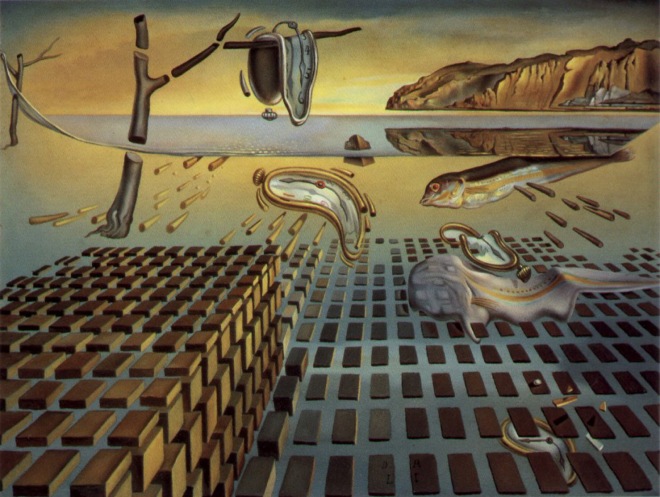
Salvador Dali: The Persistence of Memory, 1931. The melting clock describes the feeling of chronophobia rather well

Chronophobia appears to be connected with heightened awareness of the passage of time that is inherent in distant deadlines for significant events.

This morning during my 10 minutes of mindfulness, something interesting bubbled up. I randomly remembered myself on an airplane travelling back to Moscow to visit family about 2 years ago. I felt a strong urge to be that person again, a bit like when I’m on vacation and towards the end, with a sigh, I think back to how liberating the first day off felt. Or when I reach the last bite of some dopamine-explosive dessert, I think back to how happy I felt when it was just put in front of me. We all love vacation and desert. However, my wish to be 2 years younger makes little sense. I was in the throes of a challenging 70-80 hours per week medical rota. It took much ingenuity to carve out enough time to travel. Is it regret? It wouldn’t be fair to say that the last 2 years were somehow a waste of time in any regard. Why do I feel so drawn to the thought of going back in time?
fear of the passage of time chronophobia
Salvador Dali: The Disintegration of the Persistence of Memory, 1954. Dali saw the fish as a symbol of life

Fear of opportunity cost

Aged 27, I frequently contemplate what it would go back to a previous point in time. I think it’s the understanding of the limited nature of time. I also worry about opportunity cost. In economics, there is the term opportunity (alternative) cost is the value of the option that we don’t choose when making a decision. [If I have 1 euro and buy a 1 euro can of Coke, I would have to forego the 1 euro Mars bar in order to have it. I would thus potentially worry about what it would have been like if they got a Mars bar instead.] The feeling is different to decision-anxiety. It’s not even about second guessing one’s choice, but more about imagining alternative paths.

The word decision literally means the cutting off – of other options. Thinking of the alternatives always reminds us of the unyielding nature of choice and how we really can’t literally “have it all”.

Robert Frost’s famous (infamous?) “The Road Not Taken” is a brilliant and often misinterpreted examination of the nature of choice. It is important to recognise the speaker’s deliberation: he says the roads are much the same: “just as fair”, “really about the same”, “equally lay”.

“The Road Not Taken”, a frequent feature of post-card philosophy, is often oversimplified to say that the speaker chose the less travelled road – and, woohoo, that’s amazing. It’s more complex than that.

The speaker admits that he left the first road “for another day”. While he knew he would never go back, the torment of admitting the final nature of choice is just too much. 

One can get very detailed when describing their particular fear. I certainly don’t support the idea of including “fear of opportunity cost”, “fear of the passage of time” or even “fear of choice” as phobias into the DSM. Indeed, this is perfect ground for thinking by induction. Is there a common thread here?

fear of death emotional coping mechanisms
Hans Holbein the Younger: The Ambassadors, 1533. Note the anamorphic skull in the foreground. It surely is a reminder of death

Boiling down fears to a common denominator: could it be death?

Why does chronophobia affect students? Time forces them to deal with events that will affect serious aspects of their lives such as their future careers – and thus even more permanent things like social class, the kind of people they will be likely to marry and so on. Exam results’ effects are by no means definitive, but probabilistically they are significant.

It has become popular to say that there are only 2 human emotions: fear and love.

Everything negative is a form of fear. It kind of makes sense: anger is a way of defending one’s point of view, property or whatever other boundary. Being sad is a fear that one will never be as happy as they were before as a result of an event (not talking about depression here). Disgust is a fear that something will negatively impact one’s existence. You get the gist.

The other popular thought is that all fear is a form of the ultimate fear – of death.

Going back to chronophobia again, why does it affect the elderly? Time threatens the existence of the elderly. It threatens all of our’s existence, but the elderly are more aware of it – mostly for social and cultural reasons. Now, none of us are deluded enough to actually think we’re not going to die. However, as Ernest Becker points out:

we have 2 ideas of the self: the physical and the symbolic.

In my opinion, our rationality only extends as far as the physical self. We are preoccupied with ways to immortalise our symbolic self. As per the “Mahabharata”:

“The most wondrous thing in the world is that although every day innumerable creatures go to the abode of death, still man thinks that he is immortal”.

fear of being insignificant
Salvador Dali: Metamorphosis of Narcissus, 1937. Dali had an interest in psychiatry

The recent debate that followed my discussion of the role of validation in our self-esteem sparked some follow on thoughts. In short, it showed that people with narcissistic tendencies experience much emptiness or even self-hatred – and validation is used to take the edge off. However, as all creatures who make choices, people with narcissistic tendencies are subject to avoiding pain and seeking pleasure (thank you, Dr. Freud). Clearly, they find narcissism more tolerable that the alternative. How could this be?

What if those who crave validation to feel good about themselves chose to be this way because the alternative – knowing that one is inherently valuable, without any validation – makes the thought of inevitable death absolutely intolerable? If one feels that they’re not that valuable, dying isn’t quite as scary or tragic.

Realising that a person is valuable, getting attached and then letting go is much harder than never getting attached – in this case to your self, as is the case with death. This devaluation allows people to cope with the fear of death. At the same time, the person with narcissistic tendencies maintains the upside of being able to work on “their immortality projects”, like winning medals and getting promotions. This is just a hypothesis of mine. I understand that I have no idea what Steve Jobs was really like. A lot of people say that he was an obnoxious narcissist. He said this, which happens to be congruent with my hypothesis:

Remembering that you are going to die is the best way I know to avoid the trap of thinking you have something to lose. You are already naked. There is no reason not to follow your heart.

There are other psychologically sneaky ways that we deal with the fear of death that have stood the test of time (well, since 1974 or so when “Denial of Death” was published):

Becker argues that everything we do: writing books, starting businesses, having children are all ways to transcend – and not have to deal with – death.

It makes sense too: the thought that everything one ever does will disappear into oblivion is so hard to accept that in order to keep going we find ways to defy death’s erasure of our existence by leaving a legacy.

fear of being insignificant

One’s own death is hard to imagine. It is as if we believe we will still be alive on some level after we die, but unable to act on our dreams and stuck reminiscing of the time we were alive and lamenting we didn’t do more.

If leaving a legacy isn’t an option, then one can choose to believe in the afterlife to help themselves cope with the concept death.

Paradoxically, dying may be a way to transcend death. Physical death could be a route to symbolic immortality. Just think of war heroes.

While death could explain a lot of our autopilot behaviour, we don’t seem to want to think about it very often. We are told to think positive thoughts instead.

To think, or not to think – about death

all fear is fear of death
...what dreams may come, when we have shuffled off this mortal coil…

Constant reminders of death were common all throughout the last millennium: having a skull on one’s desk was kind of like having sticky notes or an extra mouse. An experiment where people were asked to write about death before they were asked about their country’s war efforts showed that thinking of death made people more enthusiastic about war -as it adds meaning, purpose, a sense of belonging, a feeling of impact…

The Stoics came up with a variety of reasons and hacks to not fear death such as the symmetry argument: fearing death is like fearing the fact that one wasn’t alive before one was born. I won’t go down the rabbit hole of explaining how to fear death less.

The purpose of my reflection isn’t to say we shouldn’t fear death, and it will all be fine. It is more of an inquiry into what behaviours of ours are motivated by the fundamental, underlying fear, which so far appears to be that of death. However,…

It’s not death we fear, it is not having an impact

Is it really death we fear? I think a better way of putting it is that we fear that we’re inconsequential, insignificant, that we made no difference through our existence.

For those who insist that it is a fear of death: it’s that of the symbolic self. For those who insist that our biggest fear is to not be loved: to have someone love one is probably the biggest impact one can have on another human being. Perhaps, it is the ultimate, or the one that really count. I am not sure. However, my point remains: it is about impact.

It could just be a millennial’s take on it. With a lesser role of traditional religion in today’s society, millennials have the unfulfilled need for meaning – and have a habit of finding it in the most peculiar places.

My recent discussion of meaning according to Nietzsche prompted many to comment that the fact that we die and that the universe will ultimately end (something to do with the Sun and physics) implies that there could be no meaning in our lives. I don’t follow this argument. To me, it is like saying there’s no point in eating because you’ll get hungry again. Clearly though,

for a lot of people death is the ultimate enemy in a game rigged against them.

I used the word impact above for a reason. I could have said consequence or meaning, but something stopped me. Both of those words are overused and call to mind all kinds of associations. Furthermore, I thought of animals. They are driven largely by the same evolutionary forces as we are, and I think we overestimate the extent to which animals are different. They may not have insight, but they are a reflection at least of how nature intended things. To illustrate, I will use an example I recall from watching a BBC documentary on giraffes. Two massive male giraffes were fighting for a female. How on earth do giraffes fight, I hear you ask. Well, they violently swing their entire necks to strike. The force of the swing is enough to shatter their skulls. The battle went on to the point of near death… for the sake of a female. The giraffes decided/were driven by nature to go that far just to reproduce – so death is less important than an opportunity to have impact, which, for giraffes I think is reasonable to assume, is to have progeny.

I don’t think that the fear of not having an impact is the same as the fear of failure. One can fail, but still achieve a lot and have an impact. Failure is defined in terms of a percentage of the way to realising a dream. Impact, or lack thereof, is much more real.

I feel that a human being on their death bed is likely to think of what impact they have had, not where they ranked compared to their dream.
fear of not making a difference
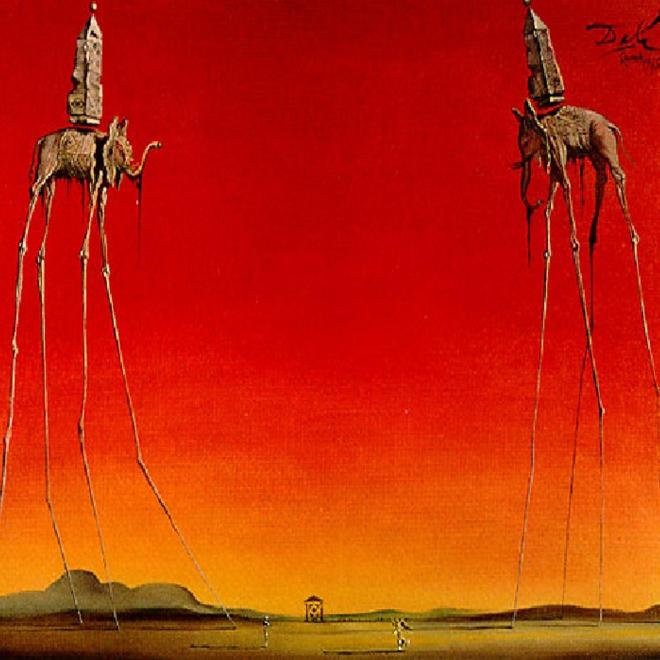
Salvador Dali: The Elephants, 1948. Not quite giraffes, but close enough

On the bright side…

There is a “cure” for fear of choice

Going back to my own ENTP-torment of being more interested in talking about choices rather than actually making them, I am looking for some kind of resolution. N. N. Taleb, a favourite writer of mine, is popularising the concept of optionality. He argues that having options is a great thing:

Optionality is the property of asymmetric upside (preferably unlimited) with correspondingly limited downside (preferably tiny).

It’s not really a way to get out of making choices. Instead, it is a way to do what you were going to do anyway, but leaving cheap enough nets here and there to see if one day something nice washes up in one of them such that covers the cost of having had the nets n times over.

He argues against specialisation (i.e. going down too far in the decision tree of choices or going down to the end of just one branch). We are all familiar with specialisation success stories. The Nobel Prize goes to the person who studied a particular enzyme for 30 years. The startup that solves a specific problem in one particular niche is the one that does well. Kim Kardashian has one thing going for her, and she’s taken over the world…

Taleb reminds us that there are cemeteries of specialised ventures and people. Just because the successes that make into the media are specialised, doesn’t mean all of them are. Specialisation comes from the propensity to make choices. It is not the only way to achieve something. Hence, it is possible that the act of making choices is overvalued.

Richard Branson has over 400 companies. Is it because he is greedy – or perhaps because he understands that specialisation is a dangerous game to play? Venture capitalists and angel investors back things in a non-specialised way. All financial investors do. It may look like it is specialised on the surface, but it really isn’t. Biotech, or robotics, isn’t a specialisation. These are incredibly broad fields. It’s like saying blogging is a specialisation. Investors take directional bets once is a while, i.e. ones that really require a choice, but they do so in a way that for every 1 euro they invest, they stand to gain 10, and only invest a tiny fraction of their euros into these schemes. This is exactly congruent with Taleb’s definition of optionality.

I have fabulously rationalised away the pressure to make choices here. However, the real work is in putting oneself into situations where optionality can be exercised.

The older I get, the more I realise that there’s quite a lot of engineering involved in all of this. It’s not so much about going after specific visions, but creating situations where visions can flourish – and ultimately have an impact.

millennials fear not having an impact
Maybe, the millennial/Gen Y variety of man (and woman) are a bit different…

You may also like:

Millennial corporate office workers and their transgender bathrooms

Millennial ENTP struggles

Nietzsche’s meaning

Anthropologists have long known that when a tribe of people lose their feeling that their way of life is worthwhile they […] simply lie down and die beside streams full of fish.

Ernest Becker

What is nihilism?

Nihilism is a confusing term. It can mean rejection of societal norms (political nihilism). This is not what I am going to discuss here.

I will talk about Nietzsche’s definition of nihilism: the radical rejection of value, meaning* and desirability.

I think this communicates the most important concepts. Of course, there are more specific definitions, so I will get them out of the way here. There is moral nihilism that says that there is no right and wrong. Epistomological nihilism says there is no universal truth or meaning. Existential nihilism rejects meaning in life.

why we need meaning in life

Stoicism vs nihilism

Stoicism is really en vogue these days. Seneca’s writings have grabbed my attention early last year and haven’t really let go. First, his Moral Letters are incredibly easy to read – compared to most undigested original philosophical texts (e.g. A. Schopenhauer). Second, they make one feel good, a bit like after watching Pulp Fiction. I was starting to wonder – what’s the catch? My “too good to be true” radar was going off.

Here’s a short summary of Seneca’s views:

  • life is set in circumstances that we’ve no control over;
  • it is possible to get through life by working on our response – not on the circumstances;
  • there is no need to fear death because
    • it is just like the blissful nothingness that came before we were born;
    • it would, so to speak, “end the heartache and the thousand natural shocks that flesh is heir to”;
    • we didn’t earn life – it was given to us by circumstance. Hence, we cannot expect to hang on to it.

Nietzsche on meaning of life and nihilism

This doesn’t sound so bad. In fact, it is quite resonant with the ultimate optimist Viktor Frankl: “When we are no longer able to change a situation, we are challenged to change ourselves” and more or less the basis of modern day talking therapies like CBT and REBT. However, Seneca is quite pessimistic. Having re-read his letters a number of times, I picture him as a man who barely endured his life.

Any modern psychiatrist would say Seneca had a passive death wish.

It’s also interesting to remember that he was one of the wealthiest people of all time. Here’s a telling quotation from Letter 65:

“The wise man, the seeker after wisdom, is bound closely, indeed, to his body, but he is an absentee so far as his better self is concerned, and he concentrates his thoughts upon lofty things. Bound, so to speak, to his oath of allegiance, he regards the period of life as his term of service. He is so trained that he neither loves nor hates life; he endures a mortal lot, although he knows that an ampler lot is in store for him.”

Nietzsche famously pointed out that Christianity is nihilistic in the sense that it is denying the value of one’s current existence and instead placing it on a dream of a better afterlife.

By that same logic, Seneca too seems nihilistic. One might argue that in the context of Seneca thinking of death – it is kind of hopeful.

Nonetheless, Seneca belittles the value of the current life, encourages escapism and hope for, essentially, life in heaven after death.

At the same time, Seneca repeats that we have limited time on Earth and we better use it wisely. Just like Christianity, this philosophy appealed to all strata in society. Using either philosophy, anyone could be a hero by thinking themselves so. In a sense, one is less responsible for their actions as this world doesn’t really matter. Certainly, making the right choices matters – as it will be assessed for the purposes of a heaven vs hell decision, but it presents life as something that happens to a person – and the person has little agency. Having said that, much of what Seneca demands of Lucilius could safely be called overcoming-oneself, a cardinal virtue according to Nietzsche.

Nietzsche on nihilism

Meaning by school of thought

Unbound by any aspiration to philosophical scholarship, I have taken the liberty of making these one liners on how different schools/philosophers viewed meaning:

Stoics: there is meaning, it is to be wise and kind;

Schopenhauer: there is meaning; awareness of suffering and death create the need for meaning;

Buddhists: there is meaning, but it is ambiguous;

Hinduism: there is meaning; it is to shed the illusion and realise the unity of the universe;

Christianity: there is meaning; the meaning is to live so as to attain entry into a superior world;

Nietzsche: there is meaning; meaningful suffering is sought after, meaningless suffering is a curse – more on this later;

Nihilists: there is no meaning.

are stoics nihilist

A nihilist’s escape routes

Being a bone fide nihilist is intolerable: there’s nothing to wish for, nothing makes a difference – like the tribes that encountered Western culture described by E. Becker in the epigraph, one may as well lie down and die. It’s a state fundamentally indistinguishable from severe and enduring depression.

Those who proclaim they are nihilistic and still go on about their lives as if nothing’s wrong are probably hedonistic, or have some kind of meaning they simply don’t call meaning. Or, they are like Anony Mole who appears to think that meaning is a psychological hack to staying motivated to live on, but ultimately hypothesising that there is no meaning at all.

For someone who doesn’t see meaning in life there’s another option, however. It is to defer meaning to one’s next life. In this sense, Christianity is a form of escapism away from nihilism.

In Christianity, the purpose of life is to live one’s current life in a certain way and attain entry into an alternate, “real and true” world – heaven. At first glance, it would seem that Nietzsche is overreacting by accusing Christianity of being nihilist. Christianity is full of ways that make this life meaningful. On closer reflection, the motivation behind acting according to the tenets  of Christianity is that someone, from a place that we all really belong in, said that it is the right thing to do. This life is only a smoke and mirrors version of the blissful life in heaven. Nietzsche rejected true world theories as nonsense. He demonstrated that it was an assumption of his – and ultimately unknowable. Richard Dawkins says it’s intellectual cowardice to not come down on one side or the other. I think it is intellectual cowardice to not admit that there are certain things that we just don’t have a way of knowing.

Despite his rejection of true world theories, Nietzsche understood that they are the fabric that holds people’s lives together.

Of course, there are many more true world theories than Christianity, but it is the one that dominates the Wester world today. For example, Marxism is a true world theory – yearning for a future utopia. Nietzsche also argued that a Christian heaven helps the human sense of self: it is kind of validating to know that, really, one belongs in a special true world – not here.

Pema Chodron wrote about the psychology of our need for such a world in an accessible way. [There’s a funny story to go with that. I was sitting on the beach right after reading Chodron, reflecting on the ways in which we’re conditioned to want a fatherly God. An elderly man approached me and wondered if I was OK – I guess I must have looked distraught. It’s rather unusual for a man in his 80s to approach a random person on a beach, so I was wondering what’s going on. He didn’t say much, just asked again if I was ok and if I like reading. He reached to hand me a brochure – looking directly at me – and said only this one thing: “Oh, and there is a God”. I thanked him, mind-boggled. After he walked away, I looked at the brochure – turns out he was a Jehovah’s witness. I didn’t know they mind read.]

Besides turning to true world theories, there is another way to avert the pain of nihilism.

Like David Foster Wallace pointed out, there’s no such thing as atheism. We all believe something.

Science slowly becomes scientism and provides explanations for things it can and cannot explain. Following a political movement gives a sense of belonging. Our culture is a kaleidoscope of options for all tastes.

meaning of life nihilism

Searching for meaning is nihilistic

Nietzsche argued that asking the question “What is the meaning of life” and demanding an external answer by some superhuman authority diminished the value of the person asking – as if it comes from a lack one’s faith in their own ability to figure it out.

Nietzsche argued that nihilism arises when people get disillusioned with their default set of beliefs – let’s say beliefs that are inherent in one’s cultures – and take this disillusionment to more generally mean that no beliefs could ever be satisfactory.

This view of nihilism is once again almost indistinguishable from depression. Nietzsche expressed it best here:

“A new pride my ego taught me, and this I teach men: no longer to bury one’s head in the sand of heavenly things, but to bear it freely, an earthly head, which creates a meaning for the earth.”

nihilism in christianity and stoicism Nietzsche

Prof. Nietzsche’s meaning of life

So what did Nietzsche himself think the meaning of life was? It was to realise one’s inner potential.

Nietzsche believed in radical responsibility: it is only ourselves who we have to blame if we miss our life’s calling.

To him, we weren’t all born human. We become human by realising our potential. This is what he meant when he said “become who you are”. Fear and laziness are our ultimate enemies. Incidentally, this sounds like it is straight out of Seneca’s writings. Nietzsche claimed there was a higher self, a kind of will that dragged us to become who we are. To me this is terribly reminiscent of a true world theory albeit one confined to the self and to this life. His method was through setting difficult goals pursuing which elevates the soul. Congruent with the traditions of Buddhism, Nietzsche argued that suffering isn’t inherently bad – and one doesn’t need to immediately try and fix it or worse, distract oneself away from it. It is an opportunity for growth and wisdom, according to Nietzsche.

Nietzsche on meaning of life

I guess it comes down to awareness, adaptability and agency again. This whole piece makes me sound like a Nietzsche fan girl. In a sense, it’s true, but he was a bit too anti-social, self-contradicting and melancholic for my liking. I will put that in more analytical terms at a later stage.

You may want to read

Kevin Simler’s reflections on meaning

Schopenhauer’s genius and mindful boredom

*[To be clear, we’re talking about meaning to a given person, not some universal, objective meta-meaning because ultimately an attempt at identifying this universal meaning will always be the meaning to the person thinking about it, or a projection thereof. This is one of the reasons humans are so naturally self-centred. David Foster Wallace describes it well here. As seen above, none of the major philosophies really even try to answer what the ultimate meaning of the universe is. This is probably because the question isn’t asked very often. This author is more interested in the tangible psychology of it – than the unknowable philosophy].

“What… is water?” asks the fish

A huge percentage of the stuff that I tend to be automatically certain of is, it turns out, totally wrong and deluded.

David Foster Wallace

I got into a merry debate with the lovely Pink Agendist about choosing day-dreaming versus being in the moment that ultimately elicited that we broadly agree: reality is a hugely interesting topic. In his touching speech, David Foster Wallace says :

The alternative is unconsciousness, the default setting, the “rat race” – the constant gnawing sense of having had and lost some infinite thing.

In a disarming manner, he admits that he isn’t saying anything ground-breaking. His point, however, is that it is so hard to keep the important thoughts in front of us that they are worth repeating. It seems that from Buddhists to Seneca to Darwin, the main philosophical thought that resonates with me is: be aware and adapt. Even in his seemingly grim Letter 61, Seneca says:

Let us set our minds in order that we may desire whatever is demanded of us by circumstances, and above all that we may reflect upon our end without sadness.

Few concepts send my mind into a spin like this. Part of me resists: humans accomplished what they’ve accomplished by defying their odds, not by accepting what is demanded of them. Siberia demands that you freeze to death or leave, for example. However, I think it is a misinterpretation on my part. Seneca is instead saying: find a way to use this situation. What is demanded is that one figures out how to chop wood and sustain a fire, so one has to manage themselves in such a way that they could do this eagerly and well. This one sentence explains the nature of cognitive behavioural therapy used today: changing one’s mind will change one’s emotions – and how one behaves. The point isn’t to idolise Seneca. I am sure that many generations of John the Caveman said it before him. The point is that the concept is as relevant today as it ever was.

Another part of me says: what are the circumstances – and what do they demand? I made a little graphic to show the nature of my confusion. Understanding the circumstances may require the sort of insight that I am not even aware exists.

developing self awareness though mindfulness

I haven’t figured out another way to get closer to understanding any of the above other than through mindfulness and reading the works of philosophers that stood the test of time. Even then, reading a philosopher’s thoughts is secretly wishing that someone else has it all figured out. This is another brilliant point that David Foster Wallace brings up: even if one doesn’t think that they have a religion, they still worship something – and have some kind of default setting:

In the day-to-day trenches of adult life, there is no such thing as atheism. There is no such thing as not worshipping. Everybody worships. The only choice we get is what to worship… The insidious thing about these forms of worship is not that they’re evil or sinful; it is that they are unconscious. They are default settings.

Just like Pema Chodron explains, it is part of human nature to assume that someone else has the answer. After all, that is what we are conditioned to believe as children through the behaviour of adults – they always know best. When we ourselves become adults, that void is then filled with some kind of worship. The only way to snap out and have the ability to choose again, even for a moment, seems to be by being in the moment.

I am tangentially involved in game development and recently came across a game called The Stanley ParableIt involves a corporate employee and his choices. The game is incredibly philosophical, touching on the concept of choice and free will – and I couldn’t do it justice here. However, if you have nothing to do on a dark January night, it will rock your world.

Have a mindful weekend, everyone.

Don’t change the channel

Mindfulness is effective in treating many mental health problems and psychiatric conditions. For those who don’t suffer from the above, it seems to still be beneficial in terms of focus, mood, relationships and results – based on many people’s personal experiences. Why then, is it so difficult at times? It is difficult for the same reason than escapism is easy. I am not Bill Murray’s biggest follower, but in one interview he said:

I would like to be more consistently here… I would like to see what I could get done if I didn’t cloud myself with automatic [thoughts]… If I were able to not change channels in my mind and body.

everyday mindfulness not day dreaming

He didn’t say anything ground-breaking, but his channels analogy really struck home with me. Having listened to this interview in the morning, I was on an uncomfortable journey between two cities today. To the right of me was a morbidly obese gentleman who sprawled himself across about three seats in an unorthodox position rarely seen in public. To the left – a lady who evidently led a lifestyle that didn’t involve too much personal hygiene. Having sneakily moved to another seat, I was putting my headphones in, prepared to sail away into a safe and pleasant day-dream. However, in my mind, I could hear the echo of the interview: don’t change the channel. Some voice of cognition questioned what I could possibly gain by being present when the present is like this? I wasn’t sure. What did I have to gain by being in a day-dream? A mindfulness devotee would surely say: nothing. Well, if people never day-dreamed, we would still live in caves. If we didn’t rehearse situations, ruminate, “mind-read” and obsess, the world would be different. I guess some may even argue it would be better. I am not sure.

I wish it was clear cut. I wish this story had an elegant twist where being present resulted in some kind of miraculous revelation. Instead it made me more aware that it is as easy to slip into the mindfulness cult as it is into a day-dream.

Ironically, Spotify shuffled to a nice house remix of R. Kelly’s Bump and Grind. As my mind was indeed very distinctly telling me “No“,  I took my headphones out. I could feel so much resistance. It angered me and made me sad that instead of floating off into a day-dream, I righteously deemed it necessary to stay in the present moment. I felt a bit like a Brave New World character without her soma. It felt necessary to stay present though. I ended up just being aware – of a storm inside.

Now, at the end of this mindful day, I can’t proudly declare that I feel at peace. There was no external conflict whatsoever, but I feel like I’d been in a blazing row for hours. With it though, there’s a certain exhausted clarity, like everything has been unreservedly said and it is all out in the open.

Faced with a choice like this again, I will probably choose mindfulness over the day-dream – again. I will stick with this channel called Reality, as we know it, rather than If I were with my friends or some other blissful escape route to rainbows and unicorns. Being honest, in part it is because I “read it in a book” and the high priests say it’s good for me. However, in part it is because I appreciate just how rarely I am even present enough to make this choice.

The day-dreams will happen regardless, the awareness won’t.

how to stop daydreaming

Validation and self-esteem

I’ll drop my glove, to prove his love; great glory will be mine.

Leigh Hunt

Vanity and fair are simple words. However, it was only recently that I understood what these words mean together. In more contemporary English, it means an exchange of validation between two people. What got me thinking about it is the book I recently read by Robert Cialdini called Influence. It describes the mechanics of how easily people’s need for validation  can be used to play them in a Machiavellian way.

Validation is always a treat. We must be wired for it. Given that humans are social animals, it makes sense to yearn for validation as it increases one’s chances of survival. If one is part of a tribe (i.e. accepted/validated by the tribe), he/she is less likely to get eaten by a sabre-toothed tiger. However, it seems that this pathway gets hijacked an awful lot.

addicted to validation

I think the best way to explain this is by looking at an extreme example: narcissism, because the logic is the same no matter where someone is on the spectrum. I grew up with and subsequently encountered some florid narcissists – though I didn’t always know it at the time. While the full blown narcissistic personality disorder is relatively uncommon, traits thereof appear quite ubiquitous. I will loosely use the word narcissistic here to signify anyone with traits of the disorder. During my late teens I loved high-achieving people and hated arrogance. It made no sense to me why somebody would act so unpleasantly. I thought that arrogant people believe they are better and that I am not worth their time. It turns out that’s only half-true.*

I subsequently figured out – through a mix of psychiatry training and reading (Daniel Goleman’s Emotional Intelligence is brilliant for this) – that arrogance is a form of insecurity. However, the exact same insecurity can be revealed through being super friendly (hence, not all narcissistic people are arrogant**).

Much of it boils down to the source of one’s self-esteem. I hypothesise that a self-esteem based on external circumstances is one of the factors that contributes to much unhappiness and perhaps even the poorly understood personality disorders – such as narcissistic, histrionic and emotionally unstable.

What does that actually mean? What is it like to be narcissistic (or a person with some narcissistic traits)? Most people think they are deluded with their own glory. This can be true – if the narcissistic person doesn’t have insight into just how hooked they are on validation. Sadly, having insight doesn’t instantly cure it. If the person with narcissistic traits does have insight, it’s a never ending cycle of feeling high from validation, feeling pathetic for being like that and seeking more validation to take the edge of. New Insights Into Narcissistic Personality Disorder highlights their fragility, internal vulnerability and external self-enhancement, their attempts to regulate insecurity by numbing emotion, especially in interpersonal contexts and their preoccupation with blame, and criticism.

For some, it is “I think therefore, I am”. For people with narcissistic tendencies, it is “I produce a good reflection, therefore I am worth existing.”

Interestingly, patients with narcissistic personality disorder have intact cognitive empathic ability and can identify with thoughts, feelings, and intentions of others. However, their capacity for emotional empathy is compromised, especially their ability to care about and share feelings of others.

Having one’s self esteem decided by external factors is hugely painful. It’s like waking up every morning and feeling awful about oneself – and yearning to encounter something or someone in the world that will prove that one’s actually worth something. No amount of proof will ever stop this feeling of emptiness for very long.

This proof could be likes on a social media post, getting any sort of good news, a reassuring friend, attention from a member of their desired sex – anything that reminds them that they aren’t near worthless (which is the default setting). This is also why so many narcissistic people are high achievers. Actually “being the best” is sometimes the only way to get rid of the pain.

If one’s self-esteem is only lifted from the depth of despair by accomplishments (validation), then he/she will do anything to accomplish – and ease the pain.

If one’s self-esteem is set externally, validation is like an addictive drug. If it’s  set internally, validation is like an occasional glass of wine. These two types of self-esteem are also knows as contingent and non-contingent.

However, what does that even mean, “set internally”? Having an interest in mindfulness, I often come across things like loving-acceptance, unconditional positive regard, etc. Maybe the reader understands them better, but more often than not, they make me feel like there’s something fake there. To me, an internally-controlled self-esteem means answering the question: is a person proud of his/her actions.

It’s impossible to hold oneself fully responsible for one’s circumstances. Yes, over time, patterns emerge that reflect the small decisions made everyday. However, there is so much beyond our control that one needs to be cautious making conclusions about themselves based on results. As all of these kind of musings, this is specific to the person in question. Some people are perhaps too laid back about how much they control and others – too intensely determined to control everything. (See this post on how to find good tailored advice.)

I think that one has to always learn from their results, but it isn’t always true that their results are a reflection of their actions. Even learning from results is tough because it is so hard to attribute results to causes.

So to bring one’s self-esteem back to being internal, one can only judge whether he/she is happy with their actions and decisions given the information they had at the time.

This post is to some extent inspired by N.N. Taleb’s commencement speech transcript. It’s not like any commencement speech I’d heard before. He says:

…I have a single definition of success: you look in the mirror every evening, and wonder if you disappoint the person you were at 18, right before the age when people start getting corrupted by life. Let him or her be the only judge; not your reputation, not your wealth, not your standing in the community, not the decorations on your lapel.

Taleb says that by his definition, he’s not successful. Fair enough. However, he doesn’t strike me as the kind of person who lacks in self-esteem. This goes back to how different people use the same words to mean different things. Obviously, to Taleb being successful is a kind of a luxury, not a must-have. Otherwise, if one looked in the mirror and resented themselves everyday, that’s a shortcut to despair.

need for validation ruins self-esteem

I wonder what it’s like for other people. For me, my 18 year old self had no clue about how the world works, so I can’t adopt this definition of success – it’s pretty useless to me. Maybe though, that’s Taleb’s point – that one should think back to their idealistic self and see what they would think. I probably shouldn’t say what my 18 year old self would think of me now, but I do wonder what Taleb got up to so that he doesn’t approve of.

I think that’s it though – reconnecting with one’s internal self-esteem is an uncanny exercise of separating oneself into two people and getting one to judge the other’s decision and actions – not their results.

Perhaps, at this point the concept of acceptance become relevant. Otherwise, it is the same old addiction to validation sugar coated with forced positive thinking.

* Whether a narcissistic person believes they are better depends on their insight into the need for validation and their actual achievements. However, narcissists do prefer to associate with people they see as being worthy of surrounding them.

** Some narcissistic people are sweet and charming. Different people use different strategies to feel special and seem worthwhile to others.

Get these blog posts via Facebook!

how to regain self-esteem narcissism

Best TED talks on psychology

Recently, I’ve come across a few useful and captivating talks. Many of these aren’t classed as psychology, but I am using a broad definition.

Generally, I am not a massive fan of TED/TEDx talks. There are certainly many that are superb, but many desperately oversimplify the problems they discuss in order to reach a wider audience – defeating the purpose of the TED project. Their so called new ideas are generally not new at all. Here are my highlights:

  1. 10 myths about psychology: debunked | Ben Ambridge

In short, he talks about a number of popular misunderstood statistics and experiments. Interestingly, he talks about how men and women’s psychological differences are grossly overblown.

How did it come to be? Well, it sells. Cosmopolitan & co. made a business out of explaining to women that men are a different species – and I am sure, there are equivalent resources for men. I often wondered about this before I heard this talk. Ambridge doesn’t really go into the specifics of the differences except where there is hard data to show that the differences are marginal.

My own hypothesis here is that emotionally men and women are much more similar than they are different – certainly more similar than pop culture has us believe.

We have these memes, a complex Marge and primitive Homer, an overthinking ruminating woman and a direct man. Not so, I believe.

emotional differences between men and women are exaggerated
This couldn’t be further from the truth as a generalisation

He also talks about how it is impossible to spot a liar. I think that with the popularisation of the concept of emotional intelligence, those who don’t think that they have a lot of it, think that there are those who can see right through other people. My own impression is that some people are better than others, but nobody gets it right consistently. I have seen people get it so unbelievably right, I began to think of them as having genius-level EQ, if there is such a thing. Observing these people more closely, I have seen them make terrible faux pas in social settings that really weren’t consistent with exceptionally high EQ. My guess is that a lot in EQ, or at least being able to effectively apply it, boils down to how much attention one are paying to the people around them.

2. The great porn experiment | Gary Wilson | TEDxGlasgow

Phenomenal talk explaining evolution and addiction in a novel way without a social agenda making for a blissful 16 minutes.

The concepts of brain plasticity, reward pathways and misdiagnosed psychiatric problems beautifully explained.

3. Your body language shapes who you are | Amy Cuddy

One of the top TED talks of all time. Cuddy has popularised the concept of power poses. Her main message is that body language isn’t a one way street from the brain to the body. Instead, the body signals things to the brain – and, it can be gamed to our advantage.

4. The art of misdirection | Apollo Robbins

This is a practical demonstration of what I call cognitive curiosities relating to attention. This eerily charming individual (you will know what I mean by the end of the talk) doesn’t go into any of the fancy science – he just shows how attention works. It made me feel both entertained and vulnerable.

I would be happy to expand this list, so your suggestions are welcome. If you are new to cognitive curiosities, this is a good (and hilarious – if you watch till the end) starting point: Michael Shermer: The pattern behind self-deception

You may also like:

Our brains are story-telling machines

Get these blog posts via Facebook!

The many ways the tail wags the dog

I first tried to read Robert Cialdini’s Influence: The Psychology of Persuasion a few years back. While the introduction is full of interesting facts, it is clearly a book written for a wide audience and has a slightly off-putting uniquely-American selling pitch quality despite being about how to not be sold to. I revisited it this Christmas, and I am very happy I did. My initial approach to it was as a book on marketing. I doubt I am the only one – learning to be good at marketing makes me feel a bit… fraudulent. Reframing it as learning about human behaviour – makes all the difference. It’s especially ironic as the book would explain why that is. In essence, it is a more dated (1984), less academic, but none the less brilliant rendition on the same issues as Daniel Kahneman’s Thinking Fast and Slow. The academic tone is probably my favourite, but it did, nevertheless, take me a particularly long time to read Thinking…, so if it seems too tedious – Influence is the perfect alternative. [Having said that, it is of a lower academic standard. For example, Cialdini’s description of S. Milgram’s famous experiment is inaccurate and his interpretation – sensationalist, but it’s still an interesting point of view that could be true.]

robert cialdini influence review

There are 6 rules of influence, Cialdini posits: Reciprocity, Social Proof, Consistency, Liking, Authority and Scarcity. The gist of it is summarised here.

Essentially, the entire book is about expectations – and how they reign over us.

I am tempted to go into a mindfulness/stoicism spiel here, but I’ll save that for later. I imagine reading this somewhat dated but still fundamentally brilliant book before the advent of social media would have been one of the best education investments one could make. Now, we are much more familiar with social proof, authority, etc as we see it every day. We probably have much sharper BS detectors for these particular marketing tricks than people did when this book was written in the 1980s. However,

this book explains the fundamentals incredibly well – and while we learnt a bit on how to not be BS’d when buying, most of us are clueless about these influence modalities in their applications outside of mechanical buying and selling .

Essentially, all of these 6 things set expectations: one feels obliged to reciprocate, one feels reassured by social proof, one trusts authority even more than one could ever imagine, etc.

Cialdini’s examples come from all areas of life.

Be it buying petrol, ordering desert, changing the behaviour of prisoners of war or navigating a romantic issue – Cialdini shows how expectations – rather than reality – determine our behaviour.

He moves from his selling pitchy voice to a much more ethically-charged discussion on how people deal with authority later in the book. He has incredible insight. He even discusses free will very briefly. It seems as though he would have liked to write a much more academically themed book, but felt he wouldn’t reach as wide an audience.

cialdini influence kahneman thinking fast and slow review

Here are some of my favourite chunks:

Consistency

This stretch below will make it easier to let go of your failed romances:

Take the bettors in the racetrack experiment. Thirty seconds before putting down their money, they had been tentative and uncertain; thirty seconds after the deed, they were significantly more optimistic and self-assured. The act of making a final decision—in this case, of buying a ticket—had been the critical factor. Once a stand had been taken, the need for consistency pressured these people to bring what they felt and believed into line with what they had already done. They simply convinced themselves that they had made the right choice and, no doubt, felt better about it all.

Before we see such self-delusion as unique to racetrack habitués, we should examine the story of my neighbor Sara and her live-in boyfriend, Tim. They met at a hospital where he worked as an X-ray technician and she as a nutritionist. They dated for a while, even after Tim lost his job, and eventually they moved in together. Things were never perfect for Sara: She wanted Tim to marry her and to stop his heavy drinking; Tim resisted both ideas. After an especially difficult period of conflict, Sara broke off the relationship, and Tim moved out. At the same time, an old boyfriend of Sara’s returned to town after years away and called her. They started seeing each other socially and quickly became serious enough to plan a wedding. They had gone so far as to set a date and issue invitations when Tim called. He had repented and wanted to move back in. When Sara told him her marriage plans, he begged her to change her mind; he wanted to be together with her as before. But Sara refused, saying she didn’t want to live like that again. Tim even offered to marry her, but she still said she preferred the other boyfriend. Finally, Tim volunteered to quit drinking if she would only relent. Feeling that under those conditions Tim had the edge, Sara decided to break her engagement, cancel the wedding, retract the invitations, and let Tim move back in with her.

Within a month, Tim informed Sara that he didn’t think he needed to stop his drinking after all; a month later, he had decided that they should “wait and see” before getting married. Two years have since passed; Tim and Sara continue to live together exactly as before. He still drinks, there are still no marriage plans, yet Sara is more devoted to Tim than she ever was. She says that being forced to choose taught her that Tim really is number one in her heart. So, after choosing Tim over her other boyfriend, Sara became happier with him, even though the conditions under which she had made her choice have never been fulfilled. Obviously, horse-race bettors are not alone in their willingness to believe in the correctness of a difficult choice, once made. Indeed, we all fool ourselves from time to time in order to keep our thoughts and beliefs consistent with what we have already done or decided.

Robert Cialdini's Influence: The Psychology of Persuasion review

Social Proof

It works even when it’s phony:

I don’t know anyone who likes canned laughter. […] The people I questioned hated canned laughter. They called it stupid, phony, and obvious. Although my sample was small, I would bet that it closely reflects the negative feelings of most of the American public toward laugh tracks.

Why, then, is canned laughter so popular with television executives? They have won their exalted positions and splendid salaries by knowing how to give the public what it wants. Yet they religiously employ the laugh tracks that their audiences find distasteful. And they do so over the objections of many of their most talented artists. It is not uncommon for acclaimed directors, writers, or actors to demand the elimination of canned responses from the television projects they undertake. These demands are only sometimes successful, and when they are, it is not without a battle.

What could it be about canned laughter that is so attractive to television executives? Why would these shrewd and tested businessmen champion a practice that their potential watchers find disagreeable and their most creative talents find personally insulting? The answer is at once simple and intriguing: They know what the research says. Experiments have found that the use of canned merriment causes an audience to laugh longer and more often when humorous material is presented and to rate the material as funnier. 

Together with Daniel Kaheman’s Thinking Fast and Slow, Daniel Goleman’s Emotional Intelligence and, to a somewhat lesser extent, Mark McCormack’s What They Don’t Teach You at Harvard Business School, this book is essential reading in understanding human behaviour.

Here is the full book though I imagine this breaches copyright

Get these blog posts via Facebook!

Waves and ideology

When I went for my jog by the sea this morning, I noticed that it was unusually stormy. It reminded me of a story told by my uncle.

Years ago, his friend and he went for a swim – in the dark – in a storm – after a few pints. Yeah, as you do. They barely made it out alive. My uncle credits his survival to one strategy – and he made sure to emphasise this lesson to me:

The waves are in charge, not you, so your job is to stop resisting the waves and work with them instead by allowing them to move you, slowly and iteratively, towards the shore.

As I ran along, I thought, isn’t that just a great metaphor in general – rather than just a “how to” for when you’re drunkenly getting out of a stormy sea?

philosophy of ideology

It then hit me that it is – for some people. However, there are some people for whom it really isn’t. As I discussed in my WordPress treatise on good advice vs bad advice, for advice to be useful, it has to be contextual. For over-ambitious people, the wave metaphor is great – as it bring them closer to reality. Their standard belief is that they can resist and accomplish, so the metaphor helps to remember that that’s not always the best strategy. However, for over-laid-back people, this metaphor is a disaster – for obvious reasons.

The whole point of these metaphors is that they allow one to see a side of things that they’re currently not seeing. In other words, heuristics need to be tailored to the specific unhelpful beliefs of a given individual.


I would argue that the point of metaphors, pondering advice and addressing one’s beliefs is to bring oneself closer to reality – and away from stereotypes and patterns that have stopped being useful.

All too often, however, these metaphors grow into ideologies. What’s worse is that people are generally drawn to ideologies that resonate with their off-kilter beliefs and idiosyncrasies, and so strengthen them – rather that being interested in ideologies that could take them out of their confusion and bring them closer to reality.

This happens through our intuitive confirmation bias, attentional bias, producing an even more biased closed minded echo chamber. This is one of the reasons why I am moving away from ideologies. An ideology is a fantasy loosely based on reality that is applicable only under a certain set of circumstances. This may still be called an ideology, but for me, observing nature – in the broadest sense of the word – is all we’ve got as our teacher.

choosing an ideology

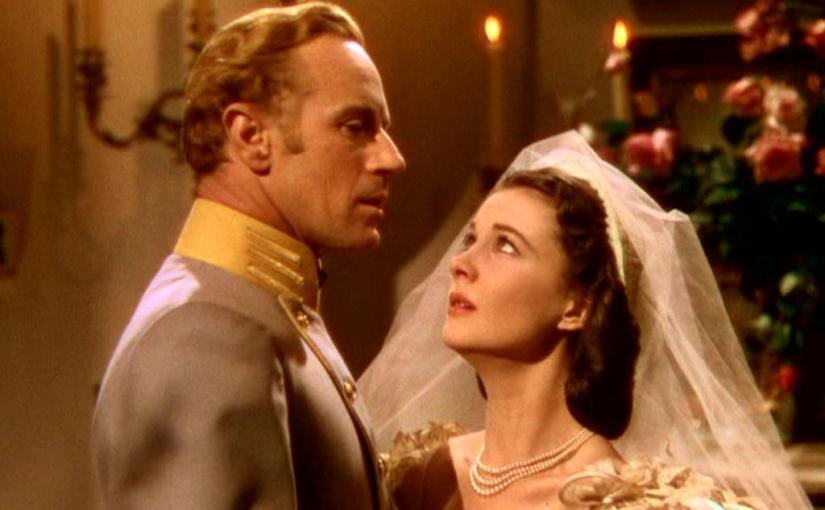
Infatuation: Scarlett O’Hara vs Jay Gatsby

Ultimately, it is the desire, not the desired, that we love.

– Friedrich Nietzsche

Seeing as how it is Christmas, I am spending some time in front of the piece of furniture I otherwise avoid – the auld telly. One of my favourite films of all time, Gone with the Wind, was on just yesterday.

I must have seen it a hundred times as a child. Those were the days of the Spice Girls and girl power, the economy was only growing and I was full of curiosity as to what it would be like to be an adult. I am not much of a vocal feminist, but Scarlett represented a kind of strong independent woman to me at the time. Naturally, I noticed that she has an unreasonable obsession with Ashley. I thought that that’s what they called love. Yes, Ashley was always a bit of a disappointment, but in my 10 year old mind, it made sense that love is love – and that’s it. Scarlett was obviously far from perfect: s a bit self-centred, a bit impulsive… But, boy, she kicked ass like no one else I’d ever seen before. I felt that the centre-stage relationship was between Ashley and Scarlett – and everyone else was a third-wheel of ill fate, the same kind that brought war and poverty to Scarlett.

infatuation in gone with the wind

Watching it now, it looks so different. Scarlett was an ambitious woman with more than a touch of insecurity and narcissism. There was no relationship. Her supposed love was in reality a crush that managed to solidify through Ashley’s response. Scarlett made the first move. There was a purpose to it, like with everything Scarlett did: she wanted to marry Ashley. Ashley told her he loved her, or rather, denied that he didn’t love her. She continued her infatuation for the rest of the film. It was fuelled by continued scenes where Ashley’s reluctantly reaffirms that he has a soft spot for Scarlett. I guess he didn’t want to hurt her – and he wasn’t lying either. It is obvious that Ashley is not the sort of man that Scarlett would naturally be interested in. There was always something odd about the extent to which she was drawn to him.

Scarlett was interested not in Ashley, but in how it made her feel to know that he loves her. The bitter sweet thought of a man trapped in a marriage to an almost perfect woman nevertheless constantly thinking of her, of Scarlett – that was what was playing on her mind constantly, yielding endless validation.

 I only spotted this now, in my late twenties. The reason I believe it is true is that in the scene where Melanie dies – and lo and behold, Scarlett falls into Ashley’s arms, the following  crucial dialogue unfolds:

Ashley: I can’t live without her, I can’t. Everything I ever had is… is going with her.
Scarlett: Oh, Ashley. You really love her, don’t you?
Ashley: She’s the only dream I ever had that didn’t die in the face of reality.
Scarlett: Dreams! Always dreams with you, never common sense.
[…]
Scarlett: lf you knew what I’ve gone through! Ashley, you should have told me years ago that you loved her and not me and not left me dangling with your talk of honor. But you had to wait till now, now when Melly’s dying to show me that I could never mean any more to you than than this Watling woman does to Rhett. And I’ve loved something that…that doesn’t really exist.

It’s bad enough to be infatuated – like Gatsby was with Daisy. However, it is much worse to be infatuated because of the belief that the subject of one’s infatuation loves them. Of course, there was an element of reciprocity adding fuel to Gatsby’s infatuation, but it wasn’t nearly as strong.

Gatsby was infatuated with Daisy from first principles; Scarlett was infatuated with Ashley as a reaction to what she perceived as his infatuation with her.

infatuation in the great gatsby
Leo never looked as intense as Robert

It makes more sense from an evolutionary point of view for a person to be obsessed with someone who already has a crush them , but it is also kind of… pathetic. It’s like the decision wasn’t even theirs. It is especially pathetic if they don’t have a crush on the infatuated person- and it’s only in their mind.

The dialogue above is so ironic. Ashley, the supposed dreamer, off with the fairies while Scarlett was saving Tara, saving Melanie’s life and just generally solving the most complex of problems, talked about Melanie as the one thing that was real. It finally hit her then that she was the one who was living in a dream. Ashley told her that they would never be happy together because they are so different. He saw reality much more clearly than she did – in this sense. On the other hand, Gatsby never even made it as far as Scarlett. What about Rhett – was he infatuated? I think he was hopeful, but still kept an eye on reality.

It’s tough denouncing Scarlett from her “super-woman who was unlucky with men” status to “needy super-woman who ruined things because she was too silly to see the truth” status. At least now, it makes more sense.

understanding infatuation great gatsby gone with the wind

Ego undermines greatness by deluding its holder

In short: don’t be a needly distracted narcissist because it sabotages your mission. That’s it.

After Audible recommending this book for me in every way, Ego is the Enemy finally made its way onto my reading list. I wish it didn’t. Of course, there are some things that I feel the author got perfectly right in a refreshing way – especially because he is 29 (in 2016). Overall, the better insights of Ryan Holiday are concisely expressed in Ray Dalio’s Principles.

Premise and logic

Holiday takes the “study the successful” approach. There are a number of problems with that approach – and I am very close to banning any such book from my reading list for the future.

In general, these books tend to make an assertion, back it up with a historical fact – et voilà, it’s true. Not really. As a bunch of musings and hypotheses, it’s fine, but this kind of work implies that it’s didactic – “here’s how to defeat [your ego]” the title reads. Meanwhile, the “logic” doesn’t really hold water and violates, in the broadest sense, the scientific method. This isn’t science, it’s more related to philosophy, but it has to be logical regardless.

These Socrates-quoting authors assume that the idiosyncrasies of the successful are causal to their success. In reality, it’s a very small observational study with a handpicked sample. The collection of stories explains more about confirmation bias than it does about the proposed subject.

ego is the enemy ryan holiday book review

Holiday even talks about how passion in a certain field is common among the highly successful (e.g. Steve Jobs) – but he also points out that there are countless cases of passionate entrepreneurs, writers, etc – who failed. Great insight – and there are a few like that. Only Holiday didn’t manage to take another step out of his own work to realise that this very logic applies to saying that being dispassionate is the real cause for success.

Holiday simply swaps one brand of snake oil for another.

On this note, Nassim Nicholas Taleb just published this one-liner on Facebook that I simply have to include here:

Scientism is to science what a Ponzi scheme is to an investment.

While I don’t endorse using it as a manual, the only examples of useful books written in this style that I am familiar are Niccolo Machiavelli’s The Prince and Discourses on Livy. Many of the “facts” that Machiavelli uses to substantiate his argument in The Prince are wrong – most likely deliberately, as it was intended to persuade his audience, namely Lorenzo de’ Medici. If there’s one thing we can learn from Machiavelli – it is that these books are written as least to some extent for the benefit of the writer. I much prefer books that simply theorise and use historical references very vaguely – rather than as quasi-scientific evidence – like most philosophers and my proposed substitute for Holiday – Ray Dalio. Musing should be musings – and they can be very good, but they cannot be sold the way that Holiday proposes. Ryan Holiday is such a clever and accomplished man though, why does he do it? I don’t know, but maybe the fact that it sells – and builds connections – has something to do with it. Indeed, the Amazon reviews are rather good: 4.6.

Nonetheless, we will have a look at his musings.

ego is the enemy summary

Millennials

Holiday doesn’t mention millennials, but it is pretty clear that that’s what he’s talking about. He is one too. His view of us, special snowflakes, geniuses who cannot bear the waste of working in junior positions clearly shows that he himself has never been in that situation. He knows that being in such a position involves just doing the work and making your boss look good. Holiday knows that that’s not what the Harvard grad that was selected out of thousands time after time for this position wants to hear. He reminds us of these, what he calls, realities:

  1. you’re not nearly as good or as important as you think you are

  2. you have an attitude that needs to be adjusted

  3. information you learnt in college in outdated

I broadly agree with assertion 1 and 3. Two is in and of itself attitudinal. Indeed, Dalio has interesting things to say about all of this and my views are for more resonant with his.

Holiday feels that our problem is the “indignities of serving someone else.”

He argues that rather than obsessing with one’s own ego, the said snowflake should trust the apprentice model that has produced great results in the past. (Holiday provides no data on how many lives it diverted into a mindless, creative-less funnel of paying mortgages and 9-5). He says, be an anteambulo (one who precedes to clear the way), attach and subsume your identity to the identity of those who are already successful and basically ride that wave to your own success.

Most of us snowflakes don’t have a problem with serving someone else. Making your boss look good is no problem. We understand that apprenticing under a solid role model is beneficial.

I feel the problem is the shocking emptiness and pointlessness (“should have been automated 10 years ago”) of much of this work in reality.

Frequently the work and the people at the top are both uninspiring. Many of them aren’t there out of professional fervour, but out of familiarity and necessity. The ones who do become anteambuloes are becoming the people at the top – with fewer perks year on year. Holiday had a different experience – it seems that the people in the organisations he worked for were there out of more exciting reasons. He probably doesn’t realise how rare that it. Us snowflakes, we yearn for purpose besides having the nicest car in the neighbourhood – which categorically satisfies the generations above us. Maybe it’s an illusion, but it’s at the heart of our snowflake-hood, not the indignity of serving someone else.

The other problem with accepting this lifestyle is that it quickly drives out whatever creativity was inherent in the bright-eyed intern. No matter how aware we are of how corporate indoctrination works, the bottom line is that it works. Staying in long enough will result in successful zombification.

ego is the enemy review

The ego

Holiday’s use of the word refers to our need for validation and self-importance. Sometimes what he actually means is better described as jealousy. Sometimes he means lack of focus. He states a lot of obvious things about the harm done through ego barriers and emphasises the value of letting go of them.

In Chapter 10, the author says that tolerating badness can be necessary as part of achieving goals, and this tolerating is actually avoiding one’s ego.

Unless this book is aimed at finished narcissists, it’s kind of sounds like a Stalinist “goals justify the means” turned on oneself. Again, Dalio talks about this in his Principles – making far more sense. Not letting ego barriers stand in the way of achieving a goal is quite different to the ambitious/masochistic attitude that Holiday seems to advocate.

Holiday is refreshingly honest about the way the world requires us to be master story tellers and build our own brands – and hence the need to be special.

The author is averse to living in a fantasy and encourages action over overthinking. He describes the psychological phenomenon he calls imaginary audience with suspicious finesse.

ryan holiday book review

Marketing, not philosophy

The opening chapters are much better than the average quality of the book. His structure isn’t terribly clear and he repeats himself a lot. It should definitely be shorter. By chapter 17 of 35, it was a bit “When is the end?” “Oh, could this be my ego sabotaging me?” “Mmm, no. It’s you thinking”.

My conclusion is that there are much better books out there on the subject. There’s nothing new here. It was interesting to get inside (the accessible) part of the mind of a rich and famous self-made millennial rich guy who knows how to sell things.

Ryan Holiday is definitely no philosopher. Even his references to stoicism are a bit lopsided, but then again – it’s just another example of confirmation bias. The language and references to history and literature – even the pretentious image on the cover – create the atmosphere of intellectual finesse. It’s not actually there.

He is a marketer – and seemingly a shady one too. I’d been warned by the kind of people that recommended his book not to buy it. Having read it, I feel a bit like my friends who went to Jordan Belfort’s seminar after watching The Wolf of Wall Street – only to come back and say that it wasn’t at all useful. It was a sales pitch of some bigger weekend seminar that he does later in the year. I never even considered giving money to Jordan Belfort – not after watching the film. Should have used that logic this time too!

“Impressing people is utterly different from being truly impressive.”

Indeed.