Best TED talks on psychology

Recently, I’ve come across a few useful and captivating talks. Many of these aren’t classed as psychology, but I am using a broad definition.

Generally, I am not a massive fan of TED/TEDx talks. There are certainly many that are superb, but many desperately oversimplify the problems they discuss in order to reach a wider audience – defeating the purpose of the TED project. Their so called new ideas are generally not new at all. Here are my highlights:

  1. 10 myths about psychology: debunked | Ben Ambridge

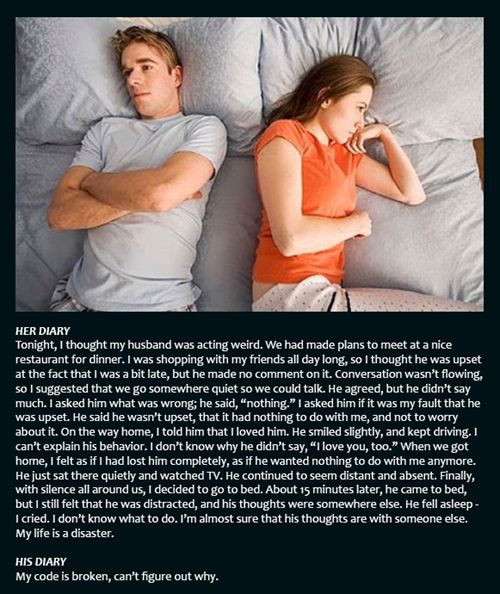
In short, he talks about a number of popular misunderstood statistics and experiments. Interestingly, he talks about how men and women’s psychological differences are grossly overblown.

How did it come to be? Well, it sells. Cosmopolitan & co. made a business out of explaining to women that men are a different species – and I am sure, there are equivalent resources for men. I often wondered about this before I heard this talk. Ambridge doesn’t really go into the specifics of the differences except where there is hard data to show that the differences are marginal.

My own hypothesis here is that emotionally men and women are much more similar than they are different – certainly more similar than pop culture has us believe.

We have these memes, a complex Marge and primitive Homer, an overthinking ruminating woman and a direct man. Not so, I believe.

emotional differences between men and women are exaggerated
This couldn’t be further from the truth as a generalisation

He also talks about how it is impossible to spot a liar. I think that with the popularisation of the concept of emotional intelligence, those who don’t think that they have a lot of it, think that there are those who can see right through other people. My own impression is that some people are better than others, but nobody gets it right consistently. I have seen people get it so unbelievably right, I began to think of them as having genius-level EQ, if there is such a thing. Observing these people more closely, I have seen them make terrible faux pas in social settings that really weren’t consistent with exceptionally high EQ. My guess is that a lot in EQ, or at least being able to effectively apply it, boils down to how much attention one are paying to the people around them.

2. The great porn experiment | Gary Wilson | TEDxGlasgow

Phenomenal talk explaining evolution and addiction in a novel way without a social agenda making for a blissful 16 minutes.

The concepts of brain plasticity, reward pathways and misdiagnosed psychiatric problems beautifully explained.

3. Your body language shapes who you are | Amy Cuddy

One of the top TED talks of all time. Cuddy has popularised the concept of power poses. Her main message is that body language isn’t a one way street from the brain to the body. Instead, the body signals things to the brain – and, it can be gamed to our advantage.

4. The art of misdirection | Apollo Robbins

This is a practical demonstration of what I call cognitive curiosities relating to attention. This eerily charming individual (you will know what I mean by the end of the talk) doesn’t go into any of the fancy science – he just shows how attention works. It made me feel both entertained and vulnerable.

I would be happy to expand this list, so your suggestions are welcome. If you are new to cognitive curiosities, this is a good (and hilarious – if you watch till the end) starting point: Michael Shermer: The pattern behind self-deception

You may also like:

Our brains are story-telling machines

Get these blog posts via Facebook!

The many ways the tail wags the dog

I first tried to read Robert Cialdini’s Influence: The Psychology of Persuasion a few years back. While the introduction is full of interesting facts, it is clearly a book written for a wide audience and has a slightly off-putting uniquely-American selling pitch quality despite being about how to not be sold to. I revisited it this Christmas, and I am very happy I did. My initial approach to it was as a book on marketing. I doubt I am the only one – learning to be good at marketing makes me feel a bit… fraudulent. Reframing it as learning about human behaviour – makes all the difference. It’s especially ironic as the book would explain why that is. In essence, it is a more dated (1984), less academic, but none the less brilliant rendition on the same issues as Daniel Kahneman’s Thinking Fast and Slow. The academic tone is probably my favourite, but it did, nevertheless, take me a particularly long time to read Thinking…, so if it seems too tedious – Influence is the perfect alternative. [Having said that, it is of a lower academic standard. For example, Cialdini’s description of S. Milgram’s famous experiment is inaccurate and his interpretation – sensationalist, but it’s still an interesting point of view that could be true.]

robert cialdini influence review

There are 6 rules of influence, Cialdini posits: Reciprocity, Social Proof, Consistency, Liking, Authority and Scarcity. The gist of it is summarised here.

Essentially, the entire book is about expectations – and how they reign over us.

I am tempted to go into a mindfulness/stoicism spiel here, but I’ll save that for later. I imagine reading this somewhat dated but still fundamentally brilliant book before the advent of social media would have been one of the best education investments one could make. Now, we are much more familiar with social proof, authority, etc as we see it every day. We probably have much sharper BS detectors for these particular marketing tricks than people did when this book was written in the 1980s. However,

this book explains the fundamentals incredibly well – and while we learnt a bit on how to not be BS’d when buying, most of us are clueless about these influence modalities in their applications outside of mechanical buying and selling .

Essentially, all of these 6 things set expectations: one feels obliged to reciprocate, one feels reassured by social proof, one trusts authority even more than one could ever imagine, etc.

Cialdini’s examples come from all areas of life.

Be it buying petrol, ordering desert, changing the behaviour of prisoners of war or navigating a romantic issue – Cialdini shows how expectations – rather than reality – determine our behaviour.

He moves from his selling pitchy voice to a much more ethically-charged discussion on how people deal with authority later in the book. He has incredible insight. He even discusses free will very briefly. It seems as though he would have liked to write a much more academically themed book, but felt he wouldn’t reach as wide an audience.

cialdini influence kahneman thinking fast and slow review

Here are some of my favourite chunks:

Consistency

This stretch below will make it easier to let go of your failed romances:

Take the bettors in the racetrack experiment. Thirty seconds before putting down their money, they had been tentative and uncertain; thirty seconds after the deed, they were significantly more optimistic and self-assured. The act of making a final decision—in this case, of buying a ticket—had been the critical factor. Once a stand had been taken, the need for consistency pressured these people to bring what they felt and believed into line with what they had already done. They simply convinced themselves that they had made the right choice and, no doubt, felt better about it all.

Before we see such self-delusion as unique to racetrack habitués, we should examine the story of my neighbor Sara and her live-in boyfriend, Tim. They met at a hospital where he worked as an X-ray technician and she as a nutritionist. They dated for a while, even after Tim lost his job, and eventually they moved in together. Things were never perfect for Sara: She wanted Tim to marry her and to stop his heavy drinking; Tim resisted both ideas. After an especially difficult period of conflict, Sara broke off the relationship, and Tim moved out. At the same time, an old boyfriend of Sara’s returned to town after years away and called her. They started seeing each other socially and quickly became serious enough to plan a wedding. They had gone so far as to set a date and issue invitations when Tim called. He had repented and wanted to move back in. When Sara told him her marriage plans, he begged her to change her mind; he wanted to be together with her as before. But Sara refused, saying she didn’t want to live like that again. Tim even offered to marry her, but she still said she preferred the other boyfriend. Finally, Tim volunteered to quit drinking if she would only relent. Feeling that under those conditions Tim had the edge, Sara decided to break her engagement, cancel the wedding, retract the invitations, and let Tim move back in with her.

Within a month, Tim informed Sara that he didn’t think he needed to stop his drinking after all; a month later, he had decided that they should “wait and see” before getting married. Two years have since passed; Tim and Sara continue to live together exactly as before. He still drinks, there are still no marriage plans, yet Sara is more devoted to Tim than she ever was. She says that being forced to choose taught her that Tim really is number one in her heart. So, after choosing Tim over her other boyfriend, Sara became happier with him, even though the conditions under which she had made her choice have never been fulfilled. Obviously, horse-race bettors are not alone in their willingness to believe in the correctness of a difficult choice, once made. Indeed, we all fool ourselves from time to time in order to keep our thoughts and beliefs consistent with what we have already done or decided.

Robert Cialdini's Influence: The Psychology of Persuasion review

Social Proof

It works even when it’s phony:

I don’t know anyone who likes canned laughter. […] The people I questioned hated canned laughter. They called it stupid, phony, and obvious. Although my sample was small, I would bet that it closely reflects the negative feelings of most of the American public toward laugh tracks.

Why, then, is canned laughter so popular with television executives? They have won their exalted positions and splendid salaries by knowing how to give the public what it wants. Yet they religiously employ the laugh tracks that their audiences find distasteful. And they do so over the objections of many of their most talented artists. It is not uncommon for acclaimed directors, writers, or actors to demand the elimination of canned responses from the television projects they undertake. These demands are only sometimes successful, and when they are, it is not without a battle.

What could it be about canned laughter that is so attractive to television executives? Why would these shrewd and tested businessmen champion a practice that their potential watchers find disagreeable and their most creative talents find personally insulting? The answer is at once simple and intriguing: They know what the research says. Experiments have found that the use of canned merriment causes an audience to laugh longer and more often when humorous material is presented and to rate the material as funnier. 

Together with Daniel Kaheman’s Thinking Fast and Slow, Daniel Goleman’s Emotional Intelligence and, to a somewhat lesser extent, Mark McCormack’s What They Don’t Teach You at Harvard Business School, this book is essential reading in understanding human behaviour.

Here is the full book though I imagine this breaches copyright

Get these blog posts via Facebook!

Waves and ideology

When I went for my jog by the sea this morning, I noticed that it was unusually stormy. It reminded me of a story told by my uncle.

Years ago, his friend and he went for a swim – in the dark – in a storm – after a few pints. Yeah, as you do. They barely made it out alive. My uncle credits his survival to one strategy – and he made sure to emphasise this lesson to me:

The waves are in charge, not you, so your job is to stop resisting the waves and work with them instead by allowing them to move you, slowly and iteratively, towards the shore.

As I ran along, I thought, isn’t that just a great metaphor in general – rather than just a “how to” for when you’re drunkenly getting out of a stormy sea?

philosophy of ideology

It then hit me that it is – for some people. However, there are some people for whom it really isn’t. As I discussed in my WordPress treatise on good advice vs bad advice, for advice to be useful, it has to be contextual. For over-ambitious people, the wave metaphor is great – as it bring them closer to reality. Their standard belief is that they can resist and accomplish, so the metaphor helps to remember that that’s not always the best strategy. However, for over-laid-back people, this metaphor is a disaster – for obvious reasons.

The whole point of these metaphors is that they allow one to see a side of things that they’re currently not seeing. In other words, heuristics need to be tailored to the specific unhelpful beliefs of a given individual.


I would argue that the point of metaphors, pondering advice and addressing one’s beliefs is to bring oneself closer to reality – and away from stereotypes and patterns that have stopped being useful.

All too often, however, these metaphors grow into ideologies. What’s worse is that people are generally drawn to ideologies that resonate with their off-kilter beliefs and idiosyncrasies, and so strengthen them – rather that being interested in ideologies that could take them out of their confusion and bring them closer to reality.

This happens through our intuitive confirmation bias, attentional bias, producing an even more biased closed minded echo chamber. This is one of the reasons why I am moving away from ideologies. An ideology is a fantasy loosely based on reality that is applicable only under a certain set of circumstances. This may still be called an ideology, but for me, observing nature – in the broadest sense of the word – is all we’ve got as our teacher.

choosing an ideology

Is free will just another name for motivation?

The concept of free will – the ability to make our own choices – has occupied me on and off for some time. Recently, my interest has been reignited by Kurt Vonnegut’s Breakfast of Champions. Research seems to point towards the idea that awareness of volition occurs in parallel to actual agency. In other words, wanting to do something seems to occur n parallel rather than as a cause to it happening. There are a variety of experiments to support this. The explanation in Crash Course rather elegantly shows that there aren’t many arguments to support free will other than the fact that it just feels like it’s there.

free will vs instinct

Babies

In this context, it’s interesting to consider the instinct to reproduce. While planning a child involves conscious cognitive effort, instinct is a big part of the process.  This instict is far more subtle than let’s say the instinct to eat when one’s hungry. This doesn’t mean it’s less strong. We are pretty clear that the need to eat is largely outside of our control or free will – it’s just there and we work around it. If I had to make a decision as to whether children were a product of a cognitive decision making process or an instinct – I would have to choose instinct. However, that’s not how it feels. It feels like one made a mostly cognitive decision to have a child – rather than the feeling of a mostly instinctive decision to eat when one’s hungry.

So if it possible to have a child and think that you consciously decided to do so, what’s to say that everything isn’t driven through instinct.

Of course, one can argue that free will has the potential to override instinct. However, even in that case, free will only gets to speak after the instinct made itself known, adding to the conditionality and frailty of free will.

free will in animals

Cats

It is quite conceivable to look at a cat and explain all of its actions through instinct. Or a dog – does a dog love its owner so unconditionally because it is a better creature – or because we relentless bred it into them, by getting rid of all the non-submissive dogs in a given breed? We are obsessed with explaining how we are different from animals. Maybe, the distinction is blown out of proportion.

free will autonomic function

Breath

Alerting someone to their breath is usually quite fascinating (unless they are used to it through mindfulness or have a healthcare background). People usually have this slightly blunted uncanny realisation in their eyes – “what, I’ve been breathing all time? Yes, naturally I have, but… Anyway, play it cool.”

I am sure, if someone randomly asked me: are you in charge of our own breathing? Without much thinking, I would say, yes.

We can, to some extent, override our respiratory drive, alter our breathing pattern, etc (at least that’s what we think tudum-tshh). However, the bottom line is that breathing happens because it has been hard wired genetically. The temptation though, is to say we control it – probably fuelled by the fact that we can “control” any of it. I wonder what else happens that way: how many of our choices and thoughts happen just like the breath? We breath when we sleep – we think and feel while we sleep too, we call it dreams. Buddhists see thoughts as something external – they are like clouds that come and go. So who’s actually in charge?

Motivation

One of the reasons why it feels so… eery and empty to think about our lack of free will is that we are no longer in control.

Being in control is central to motivation – according to pretty much any study ever done on it.

Taking the lack of free will argument a step further, it is also possible that this sense of control is wired into us because it propels us forward. Most commencement speeches that get millions of hits on YouTube boil down to the same message: we have more choices and power than we realise. This feel good message is, in a sense, the opposite to the thought that there’s no free will. However, if free will doesn’t exist, by writing this, I -and countless people before me, prove that it’s possible to at least contemplate its lack. It’s possible to have insight, at least, even though it doesn’t feel good.

Maybe, this feeling of control is just like hunger and thirst – it is a drives us to accomplish, regardless of whether we have any choice over it.

There’s still hope…

That free will as we know it does exist.

Just because some actions occur without free will as evidenced through neurophysiology experiments, doesn’t mean that all actions occur this way.

… And if these bone fide free willed thoughts and actions exist, it is possible that they influence the will-less, or the subconscious, whatever you want to call it – just like you can teach your respiratory centre to stay quiet while diving for pearls for minutes at a time. This would mean that while decisions are made subconsciously, there is still a way to make them yours – and not predetermined.

Ego undermines greatness by deluding its holder

In short: don’t be a needly distracted narcissist because it sabotages your mission. That’s it.

After Audible recommending this book for me in every way, Ego is the Enemy finally made its way onto my reading list. I wish it didn’t. Of course, there are some things that I feel the author got perfectly right in a refreshing way – especially because he is 29 (in 2016). Overall, the better insights of Ryan Holiday are concisely expressed in Ray Dalio’s Principles.

Premise and logic

Holiday takes the “study the successful” approach. There are a number of problems with that approach – and I am very close to banning any such book from my reading list for the future.

In general, these books tend to make an assertion, back it up with a historical fact – et voilà, it’s true. Not really. As a bunch of musings and hypotheses, it’s fine, but this kind of work implies that it’s didactic – “here’s how to defeat [your ego]” the title reads. Meanwhile, the “logic” doesn’t really hold water and violates, in the broadest sense, the scientific method. This isn’t science, it’s more related to philosophy, but it has to be logical regardless.

These Socrates-quoting authors assume that the idiosyncrasies of the successful are causal to their success. In reality, it’s a very small observational study with a handpicked sample. The collection of stories explains more about confirmation bias than it does about the proposed subject.

ego is the enemy ryan holiday book review

Holiday even talks about how passion in a certain field is common among the highly successful (e.g. Steve Jobs) – but he also points out that there are countless cases of passionate entrepreneurs, writers, etc – who failed. Great insight – and there are a few like that. Only Holiday didn’t manage to take another step out of his own work to realise that this very logic applies to saying that being dispassionate is the real cause for success.

Holiday simply swaps one brand of snake oil for another.

On this note, Nassim Nicholas Taleb just published this one-liner on Facebook that I simply have to include here:

Scientism is to science what a Ponzi scheme is to an investment.

While I don’t endorse using it as a manual, the only examples of useful books written in this style that I am familiar are Niccolo Machiavelli’s The Prince and Discourses on Livy. Many of the “facts” that Machiavelli uses to substantiate his argument in The Prince are wrong – most likely deliberately, as it was intended to persuade his audience, namely Lorenzo de’ Medici. If there’s one thing we can learn from Machiavelli – it is that these books are written as least to some extent for the benefit of the writer. I much prefer books that simply theorise and use historical references very vaguely – rather than as quasi-scientific evidence – like most philosophers and my proposed substitute for Holiday – Ray Dalio. Musing should be musings – and they can be very good, but they cannot be sold the way that Holiday proposes. Ryan Holiday is such a clever and accomplished man though, why does he do it? I don’t know, but maybe the fact that it sells – and builds connections – has something to do with it. Indeed, the Amazon reviews are rather good: 4.6.

Nonetheless, we will have a look at his musings.

ego is the enemy summary

Millennials

Holiday doesn’t mention millennials, but it is pretty clear that that’s what he’s talking about. He is one too. His view of us, special snowflakes, geniuses who cannot bear the waste of working in junior positions clearly shows that he himself has never been in that situation. He knows that being in such a position involves just doing the work and making your boss look good. Holiday knows that that’s not what the Harvard grad that was selected out of thousands time after time for this position wants to hear. He reminds us of these, what he calls, realities:

  1. you’re not nearly as good or as important as you think you are

  2. you have an attitude that needs to be adjusted

  3. information you learnt in college in outdated

I broadly agree with assertion 1 and 3. Two is in and of itself attitudinal. Indeed, Dalio has interesting things to say about all of this and my views are for more resonant with his.

Holiday feels that our problem is the “indignities of serving someone else.”

He argues that rather than obsessing with one’s own ego, the said snowflake should trust the apprentice model that has produced great results in the past. (Holiday provides no data on how many lives it diverted into a mindless, creative-less funnel of paying mortgages and 9-5). He says, be an anteambulo (one who precedes to clear the way), attach and subsume your identity to the identity of those who are already successful and basically ride that wave to your own success.

Most of us snowflakes don’t have a problem with serving someone else. Making your boss look good is no problem. We understand that apprenticing under a solid role model is beneficial.

I feel the problem is the shocking emptiness and pointlessness (“should have been automated 10 years ago”) of much of this work in reality.

Frequently the work and the people at the top are both uninspiring. Many of them aren’t there out of professional fervour, but out of familiarity and necessity. The ones who do become anteambuloes are becoming the people at the top – with fewer perks year on year. Holiday had a different experience – it seems that the people in the organisations he worked for were there out of more exciting reasons. He probably doesn’t realise how rare that it. Us snowflakes, we yearn for purpose besides having the nicest car in the neighbourhood – which categorically satisfies the generations above us. Maybe it’s an illusion, but it’s at the heart of our snowflake-hood, not the indignity of serving someone else.

The other problem with accepting this lifestyle is that it quickly drives out whatever creativity was inherent in the bright-eyed intern. No matter how aware we are of how corporate indoctrination works, the bottom line is that it works. Staying in long enough will result in successful zombification.

ego is the enemy review

The ego

Holiday’s use of the word refers to our need for validation and self-importance. Sometimes what he actually means is better described as jealousy. Sometimes he means lack of focus. He states a lot of obvious things about the harm done through ego barriers and emphasises the value of letting go of them.

In Chapter 10, the author says that tolerating badness can be necessary as part of achieving goals, and this tolerating is actually avoiding one’s ego.

Unless this book is aimed at finished narcissists, it’s kind of sounds like a Stalinist “goals justify the means” turned on oneself. Again, Dalio talks about this in his Principles – making far more sense. Not letting ego barriers stand in the way of achieving a goal is quite different to the ambitious/masochistic attitude that Holiday seems to advocate.

Holiday is refreshingly honest about the way the world requires us to be master story tellers and build our own brands – and hence the need to be special.

The author is averse to living in a fantasy and encourages action over overthinking. He describes the psychological phenomenon he calls imaginary audience with suspicious finesse.

ryan holiday book review

Marketing, not philosophy

The opening chapters are much better than the average quality of the book. His structure isn’t terribly clear and he repeats himself a lot. It should definitely be shorter. By chapter 17 of 35, it was a bit “When is the end?” “Oh, could this be my ego sabotaging me?” “Mmm, no. It’s you thinking”.

My conclusion is that there are much better books out there on the subject. There’s nothing new here. It was interesting to get inside (the accessible) part of the mind of a rich and famous self-made millennial rich guy who knows how to sell things.

Ryan Holiday is definitely no philosopher. Even his references to stoicism are a bit lopsided, but then again – it’s just another example of confirmation bias. The language and references to history and literature – even the pretentious image on the cover – create the atmosphere of intellectual finesse. It’s not actually there.

He is a marketer – and seemingly a shady one too. I’d been warned by the kind of people that recommended his book not to buy it. Having read it, I feel a bit like my friends who went to Jordan Belfort’s seminar after watching The Wolf of Wall Street – only to come back and say that it wasn’t at all useful. It was a sales pitch of some bigger weekend seminar that he does later in the year. I never even considered giving money to Jordan Belfort – not after watching the film. Should have used that logic this time too!

“Impressing people is utterly different from being truly impressive.”

Indeed.

Infinite appetite for distractions

“…reality, however utopian, is something from which people feel the need of taking pretty frequent holidays….”

Brave New World is one hell of a book. I am so impressed with it, I barely know where to start. This book made me understand why people write fiction. Until now, fiction always seemed lyrical – and only accessible to those with a particularly creative rather than an analytical mind. For example, poetry always made more sense to me than fictional prose – because it doesn’t usually require one to conjure up things that have never happened, but rather seeing things that others mightn’t see in what did happen. Huxley strikes me as analytical – but well able to articulate his analysis through an elaborate metaphor that is Brave New World. The story line didn’t flow and felt contrived to me. However, the descriptions and the dialogue more than made up for it.

The book came out in 1931. Interestingly, it was banned in Ireland “for being anti-family and anti-religion.”

The beauty of the book is that we aren’t strongly drawn to side with one side over the other. While one side is infinitely more familiar and natural, the other eerily makes a lot of sense. Hence, it isn’t just a praise of our “old” values, but an insightful examination. I don’t know that Huxley meant it that way – but that’s how it reads to me today. Consider this, for example. Opposing the brave new world, we have John, a boy who grew up in a close-knit tribe and whose morals are deeply aligned with those of Shakespeare’s heroes. So far – so good. However, he had a troubled mother and grew up without a father. This clearly left a mark on him – and would never have happened in the brave new world. He also self-flagellates. Minutes after confessing his endless love to a woman, he violently disowns her – for wanting to have sex with him. He ultimately commits suicide. Not so good. John is implicitly compared to Shakespeare’s tragic heroes, nearly all of them – Hamlet, Macbeth, Othello, Lear and Romeo as he is pensive, ambitious, proud and impulsive.

While there are lots of insights to be derived from this book, I am not convinced of how new this brave new world really is. Is this regime really much different to what we have had before?

Most of all, for me, this book is a distilled vision of how human nature shows up when people are put into a very particular set of circumstances.

Brave New World meaning

Highlights

The biggest highlight is Chapter 16. The Controller, the man who runs this new world, is a tyrannical yet highly intelligent and calm person. He is the one who makes the rules of the brave new world. He reveals how he made his decisions. Ironically, it reminds me of the last chapter of every Harry Potter book – where we always find out the real behind-the-scenes from Dumbledore.

/I really need to read more. But while we’re here, could the fact that Dumbledore’s first name is Albus be an allusion to Aldous Huxley’s first name – as J.K.R. took on some of the structure, (even though it’s not necessarily unique to Huxley)?/

What’s interesting is that, on a certain level, the arguments presented by the Controller seem both logical and humanitarian. Here are some highlights:

On the subjected of happiness versus grand feats:

“Civilisation has absolutely no need of nobility or heroism.These things are symptoms of political inefficiency. In a properly organised society like ours, nobody has any opportunities for being noble or heroic […] [In this society] People are happy; they get what they want, and they never want what they can’t get. They’re well off; they’re safe; they’re never ill; they’re not afraid of death; they’re blissfully ignorant of passion and old age; they’re plagued with no mothers or fathers; they’ve got no wives, or children, or lovers to feel strongly about; they’re so conditioned that they practically can’t help behaving as they ought to behave. […] The greatest care is taken to prevent you from loving any one too much. […] you’re so conditioned that you can’t help doing what you ought to do. And what you ought to do is on the whole so pleasant, so many of the natural impulses are allowed free play, that there really aren’t any temptations to resist.”

“Actual happiness always looks pretty squalid in comparison with the overcompensations for misery. And, of course, stability isn’t nearly so spectacular as instability. And being contented has none of the glamour of a good fight against misfortune, none of the picturesqueness of a struggle with temptation, or a fatal overthrow by passion or doubt. Happiness is never grand.”

On the subject of social order:

John asks: Why don’t you make everybody an Alpha Double Plus while you’re about it? For those who haven’t read the book, Alpha Double Plus is a genetically superior person who is educated (“conditioned” – and I believe that’s a fair word) to be aware of their individuality.

“We believe in happiness and stability. A society of Alphas couldn’t fail to be unstable and miserable. Imagine a factory staffed by Alphas that is to say by separate and unrelated individuals of good heredity and conditioned so as to be capable (within limits) of making a free choice and assuming responsibilities… An Alpha-decanted, Alpha-conditioned man would go mad if he had to do Epsilon Semi-Moron work – go mad, or start smashing things up.

Alphas can be completely socialised – but only on condition that you make them do Alpha work. Only an Epsilon can be expected to make Epsilon sacrifices, for the good reason that for him they aren’t sacrifices; they’re the line of least resistance. His conditioning has laid down rails along which he’s got to run. He can’t help himself; he’s foredoomed.”

The Controller cites the Cyprus experiment, where Cyprus was cleared and populated with Alphas – resulting in civil war. While this is obviously not a real reason to substantiate Huxley’s assertion that a caste system – whether deliberate or not – makes society more stable, it shows that the Controller didn’t make this decision out of pure tyranny – but instead out of a rather unethical overuse of science. Yes, we usually say it is unethical to experiment on humans – at least in a social way, but perhaps it is also unethical to live in ignorance. Plus, in our real new world, it happens. Notably, Facebook experimented with our moods by adjusting our feeds – without letting us know, of course.

Brave New World philosophyOn the subject of the necessity of stupid work:

“Seven and a half hours of mild, unexhausting labour, and then the soma ration and games and unrestricted copulation and the feelies. What more can they ask for?”

… This reminds me terribly of the life of the graduate intake of a corporation. Soma, “a holiday from the facts”, is described as alcohol without a hangover – I think most people wished for that at some point. The feelies are terribly reminiscent of VR. Earlier on in the book there was a reference to conditioning people to love expensive outdoor sports (rather than simply loving nature – as this alone doesn’t generate economic activity). Fancy sports is also a corporate favourite. There are reasons why that is besides a Huxley-themed conspiracy theory, but it’s interesting to note.

Another (thought)-experiment to back this:

“Technically, it would be perfectly simple to reduce all lower-caste working hours to three or four a day. But would they be any the happier for that? No, they wouldn’t. The experiment was tried, more than a century and a half ago. The whole of Ireland was put on to the four-hour day. What was the result? Unrest and a large increase in the consumption of soma; that was all. Those three and a half hours of extra leisure were so far from being a source of happiness, that people felt constrained to take a holiday from them. The Inventions Office is stuffed with plans for labour-saving processes. Thousands of them… We don’t want to change. Every change is a menace to stability.”

On the subject of the natural instinct to believe there is a god: 

“You might as well ask if it’s natural to do up one’s trousers with zippers,” said the Controller sarcastically. “You remind me of another of those old fellows called Bradley. He defined philosophy as the finding of bad reason for what one believes by instinct. As if one believed anything by instinct! One believes things because one has been conditioned to believe them. Finding bad reasons for what one believes for other bad reasons–that’s philosophy. People believe in God because they’ve been conditioned to.”

Indeed, the premise of effective “hypnopaedia” (repeating statements to children in their sleep for the purpose of teaching them) is that one doesn’t need to understand ethical statements to be able to use them (unlike science – where hypnopaedia fails). It seems that that’s true to me: groups of people tend to have similar values because everyone around them has those values. Most people’s values aren’t derived from first principles, they are adopted through repetition. There are, of course, many reasons for this, e.g. it is a survival strategy and the basis of any community, but… it’s still a dangerous instrument. A particular aspect of hypnopedia seems quite realistic: people are convinced that their caste (a proxy for position in life) is the happiest place they could be. While gratitude is a virtue, it has gotten quite compulsive these days, much like in the book. Every self-respecting Instagram user reminds us of it daily. Then again, before Instagram & co., we had other sources who told us to be grateful – they know who they are. The author also talked about god in Chapter 17, very elaborately with lots of references to philosophy. I don’t think I can dissect that even to the same standard as above. I did very much enjoy his look at Edmund, Gloucester’s illegitimate son from King Lear. The Edmund of the brave new world would have been chilling with the ladies and “looking at the feelies” – not being killed off by the gods as in Shakespeare. Huxley’s argument that this mindless chilling is as good (as bad?) as death – it just depends what standard one holds themselves to.

brave new world analysis

On the subject of truth:

“I’m interested in truth, I like science. But truth’s a menace, science is a public danger.” … We […] carefully limit the scope of researches. […] We don’t allow it to deal with any but the most immediate problems of the moment.”

This applies today. The usual argument is economic necessity determines whether research should be carried out. Indeed, Huxley believes so too, but in a rather twisted way: he says that truth and beauty don’t lead to economic growth. Economic growth, however, is the ultimate value: the goal is to be a “happy, hard-working, goods-consuming citizen”. Brrr.

Knowledge was the highest good, truth the supreme value; all the rest was secondary and subordinate… Universal happiness keeps the wheels steadily turning; truth and beauty can’t… Our Ford himself did a great deal to shift the emphasis from truth and beauty to comfort and happiness.”

Huxley also points out that there is real science – and then there are applications of that knowledge for the good of society – that may have little to do with the bona fide scientific method. Indeed, the fact that Ford is a god in the brave new world is scary. While in the real world, we don’t have a conveyor belt mania to the extent that Huxley feared, we have indeed sanctified phenomenally successful people. While countless people still look to god for guidance, we have seen humongous growth in these business school types (or just, types) who “study successful people.”

On the subject of love:

The indoctrination concerning love is particularly chilling. Perhaps the most likeable character, Helmholtz, who belongs in the brave new world explains what he thought of Romeo and Juliet:

The mother and father […] forcing the daughter to have some one she didn’t want! And the idiotic girl not saying that she was having some one else whom (for the moment, at any rate) she preferred!

It’s chilling because it’s not wrong. It is robotic. Helmholtz acknowledges that Shakespeare wrote in a way that provokes strong emotions and admired his craft, but Helmholtz wasn’t able for any empathy. Lenina, John’s romantic interest, however, seemed to have some real feelings for him. Her friends though thought that she was unwell.

Amusing Ourselves to Death

Neil Postman said:

“What Orwell feared were those who would ban books. What Huxley feared was that there would be no reason to ban a book, for there would be no one who wanted to read one.”

I think this has happened even during my own lifetime. Even among the most educated people I know, coming out with interest and knowledge in some obscure subject often provokes the question why do you know this?  Was your primary degree in X?  I am pretty certain that knowledge acquisition has lost a lot of its perceived value during my lifetime – now that we have Google. The deeper layer, of course, is that the process of acquiring knowledge yields much more than just the knowledge. At the same time, I wonder, has it ever been different? At the end of the day, if nobody wanted to read books or write down their thoughts, why is blogging such a big thing these days? I wonder if back when this book was written – writing – and especially reaching an audience – was primarily the province of those who had gone to Oxford and could afford to not have a day job?

“Orwell feared those who would deprive us of information. Huxley feared the truth would be drowned in a sea of irrelevance.”

Welcome to social media. This, I think, is quite unique to our age. Furthermore, in the brave new world, people are never alone – leading to the distractions that perpetuate lack of insight.

Brave New World Revisited

Huxley later wrote in a non-fiction reflection of where the world is now in relation to his Brave New World that we “failed to take into account man’s almost infinite appetite for distractions.” Indeed, he even sees religion as part of this distraction:

“’The religious sentiment will compensate us for all our losses.’ But there aren’t any losses for us to compensate; religious sentiment is superfluous. And why should we go hunting for a substitute for youthful desires, when youthful desires never fail? A substitute for distractions, when we go on enjoying all the old fooleries to the very last? What need have we of repose when our minds and bodies continue to delight in activity? of consolation, when we have soma? of something immovable, when there is the social order?”

As a concluding remark, if I could, I would definitely make this mainstream in schools. I know in some places it is, but not everywhere. 1984 is a much bigger deal in most places -perhaps as it served a political purpose. This book deserves more attention, I feel. Most school kids struggle to understand Hamlet and King Lear through generating their own insights, but I think they would be able to relate to this much more.

And Happy Christmas, of course.

You may also like:

A review of Kurt Vonnegut’s Slaughterhouse-five

Cognitive curiosities: best quotes from books on the mind

brave new world essay personal response

Management consultants now selling neuroscience

The Financial Times published an interesting post today on how management consultants are looking at brain chemicals to help analyse leadership and workplace trust.

Deloitte is looking into brain chemistry – and how they can apply what they learnt in neuroscience to management. Some of the quotes from management consultants sound like they need a bit more time in the oven: “Neuroscience would be saying you need more neural pathways to make people think differently.”

management consulting psychology neuroscience

I think Thinking Fast and Slow should be read by every management consultant and leader. I wonder what these guys will have to add on top of this. Paul Zak, the neuroscientist that the FT quotes, talks about trust as an “economic lubricant”. Isn’t that Marketing 101? In fact, I doodled about it here. Ok, they mention a few chemicals that most management consulting folk and their clients probably haven’t heard of before like oxytocin. In management consulting, a new name usually means a new sales pitch, so I can see why they are excited. Another management consultant references the idea that we are more irrational when we are in fight or flight mode. I mean, I wouldn’t be surprised that in some boardroom some CEO of a gargantuan business is signing off on a contract with a management consultancy that just presented this – but really, it does sound like plain common sense.

There is one very interesting idea in the article: predictive hiring.

Instead of relying upon CVs and interviews, they ask applicants to play 15 or 20 computer games designed with the aid of neuroscience — revealing a cognitive and emotional profile. The result is matched against the gaming profile of high-performers in the role to be filled. Combined with techniques such as machine-learning and trawling social media profiles, this approach opens the way to hiring based on capability. “Companies won’t worry where they went to school or what their grades are”…

I think that games that seeing how a person takes decisions is a great way to understand their personality. It is the basis of psychological tests. However, if, instead of trying to go into the reasons why a person is like this and what they can do about it, we could simply use this information for what it is, I think it would really help to match people with certain jobs. It’s like a decision making genome that you can then marry with a job description – of course only after you accumulate enough data.

using psychology neuroscience in management consulting

Words or empathy?

Words. Words can change how we feel in an instant, they can prime us to act in a certain way without us knowing – but they also can completely misfire.

It seems very obvious now, but it took me ages to figure this out: people don’t always mean what they say.It’s not necessarily because they are lying, but a lot of the time it is because they lack insight and communication skills.

What really hammered it home to me was when a consultant psychiatrist was explaining to me how to handle the “admit-me-or-I-will-kill-myself” kind of presentation. He asked me a very simple question: “If you wanted to kill yourself, would you go to a hospital to inform the doctor?” I’ve no intention of trying to simplify the complex issue of suicide, but there is certainly a type of patient who honestly believes they want to kill themselves and come to hospital, still. Why??? Because the words are misfiring. The words they are saying are: “I want to kill myself”. What (some of them) mean is that they are in so much emotional pain that they have no idea how to get out of it, but they would really like help. It can be, strangely, easier to identify the desire for suicide as the problem because it is a bit more external – at least compared to one’s coping skills.

The moral of the story was: people don’t always mean what they say – and they may not even know it.

This disconnect between words and insight is well known among international relations officials. Here what is said is just as important as what it is left unsaid. The people who answer questions at conferences (e.g. press conferences at the White House) aren’t the officials and military generals actually who know the most. The spokespeople are briefed in a very specific way and believe the things they say. It is too difficult to have insight into how you will be understood, so they get people who specifically understand the exact right stuff.

The significance of precise language is well known in Hollywood.

The production team of Gone with the Wind fought long and hard just to be allowed to have Rhett say “Frankly, my dear, I don’t give a damn.”

Damn was a vulgar word and the censors weren’t happy. However, “I don’t care” just doesn’t provoke the same emotions. Also, it is often said that the word frankly was an unscripted improvisation by Clark Gable – it wasn’t. It’s just different from the book, but that’s how it was in the script.

Nassim Nicholas Taleb said it well here:

when one of these [Salafi] fundamentalists talks to a Christian, he is convinced that the Christian is literal, while the Christian is convinced that the Salafi has the same oft-metaphorical concepts to be taken seriously but not literally –and, often, not very seriously.

empathy and suicide

What got me reminiscing about this was a post by FJ of The Pensives about critical thinking as an antidote to manipulation. FJ identifies reading people (and empathy) as a key part of examining one’s true intentions. FJ’s insight certainly resonates with my own – that there is meaning way beyond words. I think context needs to be examined. Incentives need to be looked at. FJ’s argument is that putting oneself in someone else’s shoes is important. Maybe he is saying the same thing in different words – no pun intended, but there’s also a potential caveat here. It’s best expressed by Nicholas Epley wrote in his fabulous book Mindwise:

Reading body language and trying to take on the other’s perspective doesn’t seem to help to understand the person better. What does help is creating situations where people can openly tell you what they think – and listen carefully.

Obviously, that’s not always possible. However, the point I am trying to make is that while empathy has become an increasingly popular concept, we shouldn’t envisage it as an antidote.

You may also like:

Cognitive curiosities: what our minds do without telling us

Knots

I was reminded of R.D. Laing’s book Knots, which is a gleefully brusque collection of various traps of thinking.

Here are some of my own examples. This one is from my time on the medical wards:

Patient’s family: “We don’t agree with your diagnosis. Do some more tests”Me: “Did you have any specific alternative diagnoses or additional tests in mind?”Patient’s family: “Don’t ask us. You’re the doctor!”

Source: Knots – an absolute gem of a blog on psychiatry

Inside a bilingual mind

My mother is in the throes of learning a foreign language – and I am doing my best to help. I am bilingual in English and Russian. There are definitely lots of people more talented at languages than I, but I am always surprised at how exceedingly rare people with near-perfect grammar and pronunciation in two languages actually are. Indeed, it is one of the things that stops me from wanting to learn another language – knowing how hard it is to get to proficiency.

In my attempt to help out with my mam’s progress, I found a lecture from this polyglot on the psychology of learning a language. He made a very interesting point:

in order to speak a different language you need to mentally switch wavelength and adopt a new persona. He argues that a language has a certain emotional state associated with it.

I don’t think it’s as literal as “happy vs sad”, but it’s more like a feeling you get when you speak a language. To be blunt about it, I imagine if I tried to speak Italian I would be more laid back and extroverted than if I tried to speak German. Indeed,

a few of my close friends remark that my mannerisms, tone and timbre all change when I switch between my two native languages. I had zero insight into this until I was told about it.

On reflection, I realised that a friend of mine who is fluent in German and English does something similar. He kind of seems to look at his shoes more when he speaks German – and seems generally less approachable.

what it's like to be bilingual

I also feel quite different when I am speaking English vs Russian. This is going to sound like I’ve lost the plot, but I can think of no better way to describe it.

In English, things are slick – like an iPhone. In Russian, things are deep and meaningful – like Dostoevsky.

I like to listen to podcasts. I realised that listening to a good podcast in Russian made me see the speaker as being intelligent, whereas a good podcast in English made me feel that the speaker is competent. The difference is subtle and so cliché! It gets worse. The Russian speaker always seems a little too direct – though not aggressive – and the English speaker seems a little sales-pitchy. I mean that’s just caricature-worthy  – but also true.

It looks like I am susceptible to the “national stereotype” biases even though I am well able to play for both sides and understand that these are just biases.

Much as I hate to admit it, I think I am also more polite when I speak English – and probably more tolerant. At the same time, I would also tend to oversimplify things more when speaking English.Perhaps having to speak English as a lingua franca has changed the world. The Financial Times has an interesting published an article portraying the ultimate beneficiaries of this arrangement as its victims here, arguing that China and Russia understand the USA and UK much better than they understand the rest of the world.

English is a language that doesn’t really allow for long sentences because there aren’t sufficiently complex noun and adjective endings, verb conjugations, etc to show what belongs where in a long sentence. For example, a typical German sentence is longer – because they do have the necessary grammatical framework.

In order to make sense in English, sentences have to be short and declarative – and by proxy, so do one’s thoughts.

All in all, there is definitely a persona-migration that happens in my head when I switch languages.

But that, as usual, got me thinking.

Adopting a persona to do any task at all is a thing. It’s not limited to languages. It’s a bit like having an implicit role model. It’s a dangerous game to play though.

On the one hand, it seems to make things easier. If one imagines themselves as a competent surgical trainee from Gray’s Anatomy, studying for medical finals get that little bit easier. However, isn’t this a departure from reality? I really like the point brought up in Steven Pressfield’s War of Artimagining yourself as a poet/artist/programmer/whatever – is only a vanity project. The point isn’t to define oneself as a poet/artist/programmer/whatever, the point is to make poems/art/code/whatever. Acting in a role, faking it until you make it is well and good, but travelling too far out into the world of alter-egos, be they Italian or surgical, should be done with a lot of insight.