Don’t change the channel

Mindfulness is effective in treating many mental health problems and psychiatric conditions. For those who don’t suffer from the above, it seems to still be beneficial in terms of focus, mood, relationships and results – based on many people’s personal experiences. Why then, is it so difficult at times? It is difficult for the same reason than escapism is easy. I am not Bill Murray’s biggest follower, but in one interview he said:

I would like to be more consistently here… I would like to see what I could get done if I didn’t cloud myself with automatic [thoughts]… If I were able to not change channels in my mind and body.

everyday mindfulness not day dreaming

He didn’t say anything ground-breaking, but his channels analogy really struck home with me. Having listened to this interview in the morning, I was on an uncomfortable journey between two cities today. To the right of me was a morbidly obese gentleman who sprawled himself across about three seats in an unorthodox position rarely seen in public. To the left – a lady who evidently led a lifestyle that didn’t involve too much personal hygiene. Having sneakily moved to another seat, I was putting my headphones in, prepared to sail away into a safe and pleasant day-dream. However, in my mind, I could hear the echo of the interview: don’t change the channel. Some voice of cognition questioned what I could possibly gain by being present when the present is like this? I wasn’t sure. What did I have to gain by being in a day-dream? A mindfulness devotee would surely say: nothing. Well, if people never day-dreamed, we would still live in caves. If we didn’t rehearse situations, ruminate, “mind-read” and obsess, the world would be different. I guess some may even argue it would be better. I am not sure.

I wish it was clear cut. I wish this story had an elegant twist where being present resulted in some kind of miraculous revelation. Instead it made me more aware that it is as easy to slip into the mindfulness cult as it is into a day-dream.

Ironically, Spotify shuffled to a nice house remix of R. Kelly’s Bump and Grind. As my mind was indeed very distinctly telling me “No“,  I took my headphones out. I could feel so much resistance. It angered me and made me sad that instead of floating off into a day-dream, I righteously deemed it necessary to stay in the present moment. I felt a bit like a Brave New World character without her soma. It felt necessary to stay present though. I ended up just being aware – of a storm inside.

Now, at the end of this mindful day, I can’t proudly declare that I feel at peace. There was no external conflict whatsoever, but I feel like I’d been in a blazing row for hours. With it though, there’s a certain exhausted clarity, like everything has been unreservedly said and it is all out in the open.

Faced with a choice like this again, I will probably choose mindfulness over the day-dream – again. I will stick with this channel called Reality, as we know it, rather than If I were with my friends or some other blissful escape route to rainbows and unicorns. Being honest, in part it is because I “read it in a book” and the high priests say it’s good for me. However, in part it is because I appreciate just how rarely I am even present enough to make this choice.

The day-dreams will happen regardless, the awareness won’t.

how to stop daydreaming

Validation and self-esteem

I’ll drop my glove, to prove his love; great glory will be mine.

Leigh Hunt

Vanity and fair are simple words. However, it was only recently that I understood what these words mean together. In more contemporary English, it means an exchange of validation between two people. What got me thinking about it is the book I recently read by Robert Cialdini called Influence. It describes the mechanics of how easily people’s need for validation  can be used to play them in a Machiavellian way.

Validation is always a treat. We must be wired for it. Given that humans are social animals, it makes sense to yearn for validation as it increases one’s chances of survival. If one is part of a tribe (i.e. accepted/validated by the tribe), he/she is less likely to get eaten by a sabre-toothed tiger. However, it seems that this pathway gets hijacked an awful lot.

addicted to validation

I think the best way to explain this is by looking at an extreme example: narcissism, because the logic is the same no matter where someone is on the spectrum. I grew up with and subsequently encountered some florid narcissists – though I didn’t always know it at the time. While the full blown narcissistic personality disorder is relatively uncommon, traits thereof appear quite ubiquitous. I will loosely use the word narcissistic here to signify anyone with traits of the disorder. During my late teens I loved high-achieving people and hated arrogance. It made no sense to me why somebody would act so unpleasantly. I thought that arrogant people believe they are better and that I am not worth their time. It turns out that’s only half-true.*

I subsequently figured out – through a mix of psychiatry training and reading (Daniel Goleman’s Emotional Intelligence is brilliant for this) – that arrogance is a form of insecurity. However, the exact same insecurity can be revealed through being super friendly (hence, not all narcissistic people are arrogant**).

Much of it boils down to the source of one’s self-esteem. I hypothesise that a self-esteem based on external circumstances is one of the factors that contributes to much unhappiness and perhaps even the poorly understood personality disorders – such as narcissistic, histrionic and emotionally unstable.

What does that actually mean? What is it like to be narcissistic (or a person with some narcissistic traits)? Most people think they are deluded with their own glory. This can be true – if the narcissistic person doesn’t have insight into just how hooked they are on validation. Sadly, having insight doesn’t instantly cure it. If the person with narcissistic traits does have insight, it’s a never ending cycle of feeling high from validation, feeling pathetic for being like that and seeking more validation to take the edge of. New Insights Into Narcissistic Personality Disorder highlights their fragility, internal vulnerability and external self-enhancement, their attempts to regulate insecurity by numbing emotion, especially in interpersonal contexts and their preoccupation with blame, and criticism.

For some, it is “I think therefore, I am”. For people with narcissistic tendencies, it is “I produce a good reflection, therefore I am worth existing.”

Interestingly, patients with narcissistic personality disorder have intact cognitive empathic ability and can identify with thoughts, feelings, and intentions of others. However, their capacity for emotional empathy is compromised, especially their ability to care about and share feelings of others.

Having one’s self esteem decided by external factors is hugely painful. It’s like waking up every morning and feeling awful about oneself – and yearning to encounter something or someone in the world that will prove that one’s actually worth something. No amount of proof will ever stop this feeling of emptiness for very long.

This proof could be likes on a social media post, getting any sort of good news, a reassuring friend, attention from a member of their desired sex – anything that reminds them that they aren’t near worthless (which is the default setting). This is also why so many narcissistic people are high achievers. Actually “being the best” is sometimes the only way to get rid of the pain.

If one’s self-esteem is only lifted from the depth of despair by accomplishments (validation), then he/she will do anything to accomplish – and ease the pain.

If one’s self-esteem is set externally, validation is like an addictive drug. If it’s  set internally, validation is like an occasional glass of wine. These two types of self-esteem are also knows as contingent and non-contingent.

However, what does that even mean, “set internally”? Having an interest in mindfulness, I often come across things like loving-acceptance, unconditional positive regard, etc. Maybe the reader understands them better, but more often than not, they make me feel like there’s something fake there. To me, an internally-controlled self-esteem means answering the question: is a person proud of his/her actions.

It’s impossible to hold oneself fully responsible for one’s circumstances. Yes, over time, patterns emerge that reflect the small decisions made everyday. However, there is so much beyond our control that one needs to be cautious making conclusions about themselves based on results. As all of these kind of musings, this is specific to the person in question. Some people are perhaps too laid back about how much they control and others – too intensely determined to control everything. (See this post on how to find good tailored advice.)

I think that one has to always learn from their results, but it isn’t always true that their results are a reflection of their actions. Even learning from results is tough because it is so hard to attribute results to causes.

So to bring one’s self-esteem back to being internal, one can only judge whether he/she is happy with their actions and decisions given the information they had at the time.

This post is to some extent inspired by N.N. Taleb’s commencement speech transcript. It’s not like any commencement speech I’d heard before. He says:

…I have a single definition of success: you look in the mirror every evening, and wonder if you disappoint the person you were at 18, right before the age when people start getting corrupted by life. Let him or her be the only judge; not your reputation, not your wealth, not your standing in the community, not the decorations on your lapel.

Taleb says that by his definition, he’s not successful. Fair enough. However, he doesn’t strike me as the kind of person who lacks in self-esteem. This goes back to how different people use the same words to mean different things. Obviously, to Taleb being successful is a kind of a luxury, not a must-have. Otherwise, if one looked in the mirror and resented themselves everyday, that’s a shortcut to despair.

need for validation ruins self-esteem

I wonder what it’s like for other people. For me, my 18 year old self had no clue about how the world works, so I can’t adopt this definition of success – it’s pretty useless to me. Maybe though, that’s Taleb’s point – that one should think back to their idealistic self and see what they would think. I probably shouldn’t say what my 18 year old self would think of me now, but I do wonder what Taleb got up to so that he doesn’t approve of.

I think that’s it though – reconnecting with one’s internal self-esteem is an uncanny exercise of separating oneself into two people and getting one to judge the other’s decision and actions – not their results.

Perhaps, at this point the concept of acceptance become relevant. Otherwise, it is the same old addiction to validation sugar coated with forced positive thinking.

* Whether a narcissistic person believes they are better depends on their insight into the need for validation and their actual achievements. However, narcissists do prefer to associate with people they see as being worthy of surrounding them.

** Some narcissistic people are sweet and charming. Different people use different strategies to feel special and seem worthwhile to others.

Get these blog posts via Facebook!

how to regain self-esteem narcissism

Best TED talks on psychology

Recently, I’ve come across a few useful and captivating talks. Many of these aren’t classed as psychology, but I am using a broad definition.

Generally, I am not a massive fan of TED/TEDx talks. There are certainly many that are superb, but many desperately oversimplify the problems they discuss in order to reach a wider audience – defeating the purpose of the TED project. Their so called new ideas are generally not new at all. Here are my highlights:

  1. 10 myths about psychology: debunked | Ben Ambridge

In short, he talks about a number of popular misunderstood statistics and experiments. Interestingly, he talks about how men and women’s psychological differences are grossly overblown.

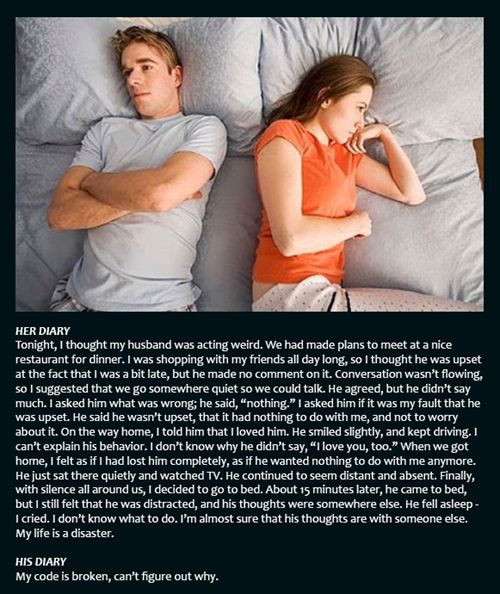
How did it come to be? Well, it sells. Cosmopolitan & co. made a business out of explaining to women that men are a different species – and I am sure, there are equivalent resources for men. I often wondered about this before I heard this talk. Ambridge doesn’t really go into the specifics of the differences except where there is hard data to show that the differences are marginal.

My own hypothesis here is that emotionally men and women are much more similar than they are different – certainly more similar than pop culture has us believe.

We have these memes, a complex Marge and primitive Homer, an overthinking ruminating woman and a direct man. Not so, I believe.

emotional differences between men and women are exaggerated
This couldn’t be further from the truth as a generalisation

He also talks about how it is impossible to spot a liar. I think that with the popularisation of the concept of emotional intelligence, those who don’t think that they have a lot of it, think that there are those who can see right through other people. My own impression is that some people are better than others, but nobody gets it right consistently. I have seen people get it so unbelievably right, I began to think of them as having genius-level EQ, if there is such a thing. Observing these people more closely, I have seen them make terrible faux pas in social settings that really weren’t consistent with exceptionally high EQ. My guess is that a lot in EQ, or at least being able to effectively apply it, boils down to how much attention one are paying to the people around them.

2. The great porn experiment | Gary Wilson | TEDxGlasgow

Phenomenal talk explaining evolution and addiction in a novel way without a social agenda making for a blissful 16 minutes.

The concepts of brain plasticity, reward pathways and misdiagnosed psychiatric problems beautifully explained.

3. Your body language shapes who you are | Amy Cuddy

One of the top TED talks of all time. Cuddy has popularised the concept of power poses. Her main message is that body language isn’t a one way street from the brain to the body. Instead, the body signals things to the brain – and, it can be gamed to our advantage.

4. The art of misdirection | Apollo Robbins

This is a practical demonstration of what I call cognitive curiosities relating to attention. This eerily charming individual (you will know what I mean by the end of the talk) doesn’t go into any of the fancy science – he just shows how attention works. It made me feel both entertained and vulnerable.

I would be happy to expand this list, so your suggestions are welcome. If you are new to cognitive curiosities, this is a good (and hilarious – if you watch till the end) starting point: Michael Shermer: The pattern behind self-deception

You may also like:

Our brains are story-telling machines

Get these blog posts via Facebook!

Authenticity and being in the public eye

Larry King is a great interviewer. Lately, he has been talking to increasingly questionable characters. Keeping an open mind, I watched his interview with Dan Bilzerian. [For those who aren’t familiar, Bilzerian has 20 million Instagram followers as of early 2017. He makes his money through poker and spends it in extremely unreserved ways – documenting some of it on Instagram.] At first, the interview seemed surprisingly good.

I am always curious about public personalities – how much of what they say is an act? One would imagine that Bilzerian is either a very calculated act, or not an act at all.

Bilzerian said you need to sign an non-disclosure agreement to walk into his house. Fair enough, he values his privacy – after all he has ridiculous numbers of people in his house all the time. He really surprised me when he said that Trump is raw and unfiltered. Could he, a poker player, really think that? I don’t think so. This casts a shadow not on his intelligence, but on the extent to which he is genuine. Hence, it is now a tougher judgement call to interpret what he says. I’m not sure what Bilzerian stands to gain from this statement about Trump. Perhaps, he would associate himself with Trump as they do have some features in common – but that’s obvious as is. Perhaps, to endear himself to Trump supporters? After all, Bilzerian does have more Insta followers than One Direction. Perhaps, it is that both of them use the same marketing strategy – an appearance of being unreserved and unfiltered – and therefore worthy of trust.

One of the things that attracts me to the writings of N.N. Taleb is that they appear to be quite genuine. He is yet to say something that seems completely contradictory to me.

However, I am increasingly suspicious of public figures. Actors are able to laugh at the same joke during the 10th take and still look like it’s real. I wonder if there’s anyone in the public sphere who the audience can afford to take at their word? Suggestions are very welcome. However, it is also possible that being authentic and being in the public eye aren’t compatible.

There’s an inherent contradiction here: people don’t gain a platform to expose their thoughts, they gain it to accomplish something. Being in the public eye has certain risks attached, so it is unlikely that anyone does it without expecting any benefit.

What if a celebrity already has a platform and then decides to use it for some other purpose? It is hard to separate support of good causes from self-promotion through associating oneself with good causes. At best, we are left with uncertainty.

are public figures genuine

The many ways the tail wags the dog

I first tried to read Robert Cialdini’s Influence: The Psychology of Persuasion a few years back. While the introduction is full of interesting facts, it is clearly a book written for a wide audience and has a slightly off-putting uniquely-American selling pitch quality despite being about how to not be sold to. I revisited it this Christmas, and I am very happy I did. My initial approach to it was as a book on marketing. I doubt I am the only one – learning to be good at marketing makes me feel a bit… fraudulent. Reframing it as learning about human behaviour – makes all the difference. It’s especially ironic as the book would explain why that is. In essence, it is a more dated (1984), less academic, but none the less brilliant rendition on the same issues as Daniel Kahneman’s Thinking Fast and Slow. The academic tone is probably my favourite, but it did, nevertheless, take me a particularly long time to read Thinking…, so if it seems too tedious – Influence is the perfect alternative. [Having said that, it is of a lower academic standard. For example, Cialdini’s description of S. Milgram’s famous experiment is inaccurate and his interpretation – sensationalist, but it’s still an interesting point of view that could be true.]

robert cialdini influence review

There are 6 rules of influence, Cialdini posits: Reciprocity, Social Proof, Consistency, Liking, Authority and Scarcity. The gist of it is summarised here.

Essentially, the entire book is about expectations – and how they reign over us.

I am tempted to go into a mindfulness/stoicism spiel here, but I’ll save that for later. I imagine reading this somewhat dated but still fundamentally brilliant book before the advent of social media would have been one of the best education investments one could make. Now, we are much more familiar with social proof, authority, etc as we see it every day. We probably have much sharper BS detectors for these particular marketing tricks than people did when this book was written in the 1980s. However,

this book explains the fundamentals incredibly well – and while we learnt a bit on how to not be BS’d when buying, most of us are clueless about these influence modalities in their applications outside of mechanical buying and selling .

Essentially, all of these 6 things set expectations: one feels obliged to reciprocate, one feels reassured by social proof, one trusts authority even more than one could ever imagine, etc.

Cialdini’s examples come from all areas of life.

Be it buying petrol, ordering desert, changing the behaviour of prisoners of war or navigating a romantic issue – Cialdini shows how expectations – rather than reality – determine our behaviour.

He moves from his selling pitchy voice to a much more ethically-charged discussion on how people deal with authority later in the book. He has incredible insight. He even discusses free will very briefly. It seems as though he would have liked to write a much more academically themed book, but felt he wouldn’t reach as wide an audience.

cialdini influence kahneman thinking fast and slow review

Here are some of my favourite chunks:

Consistency

This stretch below will make it easier to let go of your failed romances:

Take the bettors in the racetrack experiment. Thirty seconds before putting down their money, they had been tentative and uncertain; thirty seconds after the deed, they were significantly more optimistic and self-assured. The act of making a final decision—in this case, of buying a ticket—had been the critical factor. Once a stand had been taken, the need for consistency pressured these people to bring what they felt and believed into line with what they had already done. They simply convinced themselves that they had made the right choice and, no doubt, felt better about it all.

Before we see such self-delusion as unique to racetrack habitués, we should examine the story of my neighbor Sara and her live-in boyfriend, Tim. They met at a hospital where he worked as an X-ray technician and she as a nutritionist. They dated for a while, even after Tim lost his job, and eventually they moved in together. Things were never perfect for Sara: She wanted Tim to marry her and to stop his heavy drinking; Tim resisted both ideas. After an especially difficult period of conflict, Sara broke off the relationship, and Tim moved out. At the same time, an old boyfriend of Sara’s returned to town after years away and called her. They started seeing each other socially and quickly became serious enough to plan a wedding. They had gone so far as to set a date and issue invitations when Tim called. He had repented and wanted to move back in. When Sara told him her marriage plans, he begged her to change her mind; he wanted to be together with her as before. But Sara refused, saying she didn’t want to live like that again. Tim even offered to marry her, but she still said she preferred the other boyfriend. Finally, Tim volunteered to quit drinking if she would only relent. Feeling that under those conditions Tim had the edge, Sara decided to break her engagement, cancel the wedding, retract the invitations, and let Tim move back in with her.

Within a month, Tim informed Sara that he didn’t think he needed to stop his drinking after all; a month later, he had decided that they should “wait and see” before getting married. Two years have since passed; Tim and Sara continue to live together exactly as before. He still drinks, there are still no marriage plans, yet Sara is more devoted to Tim than she ever was. She says that being forced to choose taught her that Tim really is number one in her heart. So, after choosing Tim over her other boyfriend, Sara became happier with him, even though the conditions under which she had made her choice have never been fulfilled. Obviously, horse-race bettors are not alone in their willingness to believe in the correctness of a difficult choice, once made. Indeed, we all fool ourselves from time to time in order to keep our thoughts and beliefs consistent with what we have already done or decided.

Robert Cialdini's Influence: The Psychology of Persuasion review

Social Proof

It works even when it’s phony:

I don’t know anyone who likes canned laughter. […] The people I questioned hated canned laughter. They called it stupid, phony, and obvious. Although my sample was small, I would bet that it closely reflects the negative feelings of most of the American public toward laugh tracks.

Why, then, is canned laughter so popular with television executives? They have won their exalted positions and splendid salaries by knowing how to give the public what it wants. Yet they religiously employ the laugh tracks that their audiences find distasteful. And they do so over the objections of many of their most talented artists. It is not uncommon for acclaimed directors, writers, or actors to demand the elimination of canned responses from the television projects they undertake. These demands are only sometimes successful, and when they are, it is not without a battle.

What could it be about canned laughter that is so attractive to television executives? Why would these shrewd and tested businessmen champion a practice that their potential watchers find disagreeable and their most creative talents find personally insulting? The answer is at once simple and intriguing: They know what the research says. Experiments have found that the use of canned merriment causes an audience to laugh longer and more often when humorous material is presented and to rate the material as funnier. 

Together with Daniel Kaheman’s Thinking Fast and Slow, Daniel Goleman’s Emotional Intelligence and, to a somewhat lesser extent, Mark McCormack’s What They Don’t Teach You at Harvard Business School, this book is essential reading in understanding human behaviour.

Here is the full book though I imagine this breaches copyright

Get these blog posts via Facebook!

Waves and ideology

When I went for my jog by the sea this morning, I noticed that it was unusually stormy. It reminded me of a story told by my uncle.

Years ago, his friend and he went for a swim – in the dark – in a storm – after a few pints. Yeah, as you do. They barely made it out alive. My uncle credits his survival to one strategy – and he made sure to emphasise this lesson to me:

The waves are in charge, not you, so your job is to stop resisting the waves and work with them instead by allowing them to move you, slowly and iteratively, towards the shore.

As I ran along, I thought, isn’t that just a great metaphor in general – rather than just a “how to” for when you’re drunkenly getting out of a stormy sea?

philosophy of ideology

It then hit me that it is – for some people. However, there are some people for whom it really isn’t. As I discussed in my WordPress treatise on good advice vs bad advice, for advice to be useful, it has to be contextual. For over-ambitious people, the wave metaphor is great – as it bring them closer to reality. Their standard belief is that they can resist and accomplish, so the metaphor helps to remember that that’s not always the best strategy. However, for over-laid-back people, this metaphor is a disaster – for obvious reasons.

The whole point of these metaphors is that they allow one to see a side of things that they’re currently not seeing. In other words, heuristics need to be tailored to the specific unhelpful beliefs of a given individual.


I would argue that the point of metaphors, pondering advice and addressing one’s beliefs is to bring oneself closer to reality – and away from stereotypes and patterns that have stopped being useful.

All too often, however, these metaphors grow into ideologies. What’s worse is that people are generally drawn to ideologies that resonate with their off-kilter beliefs and idiosyncrasies, and so strengthen them – rather that being interested in ideologies that could take them out of their confusion and bring them closer to reality.

This happens through our intuitive confirmation bias, attentional bias, producing an even more biased closed minded echo chamber. This is one of the reasons why I am moving away from ideologies. An ideology is a fantasy loosely based on reality that is applicable only under a certain set of circumstances. This may still be called an ideology, but for me, observing nature – in the broadest sense of the word – is all we’ve got as our teacher.

choosing an ideology

Millennial corporate office workers and their transgender bathrooms

I wanna be the very best

Like no one ever was

– Pokemon opening titles

As part of my Christmas escape from routine, I’ve been trying to read more. After the off-putting Ego is the Enemy and the chilling American Tragedy , I stumbled upon an interview with Simon Sinek. He talks about how millennials are difficult to deal with in the workplace and attempts to explain how this is a product of our upbringing in a cautious non-accusatory manner. It’s kind of fun to watch because the set up is clearly intended for dialogue, whereas Sinek goes off into a suspiciously well-structured 15 minute TED talk while the poor host nods along.

millennials in the workplace

Sinek says millennials are accused of being entitled, narcissistic, unfocused and lazy.

He remarks on the fact that corporate purpose and bean bags aren’t cutting it. He talks about the reasons. According to him, there are four.

1. Parenting

According to Sinek, millenials have been subject to “failed parenting strategies”.

Sinek postulates that millennials were repeatedly told that we could have anything we wanted and that we are special.

I guess our parents belong to the generation when toxic compulsive positive thinking really took off, so that would make sense. “Just wish for it – and it’s yours”.

Sinek argues that we got into honours classes not because we accomplished enough, but because our parents complained. 

I am not so sure about this mammy getting us things. If anything, if I had been born 20 years before, my mammy would have had an easier time calling in favours and getting me into a position I didn’t deserve. This is just an impression too, but to me, the world seems more equalised and transparent – at least in education, in Europe.

The underlying premise of Sinek’s argument is that millennials are different due to these 4 causes, but he doesn’t really provide any evidence to say that, beyond the obvious, these reasons are unique to our generation – and thus their explanatory power is questionable.

He argues that participation medals (8th best…) corrupted us. When millennials meet with reality, where coming in 8th doesn’t bring all that validation it did before and mammy can’t get us a promotion, we immediately question our specialness, feel we’re inferior and blame ourselves.

I do recall moving from Moscow to Dublin (for the n-time by in my teens), after not having really lived there for 2 or 3 years, which on that scale is forever, finding that

1. Maths is a dark art to most people

2. Everyone has a medal in something.

At that point, I had barely ever won anything. I recall talking to my dad and wondering how these mildly impressive people were top this and top that. I even talked to my classmate about the dissonance. My dad explained the reality of the differing attitudes in education:

in the West, medals are used for encouragement, and they don’t mean the same thing or serve the same function as the medals of my former Russian prodigy classmates.

My friend took a different approach – together with our other friends, she gave me a little trophy that said “Official Trophy Girl” and my name. That was my first trophy. Sinek clearly knows what he’s talking about.

millennials in the workplace simon sinek

2.Technology

Sinek’s argument is that our Instagram-filtered highlight reel lives raise the standard to the point that unless you are exactly perfect, know exactly what you are talking about, you shouldn’t talk. So when we do talk, we come to out uber-experienced boss and lecture him or her on how it’s done (while having no clue and even less insight). The 2 factors above work against out self-esteem according to Sinek.

Instagram and other social media are very naturally selecting.

I would argue that whatever harm is done through participation medals, it is probably shaken out of us by the cold reality that our ramens need to be quite good before people start liking and replaying them.

He explains how technology is addictive and introduces dopamine. He makes the grotesque comparison of alcohol and social media. Sinek states that the relationships we form are superficial and we’ve no coping mechanisms other than a dopamine hit from the likes on Facebook. He makes a very sweeping assumption that almost everyone is addicted to social media.

Yes, possibly.

However, weren’t there other ways to get hooked on dopamine before? It doesn’t have to be alcohol. Has he heard of Dungeons & Dragons? Maybe, Counterstrike? Back to back episodes of Sabrina on Nickelodeon?

Here, his argument is quite weak . There’s nothing to say that we are more addicted with poor coping skills – compared to any other generation.

millennials lack purpose simon sinek

3. Impatience

We live in a world of instant gratification: Amazon next day delivery, Netflix binges, Tinder dates: “swipe right – I’m a stud”. He argues that the meaningful things (confidence, impact, etc) are slow and meandering.

Again, all of this is true. But was it ever any different? Obviously, it wasn’t Amazon-related, but there were other ways to get instant gratification. For example, fast food is all about instant gratification – and millennials don’t really binge on that at least. Perhaps, impatience is just part of being young. This quote attributed to Socrates reveals so much about the timelessness of the nature of youth:

“The children now love luxury. They have bad manners, contempt for authority; they show disrespect for elders and love chatter in place of exercise.”

why millennials suck

4. Environment

Sinek says that the corporate environment takes more interest in the numbers rather than the personal development of their employees.

First, that’s normal.

Corporations owe it to their shareholders, not their employees – that’s the premise of capitalism.

Yes, there is CSR, etc, but they are very much at the margins of corporate life. In fact, there’s nothing necessarily evil about the financial purpose, as at least in theory financial gain is a reflection of the usefulness of something to society – albeit through the prism of a supply and demand intersection.

However, it’s not the act, it’s the cover up. The fact that corporations so often come out with unfalsifiable statements that seem to want to please everyone and stand for nothing as their “values” and “purpose” is really off-putting. Working there makes one feel like a low-ranking accomplice of a gargantuan fraud – without even the freedom to admit it.

The thing that is actually going on here is that the entitled whiney millennials “ruin everything” are specifically the corporate office workers. In generations that came before, fewer people worked in offices of big corporations. Now that there are sufficient numbers of young corporate workers, the generalisation has been spread to millennials as a whole.

In these large corporate institutions, millennials don’t know their boss. Their actual boss is a hedge fund who owns the shares. The person they call their boss is just a slightly more senior employee, who has 10% more of an idea why they’re doing what they’re doing than the poor millennial. There’s no actual real work to do. Going around with balloons for people’s birthdays and making presentations – even pulling all nighters while at it – makes people feel unfulfilled and trapped. There’s no genuine purpose beyond the obvious financial one. That’s the clincher. Justin Bieber knew what to sell to his audience [his recent tour was called Purpose].

I suspect that millennials who are out there chopping wood aren’t as morally dissatisfied as the corporate office worker millennials. Now that wood is chopped, but that presentation you made is probably never going to make any difference – to anyone, anywhere, ever. And you worked so hard to make it into that position – good grades, college, years of delaying gratification – only to end up making dead presentations. You were promised that you would be making an impact. Yeah.

Second, Sinek also assumes that it is the responsibility of a corporation to develop and help the personal growth of employees – which is a bit too invasively brave new world for me. Certainly, my experience of corporate life was that acting like everyone else and generally participating in group think was part of the job. There wasn’t the group of nerds to rescue me this time.

millennials in the workplace video

There’s no real mobility and or even a promise of real success in corporate life. So no wonder we’re out there – overeducated and whinging about issues other people feel are outlandish. Bob Geldof’s recent soundbite about transgender bathrooms is an example. My points isn’t about LGBT.

My point is that you can laugh all you want, but transgender bathrooms give people something they can fight for that is meaningful to them – as it makes people feel significant, makes them feel they made a difference and belong to a group. This is what’s actually missing for millennials.

This phenomenon occurs where religion plays a minor role in one’s upbringing, as was the case with millennials.

Young people who lack a purpose and a sense of belonging can very easily be swayed by politicians into things like violent nationalism.

We’re seeing something in that vein in the recent political developments.

Another threat comes fro the fact that millennials seem to glorify working in corporations – especially if they are tech-related like Google or Facebook, because for years we were taught that that’s the best work there is.

Obviously, this doesn’t apply to everyone, but for some of us the veneer of corporate glamour is stopping us from making honest assessments. Remember, “if it’s repeated – it’s true“; that’s just the human brain.

I wonder if it was different for other generations. Yes, corporate office work wasn’t as big a phenomenon, but how did people get through it without complaining as much as the millennials? Maybe, it was quite a prestigious thing in and of itself – providing the feeling of being special. Now it’s pretty standard. A long time ago GS Elevator came out with a tweet that there aren’t many jobs out there for which you actually need a degree. Cynical as this tweet is, the first year of a corporate graduate programme is likely to confirm that assertion. Getting the most educated, most competitive people and putting them into that environment is a shock to them. Perhaps this didn’t apply for the generations above us who enjoyed their careers more than the millennials as there were fewer people with degrees.

It is also quite possible that it was all the same for previous generations – and their parents also told them that they were lazy, entitled and all the things millennials are hearing. It’s simply their turn to complain.

On the bright side, it has become cool in our generation to be an entrepreneur. While the seasoned entrepreneurs go on about how this romanticised view of building businesses is toxic, I feel it is good to encourage non-bet-the-farm entrepreneurship at least. Or even freelance. It is creative, it has as much purpose as one wants and it is both self- and socially-serving.

Most of all, millennials, myself included, should remember that there’s no use in waiting for someone to come along and give us this magical real purpose we so crave. It is up to us to make our own purpose.

*If none of this makes sense – and you happen to like video games, try Stanley’s Parable. Whoever made the game must be the great-grandchild of Descates and Huxley’s first cousin. They understand corporate life better than those who created it.

millennials in the workplace video simon sinek

You may also like:

Confessions of a career-switching millennial

Millennial ENTP studies

Nassim Nicholas Taleb wrote a very sobering piece on the nature of employment

Get these blog posts via Facebook!

Infatuation: Scarlett O’Hara vs Jay Gatsby

Ultimately, it is the desire, not the desired, that we love.

– Friedrich Nietzsche

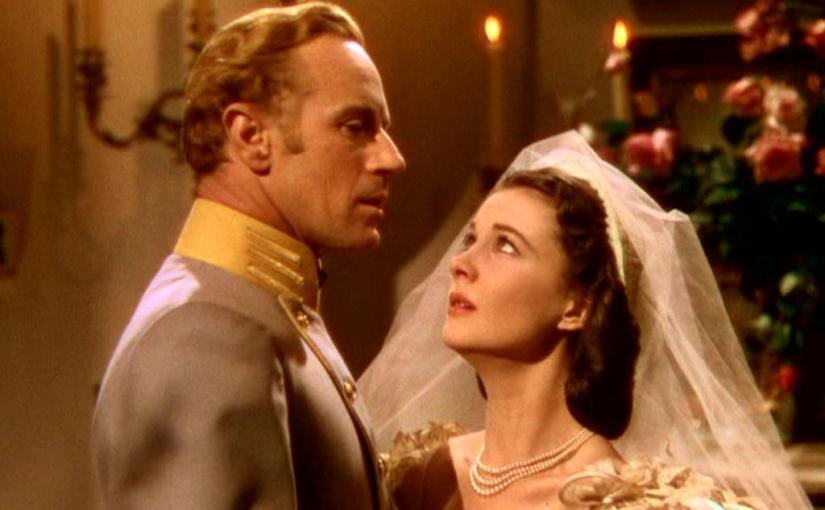
Seeing as how it is Christmas, I am spending some time in front of the piece of furniture I otherwise avoid – the auld telly. One of my favourite films of all time, Gone with the Wind, was on just yesterday.

I must have seen it a hundred times as a child. Those were the days of the Spice Girls and girl power, the economy was only growing and I was full of curiosity as to what it would be like to be an adult. I am not much of a vocal feminist, but Scarlett represented a kind of strong independent woman to me at the time. Naturally, I noticed that she has an unreasonable obsession with Ashley. I thought that that’s what they called love. Yes, Ashley was always a bit of a disappointment, but in my 10 year old mind, it made sense that love is love – and that’s it. Scarlett was obviously far from perfect: s a bit self-centred, a bit impulsive… But, boy, she kicked ass like no one else I’d ever seen before. I felt that the centre-stage relationship was between Ashley and Scarlett – and everyone else was a third-wheel of ill fate, the same kind that brought war and poverty to Scarlett.

infatuation in gone with the wind

Watching it now, it looks so different. Scarlett was an ambitious woman with more than a touch of insecurity and narcissism. There was no relationship. Her supposed love was in reality a crush that managed to solidify through Ashley’s response. Scarlett made the first move. There was a purpose to it, like with everything Scarlett did: she wanted to marry Ashley. Ashley told her he loved her, or rather, denied that he didn’t love her. She continued her infatuation for the rest of the film. It was fuelled by continued scenes where Ashley’s reluctantly reaffirms that he has a soft spot for Scarlett. I guess he didn’t want to hurt her – and he wasn’t lying either. It is obvious that Ashley is not the sort of man that Scarlett would naturally be interested in. There was always something odd about the extent to which she was drawn to him.

Scarlett was interested not in Ashley, but in how it made her feel to know that he loves her. The bitter sweet thought of a man trapped in a marriage to an almost perfect woman nevertheless constantly thinking of her, of Scarlett – that was what was playing on her mind constantly, yielding endless validation.

 I only spotted this now, in my late twenties. The reason I believe it is true is that in the scene where Melanie dies – and lo and behold, Scarlett falls into Ashley’s arms, the following  crucial dialogue unfolds:

Ashley: I can’t live without her, I can’t. Everything I ever had is… is going with her.
Scarlett: Oh, Ashley. You really love her, don’t you?
Ashley: She’s the only dream I ever had that didn’t die in the face of reality.
Scarlett: Dreams! Always dreams with you, never common sense.
[…]
Scarlett: lf you knew what I’ve gone through! Ashley, you should have told me years ago that you loved her and not me and not left me dangling with your talk of honor. But you had to wait till now, now when Melly’s dying to show me that I could never mean any more to you than than this Watling woman does to Rhett. And I’ve loved something that…that doesn’t really exist.

It’s bad enough to be infatuated – like Gatsby was with Daisy. However, it is much worse to be infatuated because of the belief that the subject of one’s infatuation loves them. Of course, there was an element of reciprocity adding fuel to Gatsby’s infatuation, but it wasn’t nearly as strong.

Gatsby was infatuated with Daisy from first principles; Scarlett was infatuated with Ashley as a reaction to what she perceived as his infatuation with her.

infatuation in the great gatsby
Leo never looked as intense as Robert

It makes more sense from an evolutionary point of view for a person to be obsessed with someone who already has a crush them , but it is also kind of… pathetic. It’s like the decision wasn’t even theirs. It is especially pathetic if they don’t have a crush on the infatuated person- and it’s only in their mind.

The dialogue above is so ironic. Ashley, the supposed dreamer, off with the fairies while Scarlett was saving Tara, saving Melanie’s life and just generally solving the most complex of problems, talked about Melanie as the one thing that was real. It finally hit her then that she was the one who was living in a dream. Ashley told her that they would never be happy together because they are so different. He saw reality much more clearly than she did – in this sense. On the other hand, Gatsby never even made it as far as Scarlett. What about Rhett – was he infatuated? I think he was hopeful, but still kept an eye on reality.

It’s tough denouncing Scarlett from her “super-woman who was unlucky with men” status to “needy super-woman who ruined things because she was too silly to see the truth” status. At least now, it makes more sense.

understanding infatuation great gatsby gone with the wind

Words or empathy?

Words. Words can change how we feel in an instant, they can prime us to act in a certain way without us knowing – but they also can completely misfire.

It seems very obvious now, but it took me ages to figure this out: people don’t always mean what they say.It’s not necessarily because they are lying, but a lot of the time it is because they lack insight and communication skills.

What really hammered it home to me was when a consultant psychiatrist was explaining to me how to handle the “admit-me-or-I-will-kill-myself” kind of presentation. He asked me a very simple question: “If you wanted to kill yourself, would you go to a hospital to inform the doctor?” I’ve no intention of trying to simplify the complex issue of suicide, but there is certainly a type of patient who honestly believes they want to kill themselves and come to hospital, still. Why??? Because the words are misfiring. The words they are saying are: “I want to kill myself”. What (some of them) mean is that they are in so much emotional pain that they have no idea how to get out of it, but they would really like help. It can be, strangely, easier to identify the desire for suicide as the problem because it is a bit more external – at least compared to one’s coping skills.

The moral of the story was: people don’t always mean what they say – and they may not even know it.

This disconnect between words and insight is well known among international relations officials. Here what is said is just as important as what it is left unsaid. The people who answer questions at conferences (e.g. press conferences at the White House) aren’t the officials and military generals actually who know the most. The spokespeople are briefed in a very specific way and believe the things they say. It is too difficult to have insight into how you will be understood, so they get people who specifically understand the exact right stuff.

The significance of precise language is well known in Hollywood.

The production team of Gone with the Wind fought long and hard just to be allowed to have Rhett say “Frankly, my dear, I don’t give a damn.”

Damn was a vulgar word and the censors weren’t happy. However, “I don’t care” just doesn’t provoke the same emotions. Also, it is often said that the word frankly was an unscripted improvisation by Clark Gable – it wasn’t. It’s just different from the book, but that’s how it was in the script.

Nassim Nicholas Taleb said it well here:

when one of these [Salafi] fundamentalists talks to a Christian, he is convinced that the Christian is literal, while the Christian is convinced that the Salafi has the same oft-metaphorical concepts to be taken seriously but not literally –and, often, not very seriously.

empathy and suicide

What got me reminiscing about this was a post by FJ of The Pensives about critical thinking as an antidote to manipulation. FJ identifies reading people (and empathy) as a key part of examining one’s true intentions. FJ’s insight certainly resonates with my own – that there is meaning way beyond words. I think context needs to be examined. Incentives need to be looked at. FJ’s argument is that putting oneself in someone else’s shoes is important. Maybe he is saying the same thing in different words – no pun intended, but there’s also a potential caveat here. It’s best expressed by Nicholas Epley wrote in his fabulous book Mindwise:

Reading body language and trying to take on the other’s perspective doesn’t seem to help to understand the person better. What does help is creating situations where people can openly tell you what they think – and listen carefully.

Obviously, that’s not always possible. However, the point I am trying to make is that while empathy has become an increasingly popular concept, we shouldn’t envisage it as an antidote.

You may also like:

Cognitive curiosities: what our minds do without telling us

Inside a bilingual mind

My mother is in the throes of learning a foreign language – and I am doing my best to help. I am bilingual in English and Russian. There are definitely lots of people more talented at languages than I, but I am always surprised at how exceedingly rare people with near-perfect grammar and pronunciation in two languages actually are. Indeed, it is one of the things that stops me from wanting to learn another language – knowing how hard it is to get to proficiency.

In my attempt to help out with my mam’s progress, I found a lecture from this polyglot on the psychology of learning a language. He made a very interesting point:

in order to speak a different language you need to mentally switch wavelength and adopt a new persona. He argues that a language has a certain emotional state associated with it.

I don’t think it’s as literal as “happy vs sad”, but it’s more like a feeling you get when you speak a language. To be blunt about it, I imagine if I tried to speak Italian I would be more laid back and extroverted than if I tried to speak German. Indeed,

a few of my close friends remark that my mannerisms, tone and timbre all change when I switch between my two native languages. I had zero insight into this until I was told about it.

On reflection, I realised that a friend of mine who is fluent in German and English does something similar. He kind of seems to look at his shoes more when he speaks German – and seems generally less approachable.

what it's like to be bilingual

I also feel quite different when I am speaking English vs Russian. This is going to sound like I’ve lost the plot, but I can think of no better way to describe it.

In English, things are slick – like an iPhone. In Russian, things are deep and meaningful – like Dostoevsky.

I like to listen to podcasts. I realised that listening to a good podcast in Russian made me see the speaker as being intelligent, whereas a good podcast in English made me feel that the speaker is competent. The difference is subtle and so cliché! It gets worse. The Russian speaker always seems a little too direct – though not aggressive – and the English speaker seems a little sales-pitchy. I mean that’s just caricature-worthy  – but also true.

It looks like I am susceptible to the “national stereotype” biases even though I am well able to play for both sides and understand that these are just biases.

Much as I hate to admit it, I think I am also more polite when I speak English – and probably more tolerant. At the same time, I would also tend to oversimplify things more when speaking English.Perhaps having to speak English as a lingua franca has changed the world. The Financial Times has an interesting published an article portraying the ultimate beneficiaries of this arrangement as its victims here, arguing that China and Russia understand the USA and UK much better than they understand the rest of the world.

English is a language that doesn’t really allow for long sentences because there aren’t sufficiently complex noun and adjective endings, verb conjugations, etc to show what belongs where in a long sentence. For example, a typical German sentence is longer – because they do have the necessary grammatical framework.

In order to make sense in English, sentences have to be short and declarative – and by proxy, so do one’s thoughts.

All in all, there is definitely a persona-migration that happens in my head when I switch languages.

But that, as usual, got me thinking.

Adopting a persona to do any task at all is a thing. It’s not limited to languages. It’s a bit like having an implicit role model. It’s a dangerous game to play though.

On the one hand, it seems to make things easier. If one imagines themselves as a competent surgical trainee from Gray’s Anatomy, studying for medical finals get that little bit easier. However, isn’t this a departure from reality? I really like the point brought up in Steven Pressfield’s War of Artimagining yourself as a poet/artist/programmer/whatever – is only a vanity project. The point isn’t to define oneself as a poet/artist/programmer/whatever, the point is to make poems/art/code/whatever. Acting in a role, faking it until you make it is well and good, but travelling too far out into the world of alter-egos, be they Italian or surgical, should be done with a lot of insight.